

Mar 19,2026
Key Capabilities of Supply Chain Data Visibility Solutions
Introduction
Logistics collaboration matters in global supply chains because modern shipments involve multiple stakeholders—freight forwarders, carriers, warehouses, customs brokers, and customers—who must coordinate in real time to ensure smooth operations. Without effective collaboration, logistics processes become fragmented, leading to delays, errors, and increased costs. A collaborative logistics environment enables synchronized workflows, shared data visibility, and faster decision-making across all parties involved.
In today’s global logistics landscape, where shipments span multiple countries, systems, and transport modes, collaboration is no longer optional—it is a foundational requirement for efficiency and scalability.
What is Logistics Collaboration
Logistics collaboration refers to the coordinated interaction between multiple stakeholders involved in the supply chain, supported by shared systems, data exchange, and aligned workflows.
Key participants in logistics collaboration include:
Freight forwarders
3PL providers
Carriers (airlines, shipping lines, trucking companies)
Warehouses and distribution centers
Customs brokers
Shippers and consignees
Collaboration is not just communication—it is system-driven coordination, where:
Data is shared in real time
Tasks are aligned across roles
Workflows are synchronized
Modern logistics platforms enable this by connecting upstream and downstream partners within a single operational environment.
Why Logistics Collaboration Matters
1. Reduces Operational Silos
Traditional logistics operations rely on:
Emails
Spreadsheets
Disconnected systems
This creates data silos, where each stakeholder has only partial visibility.
Collaboration platforms eliminate these silos by:
Centralizing information
Synchronizing updates
Providing a shared operational view
2. Improves Shipment Visibility
When all parties contribute to and access the same system:
Shipment status becomes transparent
Milestone updates are consistent
Tracking is unified across all legs
This enables end-to-end visibility, which is critical for global logistics.
3. Enhances Decision-Making
With collaborative data:
Teams can respond faster to disruptions
Alternative routes or carriers can be selected quickly
Bottlenecks can be identified early
Real-time collaboration supports proactive, rather than reactive, operations.
4. Supports Complex Global Operations
Global supply chains involve:
Multiple countries
Different regulations
Various transport modes
Collaboration ensures:
Smooth handoffs between partners
Consistent documentation
Coordinated execution across regions
For example, systems can synchronize workflows between domestic and overseas teams, ensuring seamless order handovers and shared documentation across regions .
How Logistics Collaboration Works
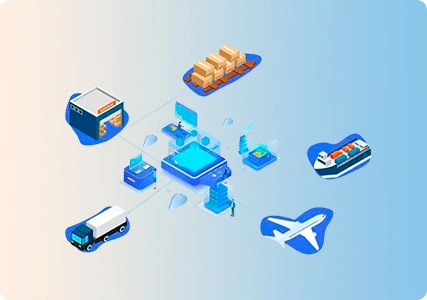
Logistics collaboration is enabled through digital platforms that connect all stakeholders into a unified workflow.
1. Centralized Data Platform
All shipment-related data is stored in one system:
Orders
Documents
Tracking events
Financial data
This becomes the single source of truth.
2. Role-Based Access
Different users access the system based on their roles:
Sales teams manage customer communication
Operations teams handle execution
Finance teams manage billing and reconciliation
Customers track shipments
This ensures both collaboration and data security.
3. Workflow Synchronization
Tasks are connected across roles:
Order creation triggers operational workflows
Milestone updates trigger notifications
Exceptions trigger alerts
This creates automated, coordinated workflows.
4. Real-Time Communication
Instead of relying on emails:
Updates are shared instantly in the system
Stakeholders receive notifications
Issues are tracked and resolved within workflows
5. Integration with External Systems
Collaboration extends beyond internal teams through:
API integrations with carriers and platforms
ERP and WMS connections
eCommerce platform integrations
This ensures seamless data flow across the entire supply chain ecosystem.
Key Features / Key Capabilities
Modern logistics collaboration platforms typically include:
Multi-role collaboration
Connect sales, operations, finance, and partners in one systemEnd-to-end shipment visibility
Shared tracking across all stakeholdersMilestone-based workflow management
Standardized processes aligned to shipment lifecycleDocument sharing and management
Centralized storage and real-time updatesException management and alerts
Automated notifications for delays or issuesIntegration capabilities (API/EDI)
Connect with carriers, ERP systems, and external platformsCustomer and partner portals
Enable external stakeholders to access relevant dataAutomation workflows
Reduce manual coordination and repetitive tasks
Benefits for Logistics Companies
1. Increased Operational Efficiency
Reduce manual communication
Eliminate redundant data entry
Streamline workflows
2. Improved Service Quality
Faster response to customer inquiries
Accurate and consistent shipment updates
Better handling of exceptions
3. Stronger Partner Relationships
Transparent collaboration with carriers and agents
Reduced misunderstandings
More reliable service delivery
4. Better Financial Control
Align operational data with financial processes
Improve billing accuracy
Reduce disputes
5. Scalability
Collaborative systems allow companies to:
Handle higher shipment volumes
Expand global operations
Onboard new partners بسهولة
Best Practices / Use Cases
Use Case 1: Freight Forwarders Managing Global Networks
Freight forwarders use collaboration platforms to:
Coordinate with overseas agents
Share shipment data in real time
Manage multi-leg transport operations
Use Case 2: Cross-Border eCommerce Logistics
eCommerce logistics providers rely on collaboration to:
Connect sellers, warehouses, and carriers
Synchronize order and tracking data
Handle high shipment volumes efficiently
Use Case 3: 3PL Providers Managing Multiple Clients
3PLs benefit from:
Centralized management of multiple customers
Role-based access for different stakeholders
Real-time visibility across all operations
Best Practices
Implement a unified platform for all stakeholders
Standardize workflows and milestone definitions
Enable real-time data sharing
Integrate external systems via APIs
Use automation to reduce manual coordination
Conclusion
Logistics collaboration is a critical enabler of efficient and scalable global supply chains. By connecting multiple stakeholders through shared systems, synchronized workflows, and real-time data, companies can overcome operational silos and improve overall performance.
As logistics networks become more complex, collaboration platforms play a central role in ensuring transparency, efficiency, and reliability across the entire supply chain.
Frequently Asked Questions
What is logistics collaboration?
Logistics collaboration is the coordinated interaction between multiple stakeholders in the supply chain, enabled by shared systems, real-time data, and synchronized workflows.
Why is collaboration important in logistics?
It reduces data silos, improves visibility, enhances decision-making, and ensures smooth coordination across multiple parties and regions.
How do logistics platforms enable collaboration?
They provide centralized data, role-based access, workflow automation, and system integrations that connect all stakeholders in one environment.
What are the benefits of logistics collaboration?
Benefits include improved efficiency, better service quality, stronger partnerships, enhanced visibility, and scalable operations.
Can logistics collaboration improve customer experience?
Yes, it enables real-time tracking, faster communication, and more reliable service, leading to higher customer satisfaction.
About WallTech
WallTech provides digital logistics solutions designed to enable seamless collaboration across global supply chains. Its platforms connect multiple roles—including operations, sales, finance, and external partners—within a unified system, supporting end-to-end logistics collaboration and real-time shipment visibility. By integrating workflows, automating processes, and enabling data sharing across upstream and downstream partners, logistics companies can improve efficiency and reduce operational complexity. With capabilities such as milestone-based tracking, workflow automation, and financial integration, WallTech helps organizations scale their operations while maintaining control and transparency.
If you're exploring ways to improve your logistics operations, feel free to connect with us to learn more about our solutions and system capabilities.
.webp "How Logistics Order Management Systems Streamline Shipment Processing")