.webp "Operational Challenges Freight Forwarders Face Without Integrated Systems")
Mar 10,2026
Operational Challenges Freight Forwarders Face Without Integrated Systems
Introduction
Freight documentation is a critical component of logistics operations, covering everything from shipping instructions to customs declarations and financial records.
However, traditional document handling methods—manual entry, email exchanges, and fragmented storage—often lead to delays, errors, and compliance risks.
Freight documentation platforms address these challenges by digitizing and standardizing document workflows, enabling faster, more accurate, and more scalable logistics operations.
What is a Freight Documentation Platform
A freight documentation platform is a digital system designed to manage, generate, process, and control logistics-related documents across the entire shipment lifecycle.
It typically supports:
Bills of lading (B/L)
Air waybills (AWB)
Commercial invoices
Packing lists
Customs documentation
Operational and financial records
These platforms integrate document management with operational and financial workflows, ensuring that all documentation is aligned with shipment activities.
Why Freight Documentation Platforms are Important
1. Managing High Document Volume
Logistics operations generate large numbers of documents daily. Platforms help handle this volume efficiently.
2. Reducing Operational Delays
Incomplete or incorrect documents can delay shipments. Structured systems ensure documents are accurate and ready on time.
3. Ensuring Regulatory Compliance
International shipments require strict documentation standards. Platforms help maintain compliance across regions.
4. Improving Data Consistency
When documents are generated from system data, inconsistencies between documents and operations are reduced.
How Freight Documentation Platforms Work
1. Data-Driven Document Creation
Shipment data is captured once and reused across all documents, eliminating repeated manual input.
2. Template-Based Document Generation
Users can configure templates for different document types and automatically generate documents based on operational data.
Systems support custom document templates and document export capabilities, enabling standardized and efficient document creation .
3. Workflow Automation
Documents move through predefined workflows such as creation, review, approval, and release.
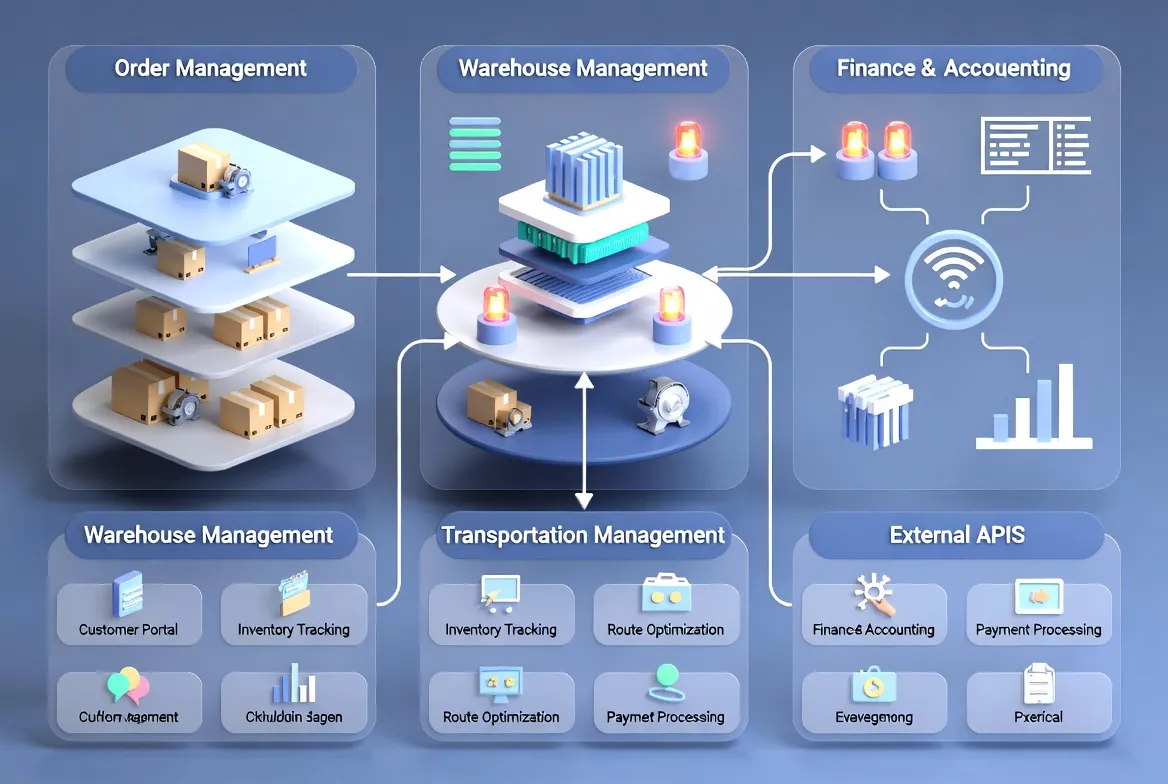
4. Integration with Logistics Systems
Documentation platforms are integrated with order management, tracking, and financial systems to ensure real-time data synchronization.
5. Real-Time Sharing and Collaboration
Documents can be shared instantly with stakeholders, including customers, carriers, and customs authorities.
Key Features of Freight Documentation Platforms
1. Centralized Document Repository
All documents are stored in a unified system, allowing easy access and retrieval.
2. Customizable Document Templates
Supports different formats and requirements for various trade lanes and customers.
3. Automated Document Generation
Documents are generated automatically using shipment data, reducing manual effort.
4. Multi-Format Export and Sharing
Documents can be exported in various formats and shared across systems and partners.
5. Role-Based Access Control
Permissions ensure that only authorized users can view or modify documents.
6. Version Control and Audit Logs
Tracks changes and maintains a history of document updates for transparency.
7. Integration with External Systems
Connects with ERP, WMS, customs systems, and third-party platforms.
8. Compliance Management Support
Ensures that required documentation meets regulatory standards.
Benefits of Using Freight Documentation Platforms
1. Increased Operational Efficiency
Automation reduces time spent on document creation and handling.
2. Reduced Errors and Rework
Data-driven processes minimize inconsistencies and mistakes.
3. Faster Shipment Processing
Documents are ready in real time, reducing delays.
4. Improved Compliance and Risk Control
Standardized processes ensure regulatory requirements are met.
5. Enhanced Collaboration
Stakeholders can access and share documents seamlessly.
Conclusion
Freight documentation platforms are essential for modern logistics operations, enabling companies to manage complex documentation requirements efficiently and accurately.
By combining automation, integration, and standardization, these platforms transform document workflows into a streamlined digital process.
As global logistics continues to grow in complexity, adopting advanced documentation platforms will be key to improving efficiency, compliance, and overall operational performance.

.webp "The Role of Supply Chain Tracking in Modern Logistics")