
Apr 29,2026
Logistics Data Platforms for Logistics Operational Insights
Introduction
A logistics platform for international trade documentation is a digital system that centralizes, automates, and manages all documents required for cross-border shipping, including invoices, packing lists, bills of lading, and customs forms. It enables logistics companies to ensure document accuracy, streamline workflows, and maintain compliance with international trade regulations.
In global logistics operations, where documentation is tightly linked to customs clearance, financial processes, and shipment execution, such platforms are essential for reducing errors, improving efficiency, and enabling seamless collaboration across stakeholders.
What is International Trade Documentation in Logistics
International trade documentation refers to the set of documents required to move goods across borders and comply with customs and regulatory requirements.
These documents typically include:
Commercial invoices
Packing lists
Bills of lading (BL) / Air waybills (AWB)
Certificates of origin
Customs declarations
Import/export licenses
Delivery receipts and proof of delivery (POD)
Each document must be accurate, consistent, and aligned with shipment data.
In traditional operations, these documents are often managed manually across emails, spreadsheets, and disconnected systems, leading to inefficiencies and risks.
A logistics platform brings all documentation into a unified, structured environment.
Why Documentation Platforms Matter in International Trade
1. Reducing Errors and Inconsistencies
Manual document preparation increases the risk of:
Data mismatches across documents
Incorrect shipment details
Missing information
These errors can lead to customs delays or penalties.
2. Improving Operational Efficiency
Handling documents manually is time-consuming, especially for high-volume logistics operations.
3. Ensuring Regulatory Compliance
Accurate documentation is essential for meeting customs requirements and avoiding compliance issues.
4. Enhancing Collaboration
Multiple stakeholders need access to the same documents:
Freight forwarders
Customs brokers
Carriers
Customers
Without a centralized system, coordination becomes difficult.
5. Supporting Scalability
As logistics companies grow, managing documentation manually becomes increasingly unsustainable.
How Logistics Platforms Manage International Trade Documentation
1. Centralized Document Management
All documents are stored within the platform and linked to specific shipments.
Single source of truth
Easy retrieval and search
Reduced reliance on emails and shared folders
2. Automated Document Generation
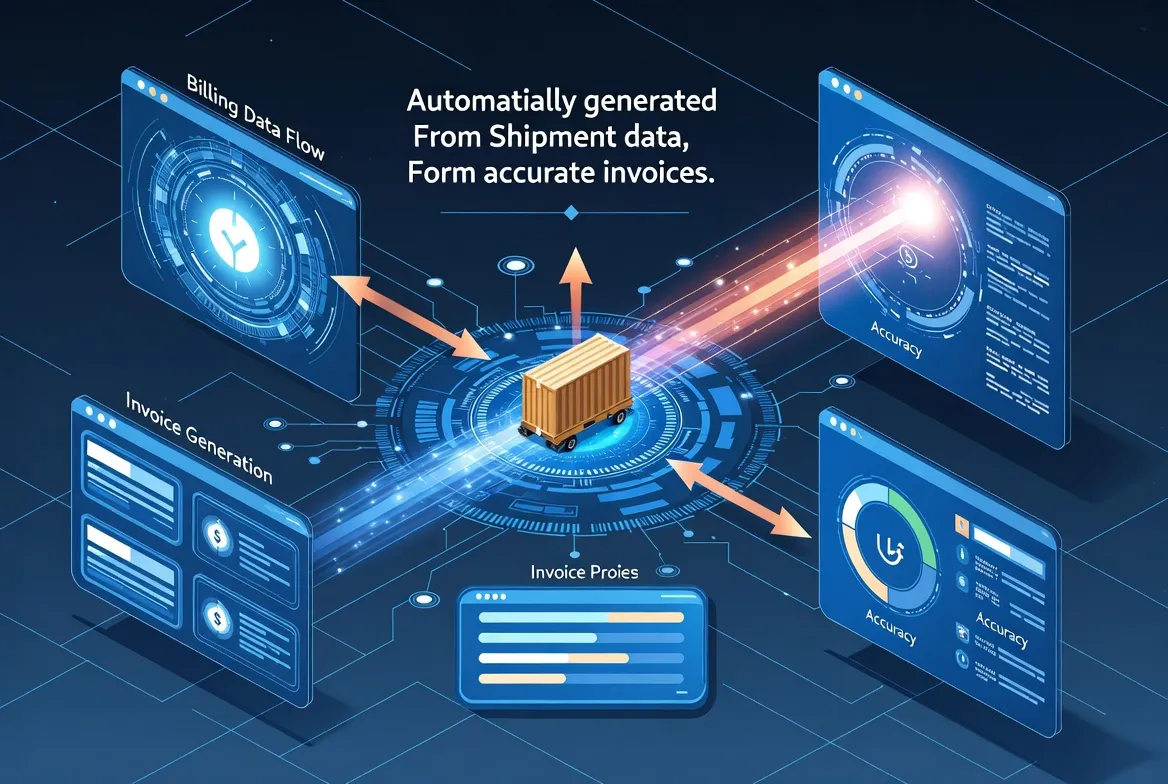
Documents are generated automatically based on shipment data.
Predefined templates
Auto-filled fields
Consistent formatting
This ensures accuracy and reduces manual workload.
3. AI-Based Data Extraction
Advanced platforms use AI and OCR technologies to extract data from uploaded documents.
Automatic capture of invoice and shipment details
Reduced manual entry
Improved processing speed
4. Workflow Integration
Documentation is integrated into the logistics workflow.
Document tasks aligned with shipment milestones
Automatic task assignments
Alerts for missing or incomplete documents
This ensures that documentation is always synchronized with operational progress.
5. Multi-Role Collaboration
The platform enables seamless sharing of documents among stakeholders.
Role-based access control
Real-time updates
Improved coordination across upstream and downstream partners
6. Real-Time Visibility
Document status is tracked alongside shipment progress.
Draft
Submitted
Approved
Rejected
This allows teams to identify and resolve issues proactively.
7. Integration with External Systems
Logistics platforms connect with:
Customs systems
ERP and financial systems
Carrier networks
This ensures smooth data flow and reduces duplication.
Key Features / Key Capabilities
Centralized Document Repository
All documents stored in one system
Organized by shipment or job
Easy access and retrieval
Workflow Automation
Automated document creation
Task-based document handling
Alerts and notifications
End-to-End Visibility
Document status integrated into shipment timeline
Real-time monitoring
Centralized dashboards
AI Data Recognition
OCR-based extraction
Reduced manual input
Improved accuracy
Multi-Role Coordination
Shared platform for all stakeholders
Role-based permissions
Improved collaboration efficiency
Financial Integration
Alignment between documents and billing
Automated invoicing and reconciliation
Consistent financial data
Benefits for Logistics Companies
Increased Efficiency
Automation reduces time spent on document preparation and management.
Improved Accuracy
Centralized data and AI processing minimize errors and inconsistencies.
Faster Customs Clearance
Accurate documentation speeds up regulatory approval processes.
Enhanced Visibility
Real-time tracking of document status improves operational control.
Better Collaboration
Unified platforms enable seamless communication between teams and partners.
Scalability
Logistics platforms support growing shipment volumes without increasing administrative burden.
Best Practices / Use Cases
1. Freight Forwarders Handling Complex Shipments
Use centralized platforms to manage multiple documents across multimodal shipments.
2. Cross-Border eCommerce Logistics
Leverage automation and AI to process large volumes of documentation efficiently.
3. 3PL Providers Coordinating Global Networks
Enable seamless document sharing across warehouses, carriers, and customers.
4. Companies Transitioning from Manual Processes
Replace fragmented document handling with structured systems to improve efficiency and control.
Conclusion
A logistics platform for international trade documentation is essential for managing the complexity of cross-border logistics operations.
By centralizing documents, automating workflows, and enabling real-time visibility and collaboration, these platforms help logistics companies reduce errors, improve compliance, and enhance operational efficiency.
As global trade continues to expand, adopting digital documentation solutions is a key step toward building scalable and resilient logistics operations.
Frequently Asked Questions
What is international trade documentation in logistics?
It refers to the documents required for cross-border shipping, including invoices, packing lists, bills of lading, and customs forms.
How do logistics platforms manage documentation?
They centralize storage, automate document generation, enable collaboration, and track document status in real time.
Why is documentation important in international trade?
Accurate documentation ensures compliance with regulations and enables smooth customs clearance and shipment execution.
What are the benefits of using a documentation platform?
Benefits include improved efficiency, reduced errors, faster processing, and better visibility.
Who uses these platforms?
Freight forwarders, 3PL providers, and cross-border logistics companies use them to manage trade documentation.
About WallTech
WallTech provides digital logistics solutions that help companies manage international trade operations with greater efficiency and control. Its platforms enable centralized document management, real-time shipment visibility through milestone-based tracking, and seamless collaboration across global partners. With capabilities such as AI-driven data recognition, workflow automation, and integrated financial processes, WallTech supports logistics companies in reducing manual workloads, improving documentation accuracy, and scaling their cross-border operations in complex global environments.
If you're exploring ways to improve your logistics operations, feel free to connect with us to learn more about our solutions and system capabilities.