.webp "Key Features of Partner Coordination Platforms")
Mar 13,2026
Key Features of Partner Coordination Platforms
Introduction
Manual logistics operations rely on human-driven processes such as spreadsheets, emails, and phone coordination, while automated logistics systems use digital platforms to manage workflows, data, and communication through predefined rules and real-time integration. The key difference lies in efficiency, accuracy, visibility, and scalability—automation enables logistics companies to operate faster, with fewer errors, and with greater control over complex global operations.
As logistics networks grow in scale and complexity, the shift from manual to automated systems has become a critical step for companies aiming to remain competitive.
What is Manual vs Automated Logistics Operations
Manual Logistics Operations
Manual logistics operations involve:
Data entry through spreadsheets
Communication via email or messaging tools
Separate systems for different functions
Human coordination for task execution
Processes are often unstructured and depend heavily on individual experience.
Automated Logistics Systems
Automated logistics systems are centralized digital platforms that:
Standardize workflows
Integrate data across systems
Automate tasks and decision-making
Provide real-time visibility
They connect all stakeholders—internal teams, partners, and customers—within a unified system.
Why the Difference Matters
The distinction between manual and automated operations directly impacts business performance.
1. Operational Efficiency
Manual: Time-consuming, repetitive tasks slow down operations
Automated: Workflow automation accelerates processes
2. Accuracy
Manual: High risk of errors in data entry and calculations
Automated: System-driven processes ensure consistency
3. Visibility
Manual: Limited and delayed visibility across shipments
Automated: Real-time tracking and unified timelines
4. Scalability
Manual: Growth requires more manpower
Automated: Systems handle increased volume without proportional cost increases
5. Collaboration
Manual: Fragmented communication across teams
Automated: Multi-role collaboration within one platform
These differences significantly affect service quality and operational performance.
How Manual and Automated Systems Work
Manual Logistics Operations Workflow
In manual environments:
Shipment data is entered into spreadsheets
Teams communicate via email or phone
Documents are stored in separate folders
Tracking updates are collected manually
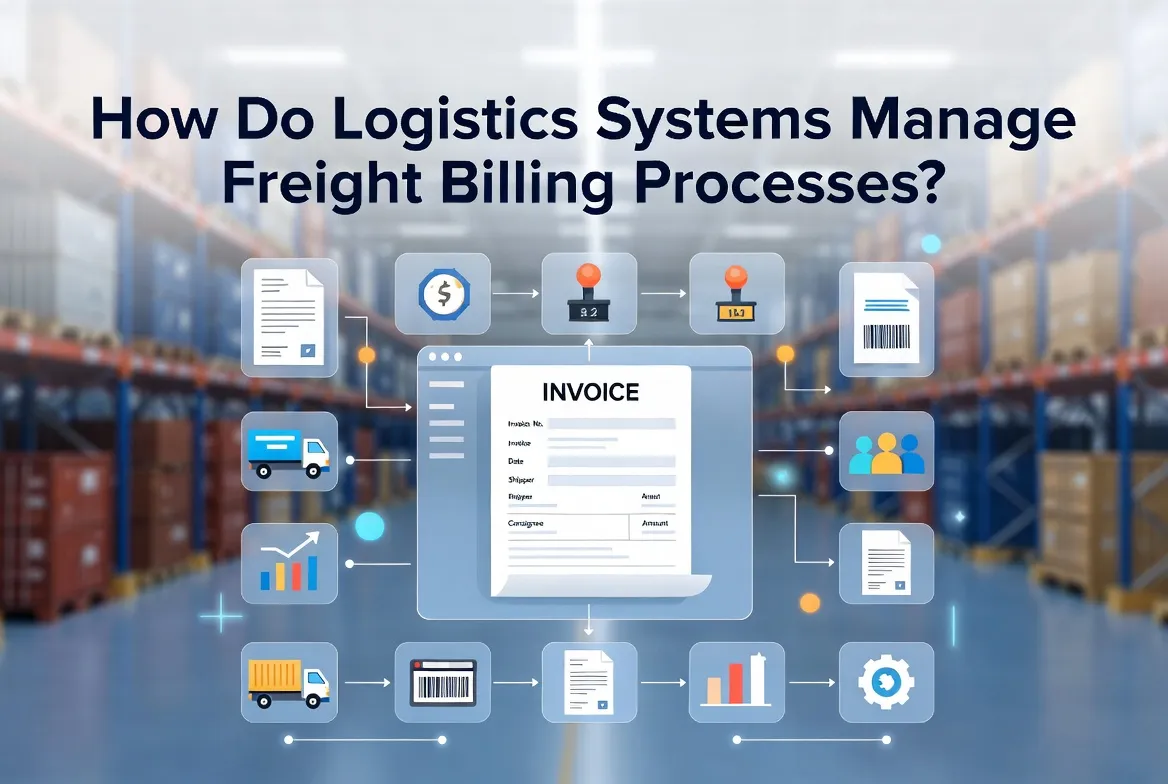
Billing is calculated and generated manually
This process is:
Labor-intensive
Prone to delays and errors
Difficult to scale
Automated Logistics Systems Workflow
In automated systems:
Shipment orders are created within a centralized platform
Workflows are triggered automatically
Tasks are assigned to relevant roles
Tracking data is integrated and updated in real time
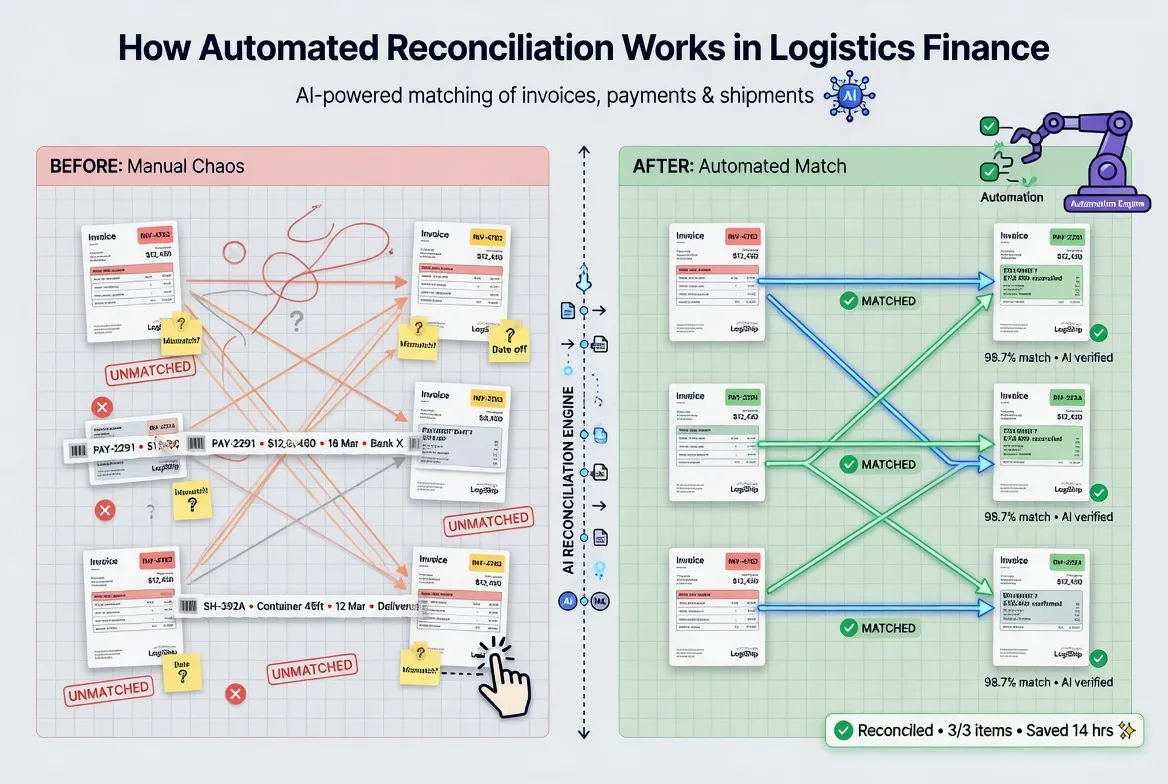
Billing and reconciliation are automated
Automation ensures that all processes are:
Structured
Connected
Efficient
Key Features / Key Capabilities
Automated logistics systems offer capabilities that replace manual processes:
Workflow automation
Standardizes and automates shipment processesMilestone-based tracking and visibility
Provides real-time updates across all shipment stagesMulti-role collaboration
Connects sales, operations, documentation, and financeCentralized data management
Eliminates data silos and ensures consistencyAI-powered data recognition
Reduces manual data entry from documentsAutomated billing and reconciliation
Ensures financial accuracy and efficiencySystem integration (API connectivity)
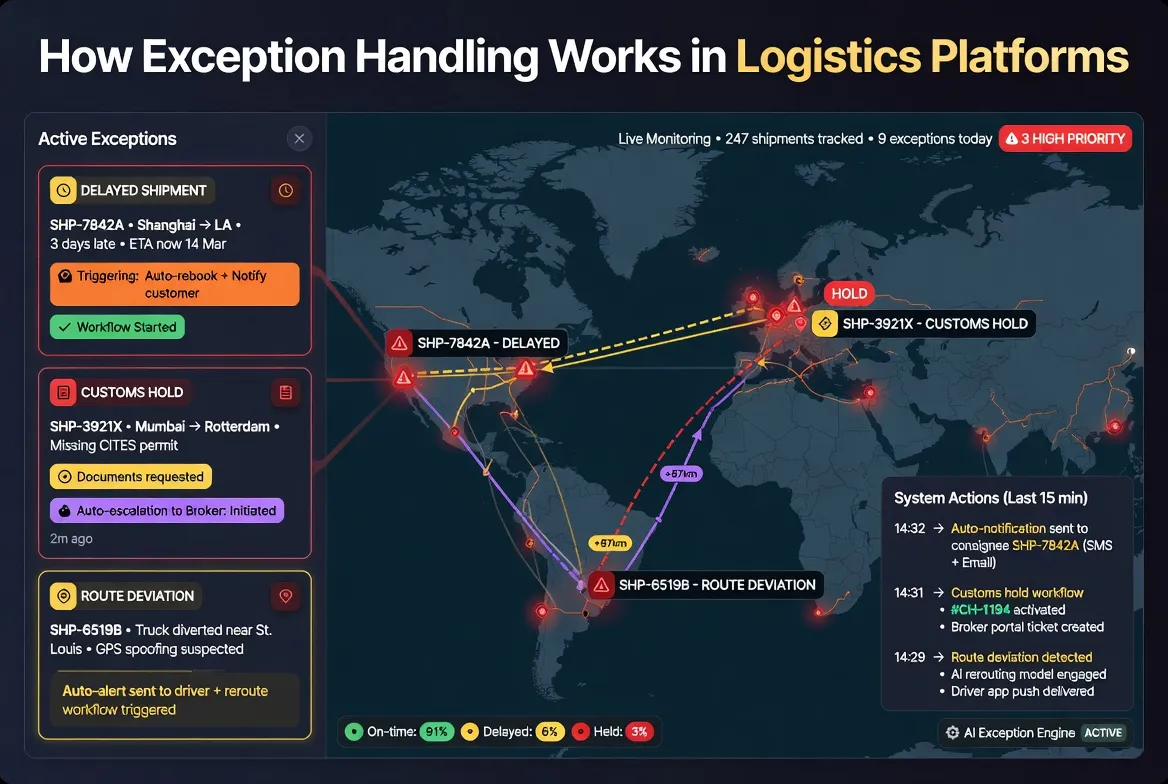
Connects with ERP, WMS, carriers, and eCommerce platformsException detection and alerts
Identifies and manages issues proactively
These features enable logistics companies to operate more effectively.
Benefits for Logistics Companies
Increased Efficiency
Reduces manual workload
Accelerates shipment processing
Improved Accuracy
Minimizes errors in data and financial calculations
Ensures consistent operations
Enhanced Visibility
Provides a single source of truth for shipment status
Enables proactive decision-making
Better Collaboration
Aligns teams and partners within one system
Reduces communication gaps
Stronger Financial Control
Automates billing and reconciliation
Improves profitability tracking
Scalability
Supports growth without increasing operational complexity
Automation transforms logistics operations into a streamlined, data-driven process.
Best Practices / Use Cases
Transitioning from Manual to Automated Systems
Logistics companies should:
Identify key manual bottlenecks
Implement systems gradually
Train teams on standardized workflows
Freight Forwarding Operations
Automate:
Shipment lifecycle management
Documentation processes
Financial workflows
Cross-Border eCommerce Logistics
Handle:
High shipment volumes
Real-time tracking
Multi-partner coordination
Multi-Branch Global Operations
Enable:
Standardized processes across regions
Centralized data management
Customer Experience Improvement
Provide:
Real-time tracking
Transparent communication
Self-service portals
Conclusion
The comparison between manual logistics operations and automated logistics systems highlights a clear shift toward digital transformation. While manual processes may work for small-scale operations, they quickly become inefficient and error-prone as business grows.
Automated logistics systems provide the structure, visibility, and scalability needed to manage modern logistics operations effectively. Companies that embrace automation are better positioned to improve efficiency, reduce costs, and deliver higher service quality.
Frequently Asked Questions
What is the difference between manual and automated logistics operations?
Manual operations rely on human-driven processes, while automated systems use digital platforms to manage workflows and data automatically.
Why are automated logistics systems better?
They improve efficiency, accuracy, visibility, and scalability, enabling better operational performance.
Can small logistics companies benefit from automation?
Yes, automation helps small companies scale operations and compete with larger players.
What processes can be automated in logistics?
Processes such as shipment management, tracking, documentation, billing, and reconciliation can be automated.
How does automation improve customer experience?
It provides real-time visibility, faster communication, and more reliable service.
About WallTech
WallTech provides digital logistics solutions that help logistics companies transition from manual operations to automated systems. Its platforms enable end-to-end logistics collaboration, connecting teams and partners within a unified workflow. With real-time shipment visibility, milestone-based tracking, and automation capabilities such as AI-driven data recognition, automated billing, and reconciliation, WallTech supports logistics providers in improving efficiency, reducing operational complexity, and scaling their global operations.
If you're exploring ways to improve your logistics operations, feel free to connect with us to learn more about our solutions and system capabilities.