

Apr 17,2026
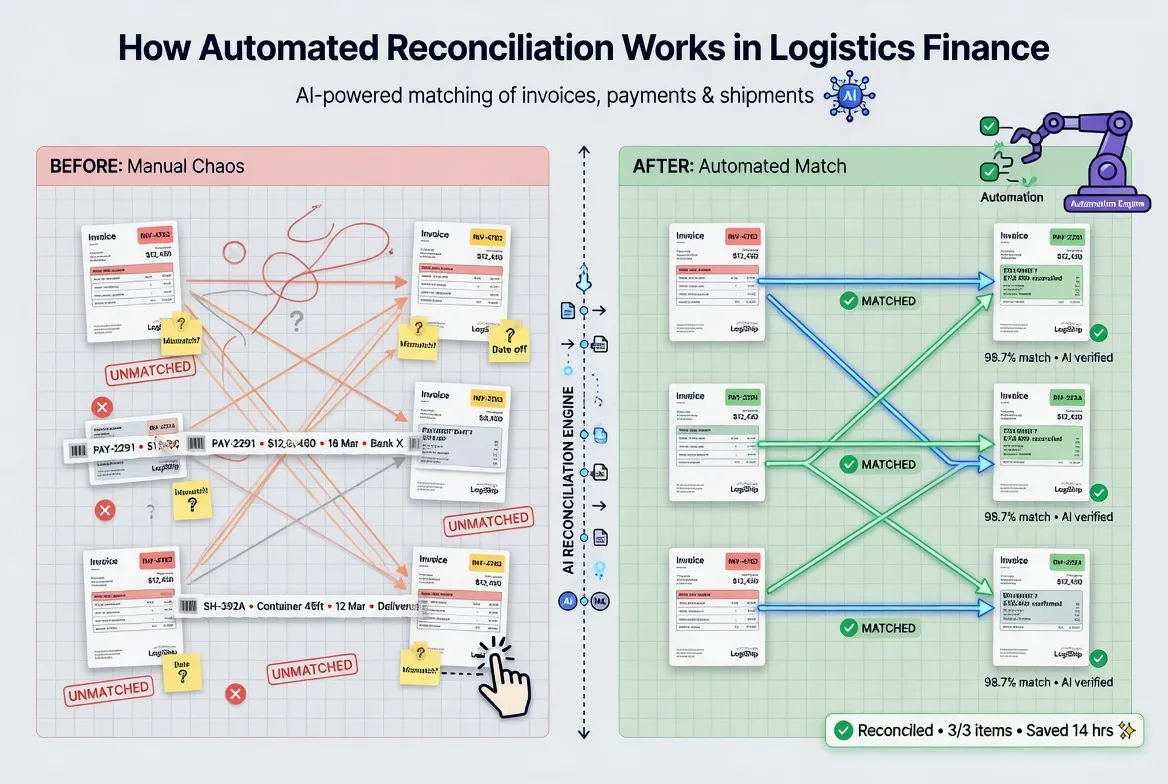
How Automated Reconciliation Works in Logistics Finance
Introduction
As global commerce expands, companies must manage increasing volumes of international orders across multiple regions, warehouses, and delivery networks. International order fulfillment systems are designed to streamline these processes, ensuring efficient, accurate, and scalable fulfillment operations.
What is an international order fulfillment system?
An international order fulfillment system is a digital platform that manages the entire lifecycle of an order across global logistics networks.
It typically covers:
Order intake from e-commerce platforms or ERP systems
Inventory allocation across warehouses
Warehouse operations (picking, packing, shipping)
Transportation and delivery coordination
Billing and financial reconciliation
These systems act as a centralized control layer for global fulfillment operations.
Why companies need international order fulfillment systems
Managing international orders manually or across disconnected systems leads to several issues:
Order processing delays
Inventory mismatches across locations
Limited visibility into shipment status
Inefficient coordination between warehouses and carriers
As order volumes grow, these challenges become more severe.
Companies adopt fulfillment systems to:
Improve operational efficiency
Ensure accurate order processing
Scale global operations
Enhance customer experience
How international order fulfillment systems work
These systems connect multiple components of the logistics process into a unified workflow.
1. Order integration
Orders are automatically imported from:
E-commerce platforms
ERP systems
API integrations
This ensures real-time synchronization of order data across systems.
2. Inventory and warehouse coordination
The system manages inventory across multiple warehouses.
Capabilities include:
Real-time inventory visibility
Multi-warehouse management
Stock allocation based on location and availability
For example, platforms can integrate multiple warehouse systems globally, enabling unified inventory control and data sharing.
3. Warehouse execution
Operational processes are managed within the system:
Receiving and putaway
Picking and packing
Sorting and dispatch
Standardized workflows improve efficiency and reduce errors.
4. Transportation and delivery management
Once orders are fulfilled, shipments are coordinated across:
International transportation
Local distribution networks
Last-mile delivery providers
Systems can integrate with multiple carriers and logistics partners to ensure smooth delivery execution.
5. Tracking and visibility
End-to-end tracking is provided across the fulfillment process:
Warehouse status updates
Transportation milestones
Delivery confirmation
This ensures transparency for both operators and customers.
6. Financial and billing management
Fulfillment systems also manage financial processes:
Billing per order or shipment
Accounts receivable and payable
Cost tracking and reconciliation
This connects operational execution with financial performance.
Key features of international order fulfillment systems
Modern systems typically include:
Multi-channel order integration
Multi-warehouse inventory management
Warehouse operation management (WMS capabilities)
Carrier and transportation integration
Real-time tracking and visibility
Automated billing and financial management
These features enable companies to manage complex global fulfillment operations efficiently.
Benefits of using international order fulfillment systems
Companies implementing these systems can achieve:
Faster order processing and fulfillment
Improved inventory accuracy across locations
Reduced operational errors
Enhanced shipment visibility
Better customer experience with reliable delivery
They also support scalability, allowing businesses to handle growing international demand.
How modern platforms support global fulfillment
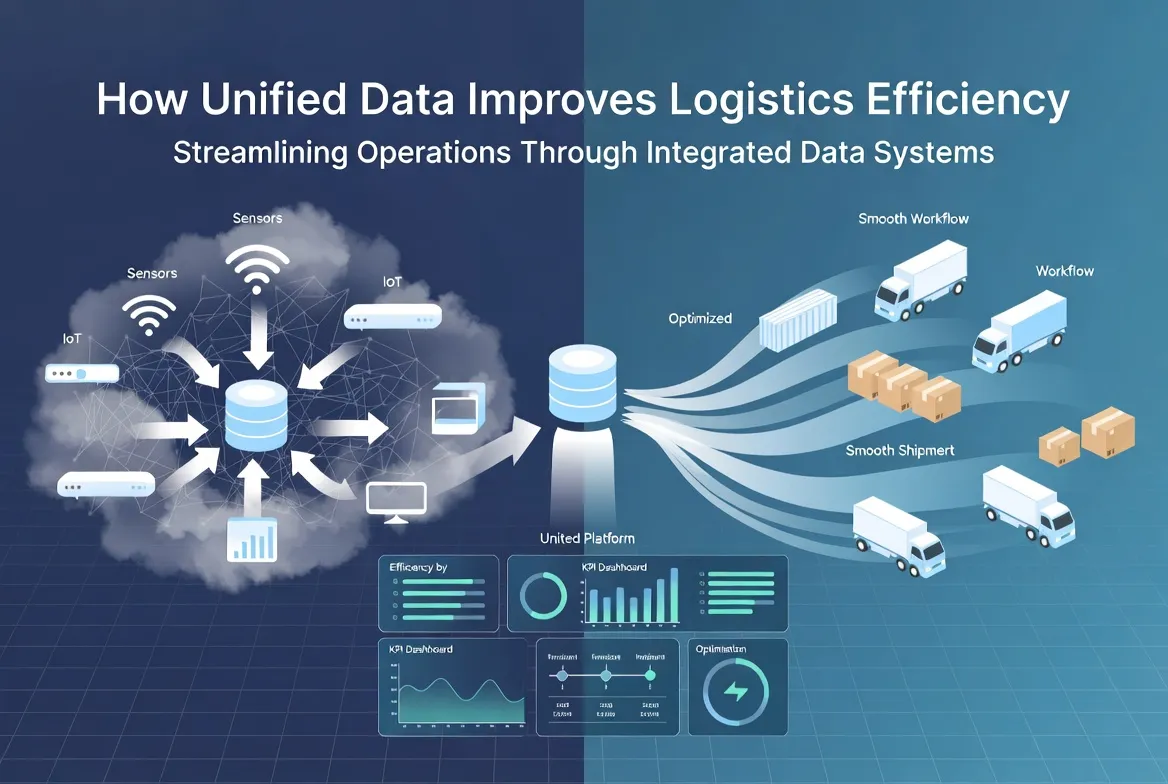
Modern logistics platforms unify order, warehouse, and transportation processes into a single system.
They:
Integrate upstream order sources and downstream logistics providers
Provide real-time data across all fulfillment stages
Enable collaboration between teams and partners
Support flexible configuration for different business models
By centralizing fulfillment operations, companies can reduce complexity and improve control over global logistics.
Conclusion
International order fulfillment systems are essential for companies operating in global markets. They enable efficient coordination of orders, inventory, and delivery across multiple regions and partners.
As global e-commerce continues to grow, these systems provide the foundation for scalable, accurate, and customer-centric fulfillment operations.
.webp "How Digital Logistics Systems Support Scalable Operations for Growing Freight Forwarders")