Apr 02,2026
Why Milestone-Based Tracking Matters for Global Logistics
Introduction
Data integration improves supply chain visibility by connecting multiple systems, data sources, and stakeholders into a unified platform, enabling real-time access to accurate and consistent logistics information. By eliminating data silos and synchronizing information across operations, companies can achieve end-to-end visibility across shipments, processes, and partners.
In modern global logistics—where data is fragmented across carriers, warehouses, customs systems, and internal platforms—data integration is essential for gaining control, improving decision-making, and ensuring operational transparency.
What is Data Integration in Supply Chain
Data integration in supply chain refers to the process of combining data from different systems, platforms, and stakeholders into a centralized environment where it can be accessed, analyzed, and used in real time.
This includes integrating:
Internal systems (ERP, WMS, TMS)
External partner systems (carriers, agents, customs platforms)
Data from IoT devices and tracking systems
Documents and operational data
The goal is to create a single source of truth that provides consistent and accurate information across the entire supply chain.
Why Data Integration Matters
1. Eliminating Data Silos
In many logistics operations, data is scattered across different systems and departments.
This leads to:
Inconsistent information
Duplicate data entry
Delayed updates
Data integration breaks down these silos, ensuring that all stakeholders work with the same data.
2. Enabling End-to-End Visibility
Without integrated data, it is difficult to track shipments across multiple stages and systems.
Data integration enables:
Unified tracking across all transport modes
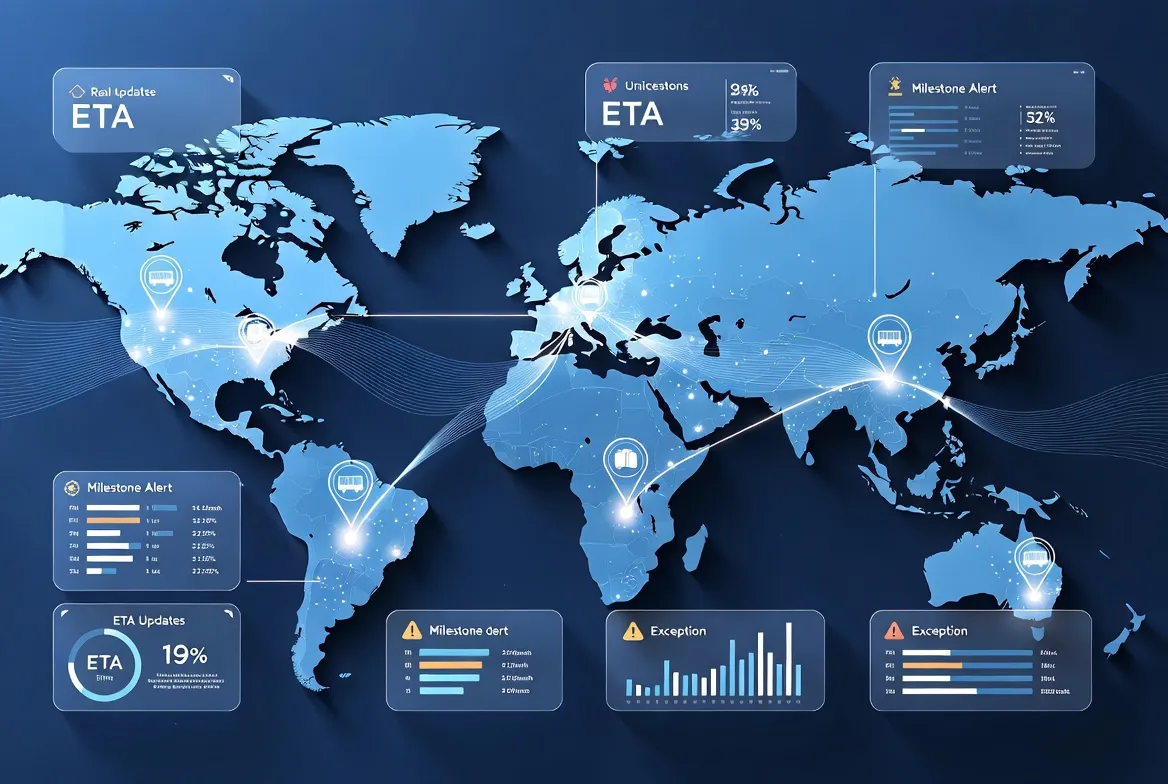
Milestone-based visibility
Real-time updates across the supply chain
3. Improving Decision-Making
Accurate and timely data allows companies to:
Identify delays and risks early
Optimize operations
Make informed decisions
4. Enhancing Collaboration
When all stakeholders have access to the same data, collaboration becomes more efficient and transparent.
5. Supporting Automation
Automation relies on structured and connected data. Without integration, automated workflows cannot function effectively.
How Data Integration Works
Data integration in logistics platforms is achieved through a combination of APIs, data pipelines, and standardized data models.
Step 1: Data Collection
Data is collected from multiple sources, including:
Internal business systems
External partners and carriers
Tracking devices and platforms
Documents and files
Step 2: Data Transformation
The collected data is standardized and transformed into a consistent format, ensuring compatibility across systems.
Step 3: Data Synchronization
Data is synchronized across all connected systems in real time or near real time.
This ensures that updates in one system are reflected across all platforms.
Step 4: Centralized Data Management
All integrated data is stored and managed within a centralized platform, providing a unified view of operations.
Step 5: Data Utilization
The integrated data is used for:
Real-time tracking and monitoring
Workflow automation
Reporting and analytics
Decision-making
Key Features / Key Capabilities
1. API-Based Integration
Seamless connectivity with external systems
Real-time data exchange
Scalable integration architecture
2. Unified Data Model
Standardized data structure
Consistent data across systems
Reduced data discrepancies
3. Real-Time Data Synchronization
Instant updates across platforms
Accurate and up-to-date information
Improved operational responsiveness
4. End-to-End Visibility
Unified shipment tracking
Milestone-based tracking
Single timeline view across all logistics stages
5. Multi-Role Collaboration
Shared data access across departments
Coordination with external partners
Role-based permissions for data security
6. Workflow Automation
Automated processes triggered by data events
Reduced manual intervention
Consistent execution of workflows
7. Data Analytics and Reporting
Performance monitoring
Operational insights
Data-driven decision-making
Benefits for Logistics Companies
1. Improved Visibility
Integrated data provides a complete and accurate view of supply chain operations.
2. Reduced Operational Errors
Eliminating duplicate data entry and inconsistencies reduces the risk of errors.
3. Faster Decision-Making
Real-time data enables quicker responses to issues and opportunities.
4. Enhanced Collaboration
All stakeholders operate with the same information, improving coordination.
5. Increased Efficiency
Automation and streamlined processes improve overall operational efficiency.
Best Practices / Use Cases
1. Freight Forwarding Operations
Data integration connects booking, operations, documentation, and finance into a unified workflow.
2. Cross-Border eCommerce Logistics
Integration of order management systems, warehouses, and last-mile carriers enables seamless fulfillment and tracking.
3. Multi-Partner Collaboration
Logistics companies can coordinate with carriers, agents, and customs systems through integrated data platforms.
4. Financial Management
Integrated data ensures accurate billing, cost tracking, and reconciliation.
Best Practices
Implement API-based integrations for scalability
Standardize data formats across systems
Ensure real-time synchronization where possible
Integrate all key stakeholders into the platform
Use integrated data to drive automation and analytics
Conclusion
Data integration is a foundational capability for improving supply chain visibility in modern logistics operations. By connecting systems, standardizing data, and enabling real-time synchronization, companies can achieve end-to-end transparency and better control over their operations.
As logistics networks become more complex, organizations that prioritize data integration will be better positioned to improve efficiency, reduce errors, and deliver high-quality service.
Frequently Asked Questions
What is data integration in supply chain?
It is the process of combining data from multiple systems and sources into a unified platform for real-time access and analysis.
How does data integration improve visibility?
It provides a single source of truth, enabling real-time tracking and consistent information across all logistics stages.
Why is data integration important in logistics?
It eliminates data silos, improves decision-making, and supports automation and collaboration.
What are the benefits of data integration?
Benefits include improved visibility, reduced errors, faster decision-making, and increased operational efficiency.
Who needs data integration in logistics?
Freight forwarders, 3PL providers, and cross-border eCommerce logistics companies benefit from integrated data systems.
About WallTech
WallTech provides digital logistics solutions that enable seamless data integration across global supply chain operations. Its platforms connect internal systems, external partners, and logistics processes into a unified environment, supporting real-time visibility and efficient collaboration.
With capabilities such as end-to-end tracking, milestone-based visibility, workflow automation, and integrated financial management, WallTech helps logistics companies eliminate data silos and improve operational efficiency. By enabling structured data flow and system connectivity, organizations can achieve greater transparency and scalability in their logistics operations.
If you're exploring ways to improve your logistics operations, feel free to connect with us to learn more about our solutions and system capabilities.
.webp "How Freight Forwarding Operations Improve Logistics Operations")