

May 15,2026
How Do Digital Systems Support Global Supply Chain Operations?
Introduction
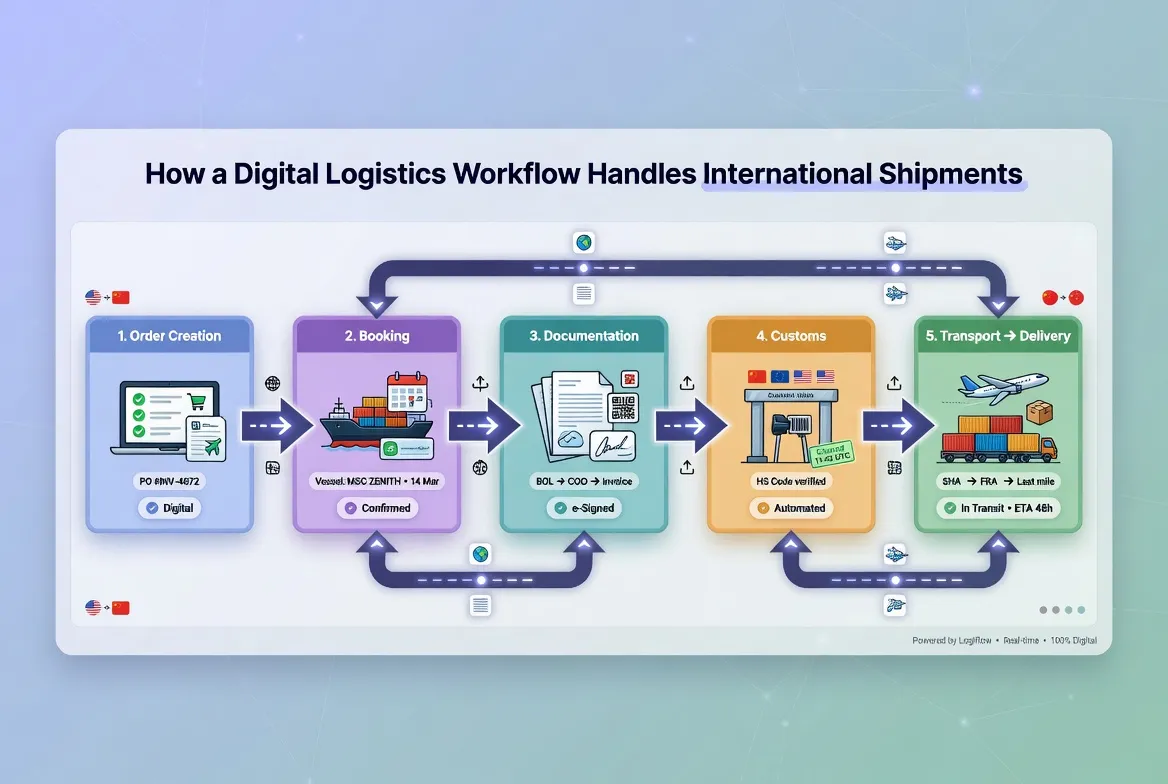
In global logistics operations, trade documentation is one of the most critical yet complex components. From bills of lading and commercial invoices to customs declarations and shipping instructions, every shipment depends on accurate, timely, and compliant documentation. However, traditional document handling is often manual, fragmented, and prone to delays.
Modern logistics platforms are transforming trade documentation systems by digitizing, standardizing, and integrating document workflows into a unified operational environment. This shift enables companies to improve efficiency, reduce errors, and ensure compliance across international supply chains.
What Is a Trade Documentation System in Logistics
A trade documentation system is a digital solution that manages the creation, processing, storage, and exchange of shipping-related documents throughout the logistics lifecycle.
These systems typically handle:
Bills of lading (BL)
Commercial invoices and packing lists
Customs declarations
Shipping instructions
Certificates and compliance documents
Instead of relying on emails, spreadsheets, and manual paperwork, logistics platforms centralize these documents within structured workflows. In modern systems, documents are generated from operational data, ensuring consistency and reducing duplication.
For example, logistics platforms can automatically generate shipping documents based on order and shipment data, eliminating the need for repeated manual input and ensuring alignment across all stakeholders.
Why Trade Documentation Systems Are Important
Trade documentation directly impacts operational efficiency, regulatory compliance, and customer satisfaction.
1. Ensuring Compliance
International logistics involves multiple regulatory frameworks. Missing or incorrect documents can lead to customs delays, penalties, or shipment rejections.
2. Reducing Operational Errors
Manual document handling increases the risk of inconsistencies across documents. A centralized system ensures that all documents are generated from the same data source.
3. Improving Efficiency
Document preparation and verification can be time-consuming. Digital systems automate these processes, significantly reducing turnaround time.
4. Enhancing Collaboration
Multiple parties—including shippers, forwarders, carriers, and customs brokers—require access to documentation. A unified platform enables seamless document sharing and visibility.
How Logistics Platforms Deliver Trade Documentation Systems
Modern logistics platforms deliver trade documentation capabilities through a combination of automation, integration, and workflow management.
1. Data-Driven Document Generation
Documents are automatically generated based on shipment data, reducing manual input and ensuring consistency.
2. Workflow-Based Document Management
Platforms structure document processes into workflows, including creation, review, approval, and release. This ensures accountability and process control.
3. Integration with External Systems
Logistics platforms connect with customs systems, carriers, and third-party services to exchange documentation electronically. This reduces manual submissions and accelerates processing.
4. Centralized Document Repository
All documents are stored in a unified system, allowing users to access and manage them in one place.
5. Real-Time Updates and Tracking
As shipment data changes, related documents can be updated dynamically, ensuring accuracy throughout the shipment lifecycle.
For example, integrated logistics systems can automatically synchronize shipment data and documents across different operational stages, enabling consistent document management across the entire supply chain.
Key Features of Trade Documentation Platforms
Effective trade documentation systems typically include the following features:
1. Customizable Document Templates
Users can configure templates for different document types, ensuring compliance with various trade requirements.
2. Automated Data Population
Document fields are populated automatically from shipment data, reducing manual work and errors.
3. Multi-Format Document Support
Platforms support various formats such as PDF, electronic documents, and structured data formats.
4. Approval and Version Control
Document workflows include approval processes and version tracking to ensure accuracy and accountability.
5. Integration Capabilities
Systems can integrate with ERP, WMS, customs systems, and carrier platforms to enable seamless data exchange.
6. Audit Trails and Compliance Logs
Detailed logs track document changes and user actions, supporting compliance and operational transparency.
Benefits of Using Trade Documentation Systems
Implementing a digital trade documentation system delivers measurable benefits across logistics operations:
1. Faster Processing Times
Automation reduces document preparation time, enabling quicker shipment execution.
2. Improved Accuracy
Centralized data reduces inconsistencies and minimizes errors across documents.
3. Enhanced Visibility
All stakeholders can access document status and content in real time.
4. Reduced Operational Costs
Less manual work and fewer errors translate into lower administrative costs.
5. Better Customer Experience
Accurate and timely documentation ensures smoother shipments and improved service reliability.
6. Scalable Operations
As shipment volumes grow, digital systems can handle increased document workloads without proportional increases in manpower.
Conclusion
Trade documentation is a foundational element of global logistics operations. Traditional manual processes are no longer sufficient to support the speed, scale, and complexity of modern supply chains.
Logistics platforms deliver advanced trade documentation systems by integrating document workflows with operational data, enabling automation, visibility, and compliance. As global trade continues to expand, companies that adopt digital documentation solutions will be better positioned to improve efficiency, reduce risks, and enhance their competitive advantage.

.webp "What Is a Freight Profit Management System?")