Apr 27,2026
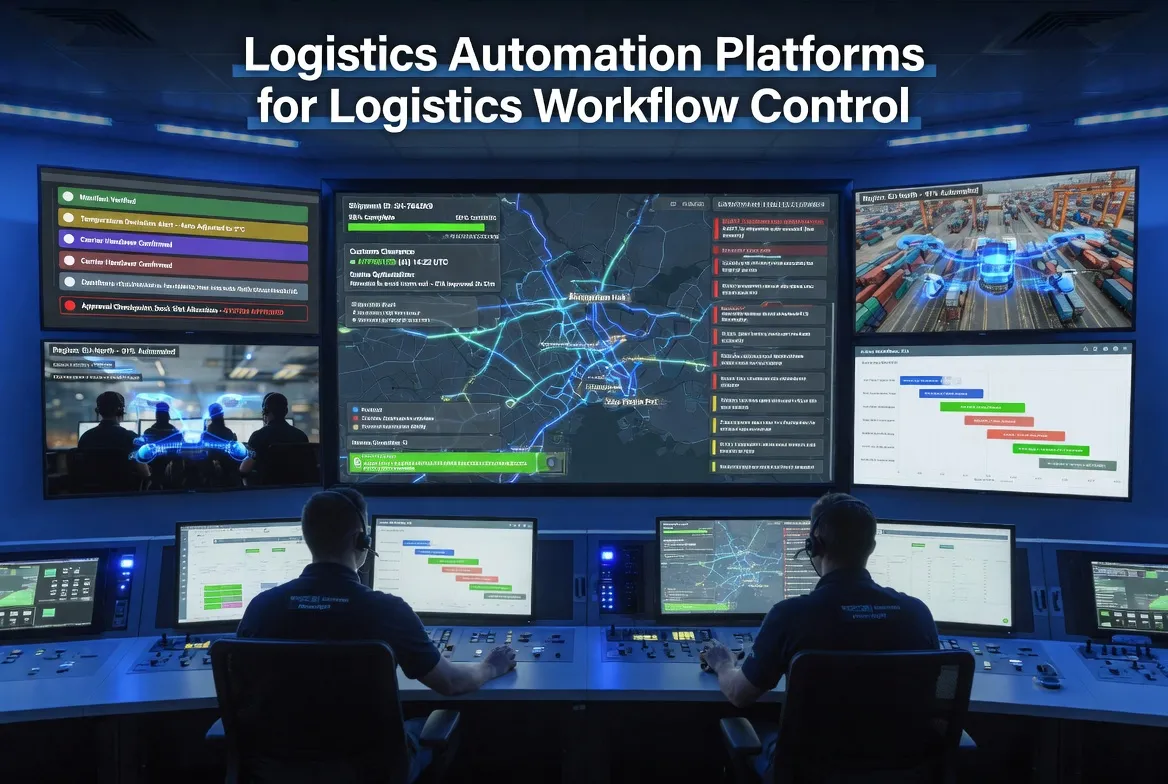
Logistics Automation Platforms for Logistics Workflow Control
Introduction
Customs clearance management software is a digital system designed to manage, automate, and streamline the process of preparing, submitting, and tracking customs declarations for international shipments. It helps logistics companies ensure regulatory compliance, reduce manual errors, and coordinate documentation across multiple stakeholders involved in cross-border trade.
In today’s global logistics environment—where shipments move across multiple countries with varying regulations—this type of software has become essential for freight forwarders, 3PLs, and cross-border eCommerce operators seeking efficiency and compliance.
What is Customs Clearance Management Software
Customs clearance management software is a specialized logistics solution that supports the end-to-end handling of customs-related processes, including document preparation, declaration submission, compliance checks, and status tracking.
It typically integrates with customs systems, logistics platforms, and internal operational tools to provide a centralized environment for managing regulatory workflows.
Key components include:
Customs declaration data management
HS code classification and validation
Duty and tax calculation
Document preparation (commercial invoice, packing list, etc.)
Submission to customs authorities or brokers
Clearance status tracking
Unlike manual or fragmented approaches, the software standardizes workflows and ensures that all required data is complete and accurate before submission.
Why Customs Clearance Management Software Matters
Customs clearance is one of the most critical—and risk-prone—stages in international logistics. Errors, delays, or non-compliance can lead to shipment holds, penalties, or even cargo rejection.
Key challenges without a system include:
Manual documentation errors leading to compliance risks
Fragmented communication between forwarders, brokers, and customs agents
Lack of visibility into clearance status
Delayed shipments due to missing or incorrect data
Difficulty managing multiple country regulations
Customs clearance management software addresses these issues by introducing structured workflows, real-time visibility, and automated validation.
For logistics companies operating across multiple markets, compliance is not just a regulatory requirement—it is a core part of service reliability and customer satisfaction.
How Customs Clearance Management Software Works
The software typically follows a structured, milestone-based workflow that aligns with the lifecycle of a shipment.
1. Data Collection and Validation
Shipment data is collected from upstream systems such as order management or freight forwarding platforms.
Product details
HS codes
Shipper and consignee information
Invoice values
AI-powered data recognition tools can extract information from documents, reducing manual input.
2. Document Preparation
The system generates required customs documents automatically based on predefined templates and rules.
Commercial invoices
Packing lists
Certificates
All documents are stored in a centralized platform for easy access and sharing.
3. Compliance Checks
Before submission, the system validates:
Data completeness
Regulatory requirements
Country-specific rules
This reduces the risk of rejection or delays.
4. Submission and Coordination
Declarations are submitted electronically to customs authorities or through brokers.
At this stage, multi-role collaboration becomes critical:
Forwarders
Customs brokers
Warehouse teams
Clients
All parties can access the same data and status through a unified system, reducing communication gaps.
5. Clearance Tracking and Exception Handling
The system provides real-time updates on clearance status.
Pending
Approved
Inspection required
Released
Exception alerts notify teams of issues, enabling faster resolution.
Key Features / Key Capabilities
Modern customs clearance management software includes:
1. End-to-End Visibility
Unified timeline for shipment and clearance milestones
Real-time tracking of customs status
Centralized dashboard for operations
2. Workflow Automation
Automated document generation
Rule-based compliance validation
Exception alerts and task triggers
3. Multi-Role Collaboration
Shared access for internal teams and external partners
Role-based permissions
Seamless coordination across upstream and downstream stakeholders
4. AI Data Recognition
OCR-based extraction from invoices and documents
Reduced manual data entry
Improved accuracy
5. Integration Capabilities
API integration with customs systems and carriers
Connection with freight forwarding and warehouse systems
Data synchronization across platforms
6. Financial and Duty Management
Automated duty and tax calculation
Integration with billing and reconciliation processes
Benefits for Logistics Companies
Implementing customs clearance management software delivers measurable improvements:
Operational Efficiency
Reduced manual workload
Faster document processing
Standardized workflows
Improved Compliance
Lower risk of penalties and delays
Accurate and complete declarations
Consistent adherence to regulations
Enhanced Visibility
Real-time tracking of clearance status
Proactive issue management
Better customer communication
Stronger Collaboration
Unified platform for all stakeholders
Reduced email and manual coordination
Clear accountability across teams
Scalability
Ability to handle increasing shipment volumes
Adaptation to multiple countries and regulations
Best Practices / Use Cases
1. Freight Forwarders Managing Multi-Country Shipments
Use centralized systems to manage different regulatory requirements across regions while maintaining a consistent workflow.
2. Cross-Border eCommerce Logistics
Automate high-volume declaration processes to handle thousands of small parcels efficiently.
3. 3PLs Coordinating Multiple Partners
Enable seamless collaboration between warehouses, carriers, and customs brokers through shared platforms.
4. Companies Transitioning from Manual Processes
Replace spreadsheets and email-based workflows with structured systems to reduce errors and improve speed.
Conclusion
Customs clearance management software plays a critical role in modern logistics by ensuring compliance, improving efficiency, and enabling real-time coordination across the supply chain.
As global trade becomes more complex, logistics companies need structured, automated systems to manage customs processes reliably.
By integrating visibility, automation, and collaboration into a single platform, these solutions help transform customs clearance from a bottleneck into a streamlined, controlled process.
Frequently Asked Questions
What is customs clearance management software in logistics?
It is a system that automates and manages the preparation, submission, and tracking of customs declarations to ensure compliance and efficiency in cross-border shipping.
How does customs clearance software work?
It collects shipment data, generates documents, validates compliance, submits declarations, and tracks clearance status through a structured workflow.
Why is customs clearance important?
Customs clearance ensures that shipments comply with import/export regulations. Delays or errors can result in penalties, shipment holds, or delivery disruptions.
What are the benefits of using customs clearance software?
It reduces manual errors, improves compliance, enhances visibility, and enables faster processing of international shipments.
Who uses customs clearance management software?
Freight forwarders, 3PL providers, customs brokers, and cross-border eCommerce logistics companies commonly use it.
About WallTech
WallTech provides digital logistics solutions designed to support end-to-end supply chain operations for freight forwarders and logistics service providers. Its platforms enable multi-role collaboration across global partners, real-time shipment visibility through milestone-based tracking, and workflow automation that reduces manual processes in operations and finance. By integrating data across systems and standardizing workflows, WallTech helps logistics companies improve operational efficiency, enhance compliance management, and scale their business in complex international environments.
If you're exploring ways to improve your logistics operations, feel free to connect with us to learn more about our solutions and system capabilities.