Mar 23,2026
How Modern Platforms Enable Automated Shipment Coordination
Introduction
Logistics system integration refers to the process of connecting multiple logistics-related systems—such as ERP, WMS, TMS, and external platforms—into a unified digital environment where data flows seamlessly across operations. It enables logistics companies to eliminate data silos, automate workflows, and achieve real-time visibility across the entire supply chain.
In today’s global logistics landscape, where freight forwarders, 3PLs, and eCommerce logistics providers rely on multiple tools and partners, system integration is no longer optional—it is essential for operational efficiency and scalability.
What is Logistics System Integration
Logistics system integration is the technical and operational process of linking different software systems and platforms to enable synchronized data exchange and coordinated workflows.
These systems typically include:
Internal systems: ERP, WMS, TMS, finance systems
External platforms: eCommerce platforms, carrier systems, customs systems
Partner systems: suppliers, overseas agents, warehouses
The goal is to create a single source of truth, where all stakeholders operate on consistent, real-time data.
For example, when an order is created in an ERP system, it can automatically flow into a warehouse system for fulfillment and into a transportation system for shipment planning—without manual input.
Why Logistics System Integration Matters
Without integration, logistics operations often face:
Data silos: Information stored across disconnected systems
Manual processes: Repetitive data entry across platforms
Limited visibility: No unified tracking of shipments
Inefficient collaboration: Poor coordination between departments and partners
System integration solves these challenges by enabling:
Real-time data synchronization across systems
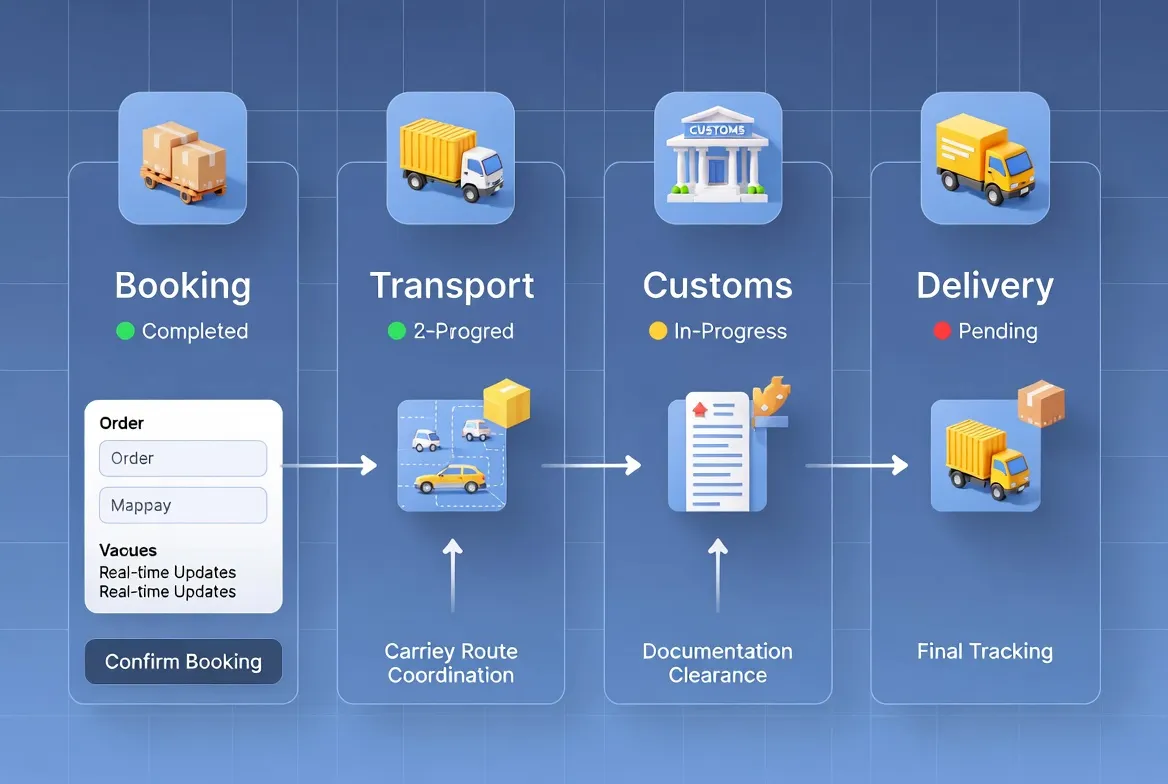
End-to-end shipment visibility through unified timelines
Seamless collaboration between internal teams and external partners
Reduced operational errors through automation
In global logistics operations involving multiple countries, carriers, and stakeholders, integration becomes the backbone of efficient execution.
How Logistics System Integration Works
Logistics system integration is typically achieved through technologies such as APIs, EDI, and middleware platforms.
1. Data Connection
Systems are connected using:
APIs (Application Programming Interfaces)
EDI (Electronic Data Interchange)
File-based integrations (CSV, XML, JSON)
These methods allow systems to exchange structured data.
2. Data Mapping and Standardization
Different systems use different data formats. Integration requires:
Field mapping (e.g., order ID, shipment status)
Data normalization
Validation rules
3. Workflow Synchronization
Integrated systems trigger actions automatically:
Order creation triggers warehouse processing
Shipment updates trigger customer notifications
Financial data flows into billing systems
4. Real-Time or Scheduled Sync
Data can be:
Real-time (instant updates)
Batch-based (scheduled intervals)
Modern logistics platforms increasingly rely on real-time integration to support dynamic operations.
Key Features of Logistics System Integration
A well-integrated logistics system typically includes:
1. Unified Data Platform
Centralized data across all systems
Single dashboard for operations
2. Multi-System Connectivity
Integration with ERP, WMS, TMS, and carrier systems
Support for eCommerce platforms and customs systems
3. End-to-End Visibility
Milestone-based shipment tracking
Unified timeline across all transport stages
4. Workflow Automation
Automated order processing
Automatic status updates and notifications
5. Data Accuracy and Consistency
Elimination of duplicate data entry
Reduced human error
6. Scalable Integration Architecture
Ability to add new partners and systems easily
For example, modern platforms can integrate multiple warehouse systems globally to enable seamless data sharing and coordinated operations across locations .
Benefits for Logistics Companies
Logistics system integration delivers measurable business benefits:
1. Improved Operational Efficiency
Reduced manual work
Faster order processing
2. Enhanced Collaboration
Multi-role coordination across departments
Real-time communication with partners
3. Better Visibility
End-to-end shipment tracking
Real-time status updates
4. Cost Reduction
Lower labor costs
Fewer operational errors
5. Faster Decision-Making
Access to real-time data
Improved planning and forecasting
6. Scalable Growth
Easily onboard new customers, partners, and regions
Best Practices / Use Cases
1. Freight Forwarding Operations
Integrating order management, documentation, and tracking systems allows forwarders to manage shipments across multiple transport modes with a unified workflow.
2. Cross-Border eCommerce Logistics
Integration with eCommerce platforms enables automatic order ingestion, label generation, and tracking updates.
3. Multi-Warehouse Management
Connecting multiple WMS systems allows centralized inventory visibility and coordinated fulfillment across global warehouses.
4. Financial Integration
Linking operational data with finance systems enables automated billing, reconciliation, and profit analysis.
5. Partner Collaboration
Integrated platforms allow upstream and downstream partners to access shared data, improving coordination and reducing delays.
Conclusion
Logistics system integration is the foundation of modern logistics operations. By connecting fragmented systems into a unified digital ecosystem, companies can achieve real-time visibility, efficient collaboration, and scalable growth.
As logistics networks become more complex, integration is no longer a technical upgrade—it is a strategic requirement for staying competitive in global supply chains.
Frequently Asked Questions
What is logistics system integration?
Logistics system integration is the process of connecting different logistics software systems to enable seamless data exchange and coordinated workflows across operations.
How does logistics system integration work?
It works by using APIs, EDI, or middleware to connect systems, standardize data, and synchronize workflows across platforms in real time or scheduled intervals.
Why is logistics system integration important?
It eliminates data silos, reduces manual work, improves visibility, and enables better collaboration across internal teams and external partners.
What are the benefits of logistics system integration?
Key benefits include improved efficiency, real-time tracking, reduced errors, better decision-making, and scalability for growing logistics operations.
About WallTech
WallTech provides digital logistics solutions designed to connect and streamline global supply chain operations. Its platforms enable end-to-end collaboration across multiple roles and partners, ensuring that shipment data flows seamlessly between systems. With capabilities such as real-time visibility, milestone-based tracking, and workflow automation, WallTech helps logistics companies reduce manual processes and improve operational efficiency. Integrated financial functions, including automated billing and reconciliation, further enhance accuracy and control.
If you're exploring ways to improve your logistics operations, feel free to connect with us to learn more about our solutions and system capabilities.