Apr 23,2026
Digital Logistics Platforms for End-to-End Logistics Management
Introduction
Logistics software for high-volume e-commerce shipping is designed to manage large volumes of orders efficiently by automating order processing, optimizing workflows, integrating with multiple platforms, and providing real-time tracking across the shipment lifecycle. It works by centralizing operations, enabling system-driven coordination, and reducing reliance on manual processes.
As cross-border e-commerce continues to grow rapidly, logistics providers must handle thousands—or even millions—of daily shipments. Without specialized software, managing such scale becomes inefficient and error-prone.
What is Logistics Software for High-Volume E-Commerce Shipping
Logistics software for high-volume e-commerce shipping is a digital platform that supports the end-to-end management of large-scale order fulfillment operations.
It typically covers:
Order ingestion from multiple eCommerce platforms
Warehouse and fulfillment coordination
Carrier selection and label generation
Shipment tracking and status updates
Billing and financial reconciliation
Unlike traditional logistics systems, these platforms are built to handle:
high-frequency order processing
multi-channel order sources
rapid operational cycles
complex last-mile delivery networks
Why It Matters
High-volume e-commerce logistics introduces unique operational challenges:
1. Massive Order Volumes
E-commerce logistics providers often process:
thousands of orders per day
peak season surges (e.g., promotions, holidays)
batch shipments across multiple destinations
Manual processing cannot keep up with this scale.
2. Multi-Platform Order Fragmentation
Orders may come from:
marketplaces (Amazon, eBay, etc.)
independent online stores
ERP or OMS systems
Without integration, managing these sources becomes inefficient.
3. Complex Last-Mile Delivery Selection
Choosing the right carrier depends on:
destination
cost
delivery speed
service level agreements
Manual selection leads to inefficiencies and inconsistent service.
4. Limited Visibility
Without centralized systems, tracking becomes fragmented across carriers and regions, making it difficult to monitor shipment status.
5. High Error Rates
Manual processes increase the risk of:
incorrect shipping labels
inaccurate addresses
billing discrepancies
How It Works
Logistics software for high-volume e-commerce shipping operates through automation, integration, and centralized control.
1. Automated Order Ingestion
The system integrates with multiple eCommerce platforms and automatically imports orders.
eliminates manual order entry
standardizes order data
ensures real-time synchronization
2. Intelligent Order Processing
Orders are automatically processed based on predefined rules:
grouping and batching orders
assigning warehouses or fulfillment centers
selecting shipping methods
This enables efficient handling of large volumes.
3. Carrier Integration and Selection
The system integrates with multiple last-mile carriers and supports:
rate comparison
service selection based on rules (cost, speed, destination)
automatic label generation
This ensures optimal delivery decisions.
4. Warehouse and Fulfillment Coordination
Logistics software connects with warehouse operations to manage:
inbound and outbound processes
inventory movement
order picking and packing
This creates a seamless link between order intake and fulfillment.
5. Real-Time Tracking and Visibility
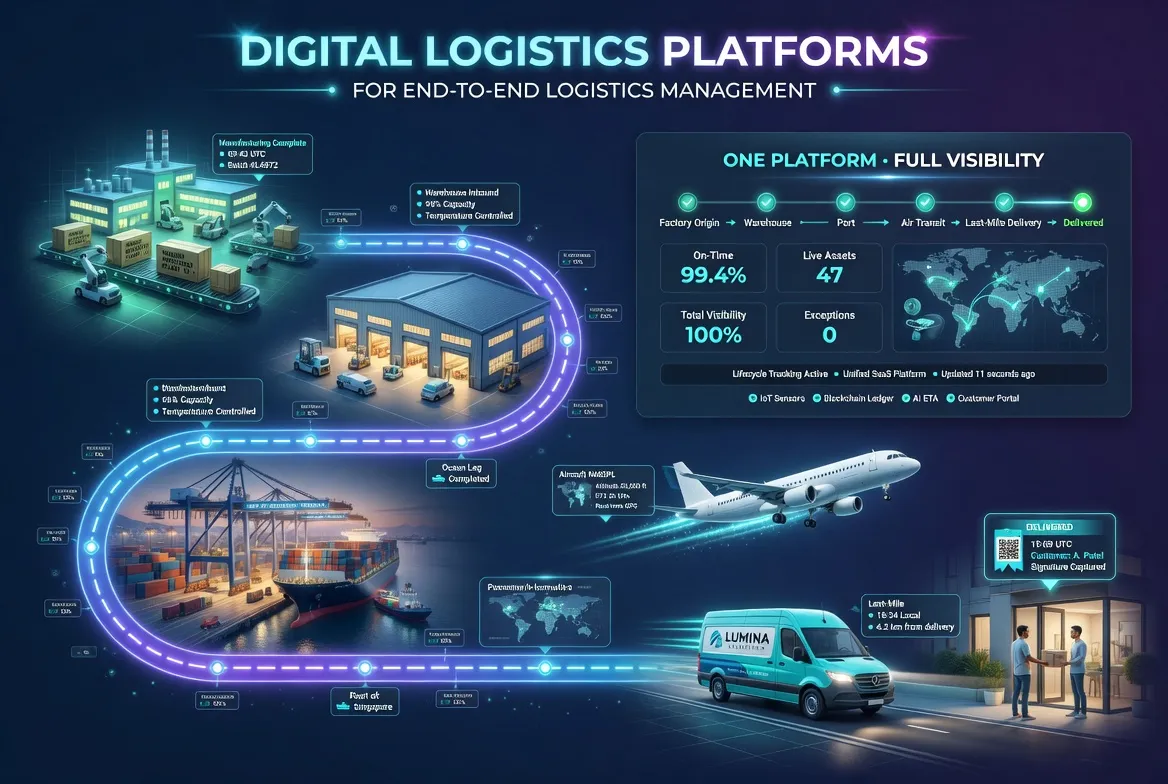
Tracking data from multiple carriers is aggregated into a unified system, providing:
end-to-end shipment visibility
milestone-based tracking across different stages
centralized monitoring of shipment status
6. Automated Billing and Financial Management
Financial processes are automated through:
rule-based billing generation
cost and revenue calculation per shipment
reconciliation of accounts
This improves financial accuracy and efficiency.
Key Features / Key Capabilities
Logistics software for high-volume e-commerce shipping typically includes:
Multi-platform integration
seamless connection with eCommerce platforms and systemsAutomated order processing
handling large volumes with minimal manual interventionCarrier management and routing logic
intelligent selection of last-mile delivery optionsEnd-to-end visibility
unified tracking across shipment stagesWorkflow automation
standardized processes for order handling and fulfillmentMulti-role collaboration
coordination between operations, warehouses, and partnersAutomated billing and reconciliation
accurate financial management
Benefits for Logistics Companies
1. Scalability
handle high order volumes without increasing manpower
support business growth and peak seasons
2. Operational Efficiency
faster order processing
reduced manual workload
streamlined workflows
3. Improved Accuracy
fewer errors in order data and labeling
consistent billing and tracking
4. Enhanced Visibility
real-time tracking across multiple carriers
centralized monitoring of operations
5. Better Customer Experience
faster processing and delivery
accurate tracking information
improved transparency
Best Practices / Use Cases
1. Cross-Border E-Commerce Logistics Providers
Manage international shipments across multiple regions and carriers with automated workflows and integrated tracking.
2. Fulfillment Centers and 3PL Providers
Use software to coordinate warehouse operations and high-volume order fulfillment efficiently.
3. Peak Season Management
Handle spikes in order volume during promotions or holidays without operational disruptions.
4. Multi-Carrier Logistics Operations
Optimize last-mile delivery by integrating and managing multiple carriers within a single system.
Best Practices for Implementation
integrate all major order sources and platforms
define clear routing and carrier selection rules
implement milestone-based tracking for visibility
automate high-frequency processes first
continuously optimize workflows based on data
Conclusion
Logistics software for high-volume e-commerce shipping enables logistics providers to efficiently manage large-scale operations in a fast-paced and complex environment. By automating order processing, integrating systems, and providing real-time visibility, these platforms support scalable and reliable logistics operations.
As e-commerce continues to grow globally, adopting such systems is essential for maintaining efficiency, accuracy, and competitiveness.
Frequently Asked Questions
What is logistics software for e-commerce shipping?
It is a system designed to manage high volumes of e-commerce orders, including order processing, fulfillment, tracking, and billing.
How does logistics software handle high-volume shipping?
It automates order intake, processing, carrier selection, and tracking, enabling efficient handling of large shipment volumes.
Why is this software important for e-commerce logistics?
It improves efficiency, reduces errors, enhances visibility, and supports scalability in high-volume environments.
What are the benefits of using logistics software?
Benefits include faster operations, improved accuracy, better tracking, and enhanced customer experience.
Can logistics software integrate with e-commerce platforms?
Yes, modern systems support integration with multiple platforms, enabling automatic order synchronization.
About WallTech
WallTech provides digital logistics solutions that support high-volume e-commerce shipping operations for freight forwarders, 3PL providers, and cross-border logistics companies. Its platforms enable end-to-end collaboration across multiple roles and partners, while delivering real-time shipment visibility through milestone-based tracking. By combining workflow automation, AI-driven data recognition, and financial automation such as billing and reconciliation, WallTech helps logistics companies manage large-scale operations efficiently and scale their business with confidence.
If you're exploring ways to improve your logistics operations, feel free to connect with us to learn more about our solutions and system capabilities.
.webp "How Logistics Collaboration Improves Logistics Operations")