
Mar 25,2026
Traditional Logistics Systems vs Modern SaaS Platforms
Introduction
Event-based tracking systems in logistics work by capturing and processing real-time events that occur at each stage of a shipment’s lifecycle, transforming these events into structured, actionable insights. Instead of relying solely on location updates, event-based tracking records operational activities—such as pickup, customs clearance, and delivery—and organizes them into a unified timeline. This approach enables logistics companies to monitor shipments more accurately, automate workflows, and improve coordination across global supply chains.
What is Event-Based Tracking in Logistics
Event-based tracking is a logistics tracking method that focuses on recording specific events or actions that occur during shipment execution.
An “event” represents a meaningful operational occurrence, such as:
Shipment created
Cargo picked up
Arrived at warehouse
Customs cleared
Departed from port
Delivered to consignee
Each event reflects a change in the shipment’s status or progress.
Unlike traditional tracking, which emphasizes geographic location, event-based tracking emphasizes operational progress and workflow execution.
It is closely related to milestone-based tracking, where events are structured into predefined milestones to create a comprehensive shipment timeline.
Why Event-Based Tracking Matters
1. Provides deeper operational visibility
Location data alone does not explain what is happening operationally.
Event-based tracking provides context by showing:
What actions have been completed
What stage the shipment is in
What steps are pending
2. Enables real-time monitoring
Event-based systems update shipment status as soon as events occur, allowing logistics teams to monitor progress in real time.
3. Improves coordination across stakeholders
Each stakeholder contributes specific events:
Carriers update transport events
Warehouses update handling events
Customs brokers update clearance events
Event-based tracking consolidates all these updates into a unified system.
4. Supports automation and workflow management
Events can trigger automated workflows, such as:
Task assignments
Notifications
Billing processes
This reduces manual intervention and improves efficiency.
5. Enhances exception detection
By tracking expected vs actual events, systems can identify:
Missing events
Delayed processes
Operational disruptions
This enables proactive issue management.
How Event-Based Tracking Systems Work
1. Event definition and standardization
The system defines a set of standard events based on shipment workflows.
For example:
“Cargo received at warehouse”
“Export customs cleared”
“Shipment departed from port”
These definitions ensure consistency across all shipments.
2. Data collection from multiple sources
Event data is collected from various systems and stakeholders:
Carrier systems via API or EDI
Warehouse management systems
Customs platforms
Manual input by operators
Modern logistics platforms integrate these data sources into a centralized system.
3. Event processing and validation
Once collected, events are:
Validated for accuracy
Mapped to the correct shipment
Assigned to the appropriate stage in the workflow
AI data recognition can also extract event information from documents, such as invoices or shipping instructions.
4. Timeline creation and visualization
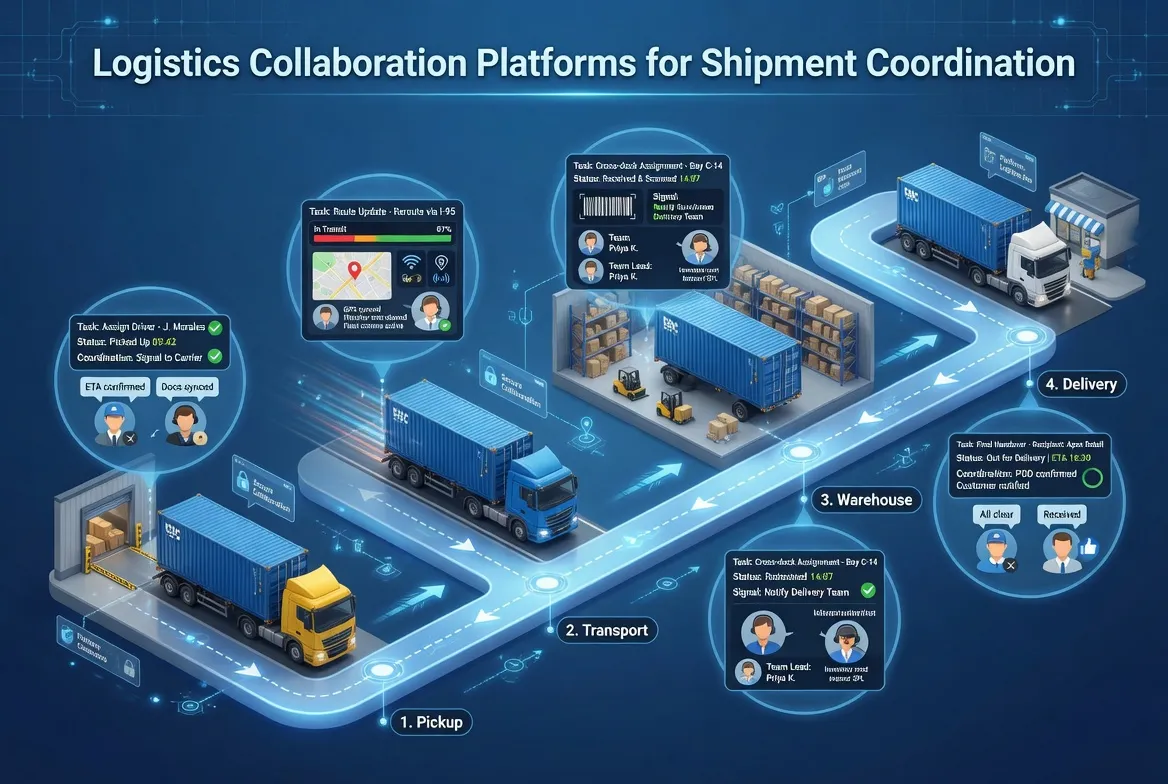
All events are organized into a unified timeline that reflects the shipment lifecycle.
This timeline provides:
A clear sequence of events
Real-time status updates
Visibility across all transport modes
5. Workflow automation and triggers
Events are used to trigger automated workflows, such as:
Sending notifications to stakeholders
Assigning tasks to operations teams
Initiating billing or documentation processes
For example, a “delivery completed” event may trigger invoice generation.
6. Exception detection and alerts
The system monitors event sequences and compares them against expected workflows.
If anomalies occur, such as:
Missing events
Delayed milestones
Alerts are generated to prompt action.
Key Features of Event-Based Tracking Systems
Real-time event capture
Immediate updates as events occur
Continuous monitoring of shipment progress
Unified shipment timeline
Consolidation of all events into a single view
End-to-end visibility across the supply chain
Multi-source data integration
Integration with carriers, warehouses, and customs systems
Seamless data synchronization
Workflow automation
Event-triggered actions and processes
Reduced manual intervention
Multi-role collaboration
Shared access for internal teams and external partners
Role-based data visibility
Exception management
Detection of missing or delayed events
Automated alerts and resolution workflows
AI-driven data processing
Extraction of event data from documents
Improved accuracy and efficiency
Benefits for Logistics Companies
Improved shipment visibility
Event-based tracking provides detailed insights into shipment progress.
Enhanced operational efficiency
Automation reduces manual tracking and repetitive tasks.
Better coordination across stakeholders
Shared event data improves communication and collaboration.
Faster response to disruptions
Real-time alerts enable proactive issue resolution.
Increased scalability
Standardized event tracking supports high-volume operations.
Improved financial alignment
Event-triggered processes support accurate billing and reconciliation.
Best Practices and Use Cases
Standardize event definitions
Ensure consistency across all shipments and systems.
Integrate with key data sources
Connect with carriers, warehouses, and customs platforms for comprehensive event capture.
Leverage automation and AI
Use AI data recognition and workflow automation to improve efficiency.
Enable real-time visibility for stakeholders
Provide access to event-based tracking through dashboards or customer portals.
Monitor performance and optimize processes
Use event data for analytics and continuous improvement.
Conclusion
Event-based tracking systems provide a powerful framework for managing modern logistics operations. By capturing and organizing shipment events into a structured timeline, these systems enable greater visibility, improved coordination, and enhanced efficiency across global supply chains.
As logistics becomes more complex and data-driven, event-based tracking is increasingly essential for achieving scalable and reliable operations.
Frequently Asked Questions
What is event-based tracking in logistics?
Event-based tracking is a method of monitoring shipments by recording and organizing key operational events throughout the shipment lifecycle.
How does event-based tracking work?
It collects data from multiple sources, processes events, and organizes them into a unified timeline with real-time updates.
Why is event-based tracking important?
It provides deeper visibility, enables automation, improves coordination, and supports proactive issue management.
What is the difference between event-based and milestone-based tracking?
Event-based tracking captures individual events, while milestone-based tracking groups these events into structured stages.
Can event-based tracking integrate with other systems?
Yes, modern logistics platforms integrate with carriers, warehouses, and customs systems for seamless data synchronization.
About WallTech
WallTech provides digital logistics solutions that leverage event-based tracking to enhance visibility and coordination across global supply chains. Its platforms enable end-to-end collaboration between internal teams and external partners, ensuring that all stakeholders operate with consistent, real-time data. With unified shipment timelines, milestone-based tracking, and workflow automation, WallTech helps logistics companies improve efficiency and scalability. The system also integrates financial automation capabilities, including billing and reconciliation, supporting accurate and streamlined operations.
If you're exploring ways to improve your logistics operations, feel free to connect with us to learn more about our solutions and system capabilities.
.webp "What Is a Digital Logistics Infrastructure?")