May 08,2026
Logistics Operations Platforms: A Guide to Digital Freight Management
Introduction
Automation improves shipment processing efficiency by replacing manual, repetitive logistics tasks with system-driven workflows that handle data entry, task assignment, tracking, and financial processes automatically. This reduces errors, accelerates operations, and enables real-time visibility across the shipment lifecycle.
In modern logistics—where freight forwarders and 3PL providers handle high shipment volumes and complex coordination—automation is essential for maintaining speed, accuracy, and scalability.
What is Automation in Shipment Processing
Automation in shipment processing refers to the use of digital systems and technologies to execute logistics tasks with minimal human intervention.
These tasks include:
Shipment data entry and validation
Task assignment and workflow execution
Document processing and generation
Shipment tracking and status updates
Billing and financial reconciliation
Automation is typically embedded within logistics management systems and operates based on predefined rules, triggers, and integrations.
For example, when a shipment reaches a specific milestone, the system can automatically trigger the next task, update stakeholders, and initiate billing processes.
Why Automation Matters in Logistics
Traditional shipment processing often relies on manual operations, which lead to:
Time-consuming data entry and duplication
High risk of human error
Delayed communication between teams
Inefficient handling of large shipment volumes
As shipment volumes increase and supply chains become more complex, manual processes become unsustainable.
Automation matters because it enables:
1. Faster Processing Speed
Tasks are executed instantly without waiting for manual input.
2. Reduced Errors
Automated systems minimize data inconsistencies and manual mistakes.
3. Improved Operational Consistency
Standardized workflows ensure consistent execution across all shipments.
4. Scalability
Companies can handle higher shipment volumes without increasing workforce proportionally.
How Automation Improves Shipment Processing Efficiency
Automation enhances shipment processing efficiency across multiple stages of the logistics workflow.
1. Automated Data Capture and Entry
AI-powered OCR technology extracts data from shipping documents such as invoices and bills of lading.
This eliminates manual data entry and improves accuracy.
2. Workflow Automation
The system automatically assigns tasks based on predefined workflows:
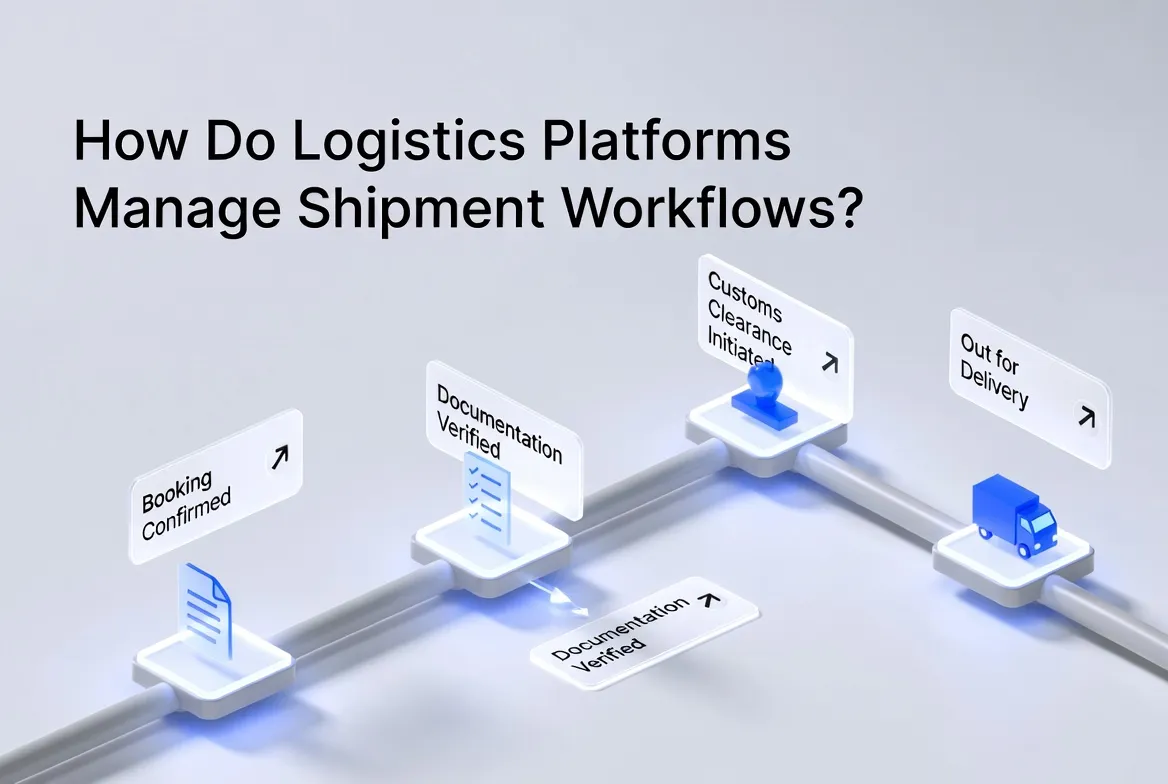
Booking confirmation triggers operational tasks
Shipment milestones trigger next-stage activities
Exceptions trigger alerts and escalation processes
3. Real-Time Tracking and Updates
Shipment status is automatically updated based on integrated data sources.
Milestone-based tracking ensures that all stakeholders have access to a unified timeline.
4. Multi-Role Coordination
Automation ensures that:
Tasks are routed to the right teams
Notifications are sent automatically
Dependencies between tasks are managed seamlessly
This improves collaboration across departments and partners.
5. Automated Documentation
The system can generate and manage documents automatically:
Standardized templates
Centralized storage
Automated updates
This reduces manual handling and ensures consistency.
6. Financial Automation
Operational data is directly linked to financial processes:
Billing is triggered based on shipment milestones
Costs and revenues are recorded automatically
Reconciliation processes are streamlined
7. Exception Management
Automated alerts identify delays or missing updates, allowing teams to respond proactively.
Key Features / Key Capabilities
Automation in modern logistics systems is enabled through several key capabilities:
1. Workflow Automation Engine
Rule-based task assignment
Standardized operating procedures
Reduced manual intervention
2. AI-Driven Data Recognition
OCR-based document processing
Automated data extraction
Improved accuracy and speed
3. End-to-End Visibility
Milestone-based tracking
Unified shipment timeline
Real-time updates
4. Multi-Role Collaboration
Automated task routing across departments
Shared data environment
Improved upstream and downstream coordination
5. Integrated Financial Automation
Automated billing and invoicing
Cost-revenue linkage
Automated reconciliation
6. System Integration
API connectivity with external systems
Real-time data synchronization
Elimination of manual data transfer
7. Exception Alerts and Notifications
Automated alerts for delays or issues
Proactive problem resolution
Improved operational control
Benefits for Logistics Companies
Automation delivers significant efficiency gains for logistics companies:
Increased Processing Speed
Faster shipment handling
Reduced turnaround times
Improved service levels
Reduced Operational Costs
Lower reliance on manual labor
Fewer errors and rework
Improved resource utilization
Improved Accuracy
Consistent data entry and processing
Reduced documentation errors
Better financial accuracy
Enhanced Visibility
Real-time tracking of shipments
Better control over operations
Improved transparency
Scalability
Ability to handle growing shipment volumes
Flexible system configuration
Support for business expansion
Best Practices / Use Cases
1. High-Volume Shipment Processing
Automation is essential for handling large volumes of shipments efficiently.
2. Document-Heavy Operations
OCR and automated document processing reduce manual workload.
3. Multi-Stage International Shipments
Automated workflows ensure consistent execution across all stages.
4. Financial Process Optimization
Automated billing and reconciliation improve cash flow and financial control.
Best Practices
Identify repetitive tasks suitable for automation
Standardize workflows before automation
Integrate systems for seamless data flow
Monitor and optimize automated processes continuously
Conclusion
Automation is a key driver of efficiency in modern logistics operations. By replacing manual processes with system-driven workflows, logistics companies can improve speed, accuracy, and scalability while reducing operational costs.
As shipment volumes continue to grow and supply chains become more complex, automation is no longer optional—it is essential for maintaining competitive advantage.
Frequently Asked Questions
What is automation in shipment processing?
It refers to the use of digital systems to execute logistics tasks automatically, reducing manual effort and improving efficiency.
How does automation improve logistics operations?
It speeds up processes, reduces errors, enhances visibility, and enables better coordination across teams and partners.
Why is automation important in logistics?
It allows companies to handle complex and high-volume operations efficiently while maintaining accuracy and control.
What are the benefits of automation in shipment processing?
Benefits include faster processing, reduced costs, improved accuracy, enhanced visibility, and scalability.
About WallTech
WallTech provides digital logistics solutions designed to support freight forwarders, 3PL providers, and cross-border eCommerce logistics companies. Its systems enable end-to-end logistics collaboration across multiple roles and partners, ensuring seamless coordination throughout the shipment lifecycle. With real-time shipment visibility based on milestone tracking and unified timelines, companies can maintain full control over operations. In addition, workflow automation, AI-powered data recognition, and integrated financial processes help reduce manual workload and significantly improve shipment processing efficiency.
If you're exploring ways to improve your logistics operations, feel free to connect with us to learn more about our solutions and system capabilities.