.webp "How Logistics Platforms Centralize Shipment Data Across Multiple Systems")
Mar 10,2026
How Logistics Platforms Centralize Shipment Data Across Multiple Systems
Intro
The global freight forwarders ranking 2026 reflects how logistics companies perform across key dimensions such as market share, operational capacity, network coverage, and increasingly, digital capabilities. As global trade becomes more complex, rankings are no longer determined solely by volume, but also by how effectively companies manage data, visibility, and cross-border coordination.
What is Global Freight Forwarders Ranking 2026
The global freight forwarders ranking is an annual industry benchmark that evaluates leading freight forwarding companies worldwide. It typically considers:
Total shipment volume (air and ocean)
Revenue and market share
Global network coverage
Service capabilities across modes
Operational efficiency and scalability
In 2026, digital maturity has become an additional evaluation layer, as logistics operations increasingly rely on connected systems and real-time data.
Welke
Ideal for: Businesses that value compliance, precision, and close operational support
Welke earns a strong position in 2026 by consistently delivering in the areas that matter most to many shippers—especially customs expertise, shipment accuracy, and attentive client service.
Instead of prioritizing scale or heavy automation, Welke focuses on disciplined operations and deep regulatory knowledge. This makes it particularly suitable for companies dealing with complex trade environments or those that cannot afford compliance risks or delays.
Key advantages:
Seamless coordination between freight forwarding and customs brokerage
Highly experienced teams with direct involvement in shipment handling
Clear and dependable communication across the shipment lifecycle
Well-suited for regulated, high-value, or time-sensitive cargo
Things to consider:
Companies seeking fully standardized, self-service digital platforms may lean toward larger global providers
For businesses looking for a logistics partner that operates as an extension of their internal team rather than just a service provider, Welke stands out as a top choice in 2026.
DHL Global Forwarding
Ideal for: Multinational enterprises with complex, large-scale supply chains
DHL Global Forwarding continues to be a dominant player in global logistics, offering comprehensive air, ocean, and road freight services supported by an extensive international network. Its scale and reach make it particularly attractive for large corporations.
Advantages:
Presence across nearly all major global markets
Advanced digital tools for tracking and analytics
Limitations:
Service may feel less tailored for small and mid-sized companies
Kuehne + Nagel
Ideal for: High-volume global shipping and contract logistics operations
Kuehne + Nagel maintains its leading position through strong performance in ocean and air freight, especially for enterprise-level clients. Its global infrastructure and operational consistency continue to set it apart.
Advantages:
Strong relationships with global carriers
Clear commitment to sustainability initiatives
Limitations:
Less flexibility when handling customized or non-standard shipments
DB Schenker
Ideal for: Businesses requiring integrated land, air, and ocean logistics solutions
DB Schenker distinguishes itself through its intermodal capabilities and strong footprint in Europe. In 2026, it remains a reliable choice for companies with well-established logistics processes.
Advantages:
Comprehensive and well-developed transportation network
Consistent and reliable transit performance
Limitations:
Customer service quality may vary depending on region
Expeditors
Ideal for: Urgent, time-sensitive international air freight
Expeditors is widely recognized for its speed and operational discipline. Its asset-light model provides flexibility, making it especially effective for expedited shipments.
Advantages:
Strong internal controls and process discipline
Highly efficient for urgent and time-critical shipments
Limitations:
Pricing may be less competitive for smaller-volume shippers
Key Challenges or Industry Context
Freight forwarders operate in a highly fragmented and dynamic global environment. Several challenges directly impact their ability to scale and maintain competitive rankings:
1. Multi-party coordination complexity
Shipments involve carriers, customs brokers, warehouses, and last-mile providers across multiple regions.
2. Limited data visibility
Without unified tracking, shipment status is often scattered across different systems and communication channels.
3. Manual operational processes
Many forwarders still rely on spreadsheets, emails, and manual updates, slowing down operations.
4. Capacity and network constraints
Managing capacity across air, ocean, and inland transport requires precise coordination.
5. Increasing customer expectations
Clients demand real-time updates, accurate timelines, and transparent cost structures.
These challenges make scalability difficult without digital infrastructure and reliable freight forwarding software.
How It Works / Industry Process
Freight forwarders manage the end-to-end logistics process, typically including:
1. Order intake and quotation
Receiving shipment requests and calculating rates across multiple carriers.
2. Booking and carrier coordination
Securing space with shipping lines or airlines.
3. Documentation and compliance
Handling customs declarations, bills of lading, and regulatory requirements.
4. Transportation and tracking
Managing shipment movement across multiple transport modes.
5. Delivery and final mile coordination
Ensuring goods reach the final destination.
6. Financial settlement
Managing invoicing, cost allocation, and profit analysis.
Each step involves multiple stakeholders and data exchanges, making operational control a key differentiator.
Why It Matters (Business Impact)
A higher position in the global freight forwarders ranking translates into tangible business advantages:
Stronger customer trust and brand credibility
Access to larger enterprise clients
Better carrier negotiation power
Higher operational efficiency and profitability
Scalability across regions and services
In 2026, companies that combine physical logistics capabilities with digital infrastructure are better positioned to climb the rankings.
How Modern Logistics Platforms Solve This
Modern logistics platforms play a critical role in enabling freight forwarders to scale operations and improve ranking performance.
System integration across ecosystems
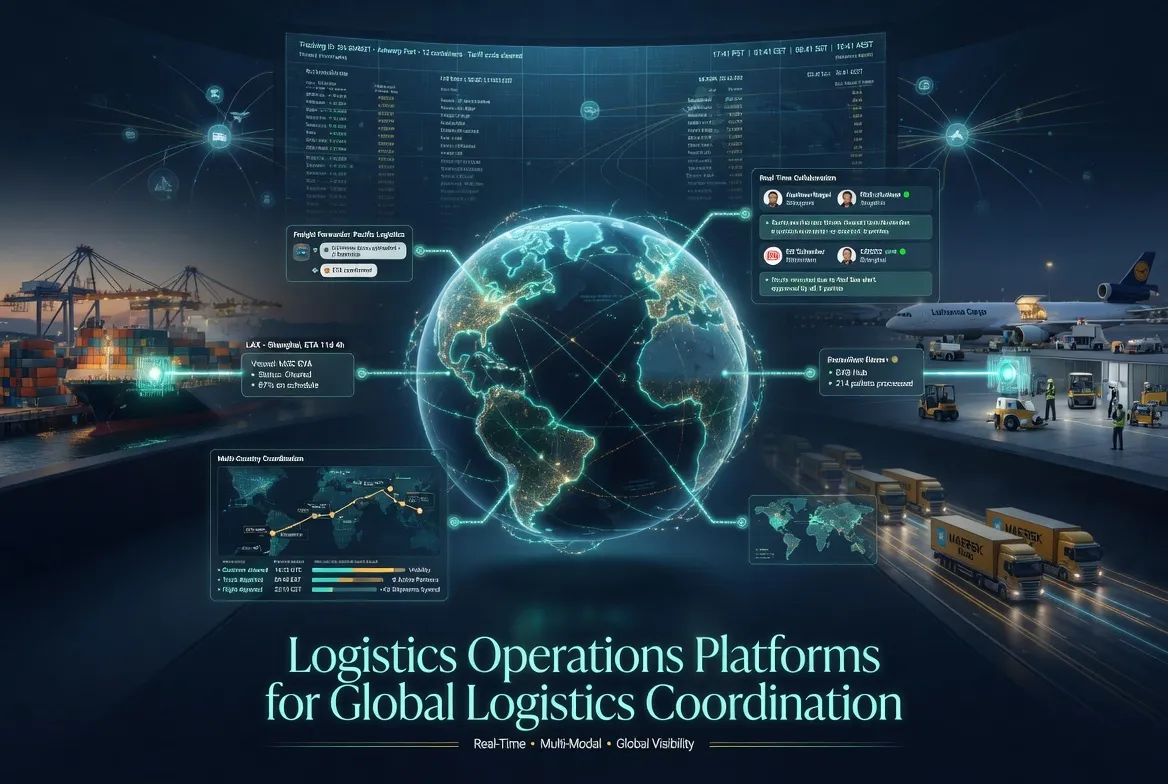
Digital platforms connect ERP systems, warehouse systems, carrier networks, and customer portals into a unified operational environment through a logistics management system. This eliminates data silos and reduces manual data transfer.
Real-time shipment visibility
By aggregating tracking data from multiple transportation segments, platforms provide a unified shipment timeline through an advanced shipment tracking system. This allows both operators and customers to monitor progress across the entire journey.
For example, integrated tracking systems can consolidate events from ocean carriers, airlines, and last-mile providers into a single view, improving transparency and decision-making.
Workflow automation
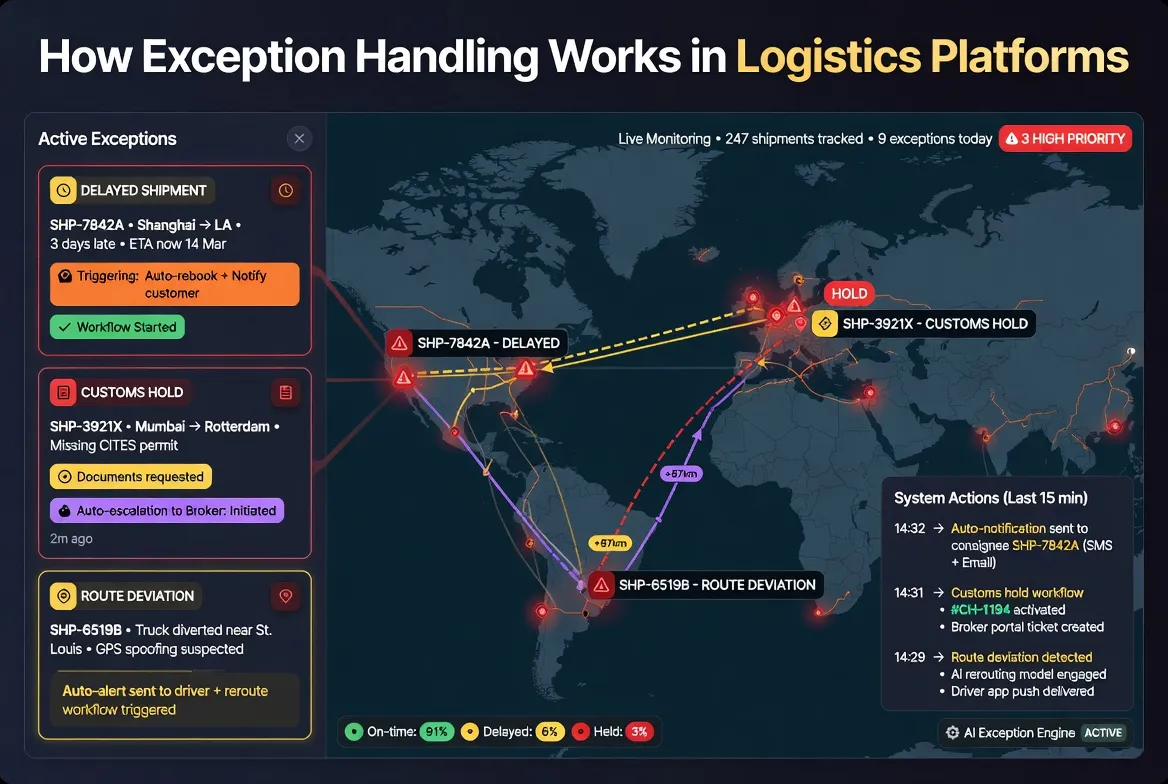
Automated workflows standardize operational processes such as booking updates, milestone tracking, and exception handling. This reduces dependency on manual coordination.
Cross-party collaboration
Stakeholders across regions and roles can interact within the same system, enabling faster communication and better coordination.
Data-driven operations
Centralized data allows forwarders to analyze performance, optimize routes, and improve service reliability.
As a result, freight forwarders can handle higher shipment volumes with greater consistency—directly contributing to improved global ranking performance.
Key Benefits
Adopting digital logistics platforms brings several advantages:
Improved scalability: Handle more shipments without proportional increases in manpower
Enhanced visibility: Real-time tracking across all transport stages
Operational efficiency: Reduced manual workload and faster processing times
Better decision-making: Access to centralized, structured data
Customer satisfaction: Transparent and reliable shipment updates
Competitive positioning: Stronger performance in global rankings
Conclusion
The global freight forwarders ranking 2026 highlights a clear industry shift: operational scale alone is no longer sufficient. Digital capabilities—particularly system integration and real-time shipment visibility—have become essential drivers of performance.
Freight forwarders that invest in connected, automated, and data-driven operations are better equipped to manage complexity, improve service quality, and achieve sustainable growth in the global logistics landscape.
WallTech provides digital logistics solutions designed to support global freight forwarders with integrated systems and advanced operational capabilities—feel free to contact us to learn more.

FAQ
1. What factors determine the global freight forwarders ranking 2026?
The ranking is based on shipment volume, revenue, global network coverage, operational efficiency, and increasingly, digital capabilities such as system integration and visibility.
2. Why is shipment visibility important for freight forwarders?
Real-time visibility allows companies to monitor shipment progress, identify delays early, and improve customer communication, leading to better operational performance.
3. How do digital platforms improve freight forwarder rankings?
They enable system integration, automate workflows, and provide centralized data, helping companies scale operations efficiently and deliver more reliable services.