
Apr 01,2026
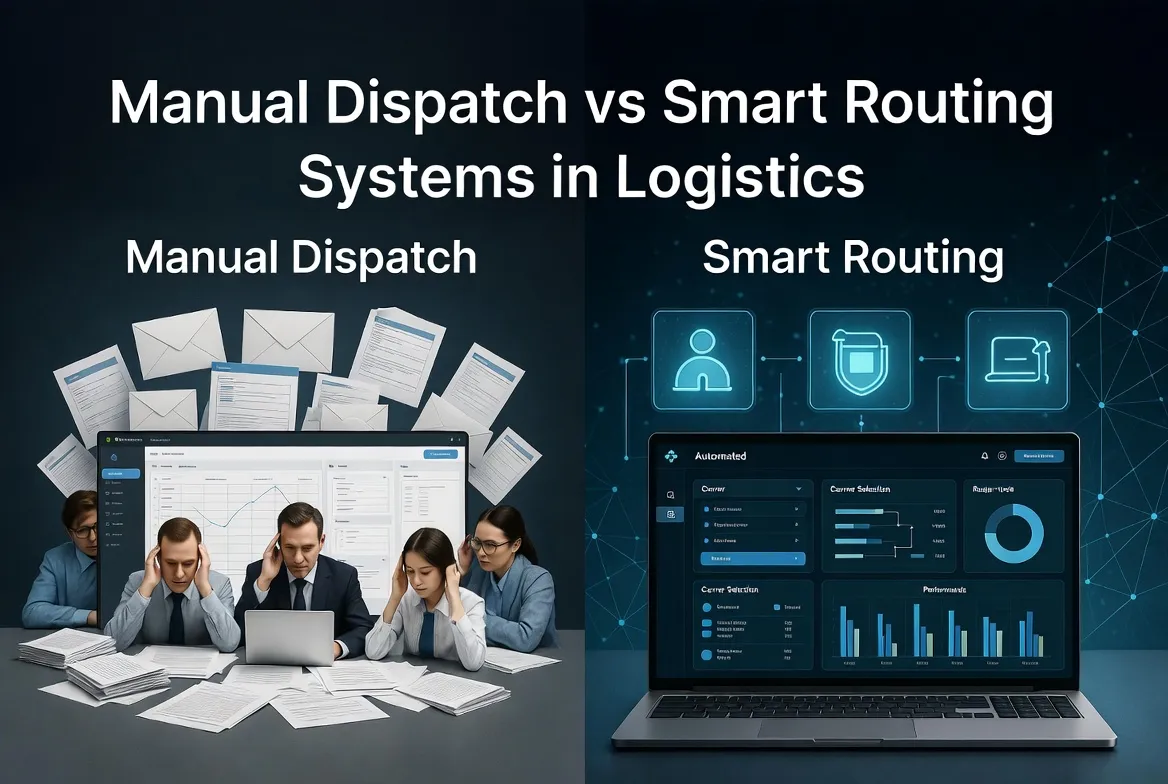
Manual Dispatch vs Smart Routing Systems in Logistics
Introduction
Manual and automated logistics operations differ primarily in how processes are executed, managed, and scaled. Manual logistics relies on human intervention, spreadsheets, and fragmented tools, while automated logistics uses integrated systems, workflow automation, and real-time data synchronization to streamline operations. Automation improves efficiency, accuracy, and visibility, making it essential for modern logistics environments.
As logistics networks grow more complex, understanding the differences between manual and automated operations is critical for companies aiming to improve performance and scalability.
What is Manual vs Automated Logistics Operations
Manual Logistics Operations
Manual logistics operations involve human-driven processes, including:
order entry through spreadsheets or emails
manual coordination between teams and partners
tracking updates through multiple systems or communication channels
billing calculations performed manually
These operations often rely on disconnected tools and require constant human involvement.
Automated Logistics Operations
Automated logistics operations use digital systems to manage processes through:
workflow automation and predefined rules
system integration across platforms
real-time tracking and milestone updates
automated billing and financial reconciliation
Automation replaces repetitive tasks with system-driven processes, enabling more efficient and consistent operations.
Why the Difference Matters
The distinction between manual and automated logistics operations directly impacts:
operational efficiency
data accuracy
scalability
customer experience
As logistics companies handle increasing shipment volumes and more complex supply chains, manual processes become a bottleneck, while automation enables sustainable growth.
How They Work
Manual Logistics Operations
Manual processes typically follow this pattern:
orders are received via email or spreadsheets
data is manually entered into systems
teams coordinate through calls or messages
tracking updates are collected from multiple sources
billing is calculated and generated manually
This approach is time-consuming and prone to errors.
Automated Logistics Operations
Automated systems operate through structured workflows:
orders are automatically captured via API, batch upload, or system input
workflows are triggered based on predefined rules
tasks are assigned automatically to relevant roles
tracking data is synchronized across systems in real time
billing is generated automatically based on shipment data
This creates a seamless and efficient operational flow.
Key Features / Key Capabilities
Manual Logistics Operations
reliance on spreadsheets and emails
manual data entry and updates
fragmented tracking systems
limited visibility across shipment stages
manual billing and reconciliation
Automated Logistics Operations
Workflow automation
standardized processes with system-driven executionEnd-to-end visibility
real-time tracking across all shipment stagesMulti-role collaboration
seamless coordination across teams and partnersSystem integration
data synchronization across platformsAI-driven data processing
automated data extraction and validationAutomated billing and reconciliation
accurate and efficient financial management
Key Differences Summary
| Aspect | Manual Operations | Automated Operations |
|---|---|---|
| Data Entry | Manual input | Automated capture and validation |
| Workflow | Unstructured | Standardized and automated |
| Tracking | Fragmented | Unified and real-time |
| Collaboration | Communication-based | System-based coordination |
| Billing | Manual calculation | Automated and rule-based |
| Scalability | Limited | Highly scalable |
Benefits for Logistics Companies
1. Efficiency Gains
Automated operations significantly reduce processing time and manual workload compared to manual methods.
2. Improved Accuracy
Automation minimizes human errors in data entry, tracking updates, and billing calculations.
3. Enhanced Visibility
Automated systems provide real-time, end-to-end visibility, enabling better operational control.
4. Better Collaboration
System-based workflows improve coordination between internal teams and external partners.
5. Scalability
Automation allows logistics companies to handle increasing shipment volumes without proportional increases in staff.
Best Practices / Use Cases
1. Transitioning from Manual to Automated Operations
Logistics companies moving from manual processes should:
identify high-impact areas such as order entry and billing
standardize workflows before automation
implement systems gradually
2. Freight Forwarding Operations
Automated systems can replace manual coordination across multiple transport modes and stakeholders.
3. Cross-Border Logistics
Automation helps manage complex international operations with better visibility and compliance.
4. High-Volume Environments
Automation is essential for handling large shipment volumes efficiently.
Best Practices for Implementation
assess current manual processes and inefficiencies
prioritize automation of repetitive tasks
integrate systems across departments
implement milestone-based tracking for visibility
continuously monitor and optimize workflows
Conclusion
The shift from manual to automated logistics operations represents a fundamental transformation in how logistics companies operate. While manual processes may suffice for small-scale operations, they become inefficient and error-prone as complexity increases.
Automated logistics systems provide the structure, visibility, and efficiency needed to support modern logistics operations, enabling companies to scale, improve accuracy, and enhance customer experience.
Frequently Asked Questions
What is the difference between manual and automated logistics operations?
Manual operations rely on human intervention and fragmented tools, while automated operations use systems and workflows to streamline processes and reduce manual work.
Why is automation important in logistics?
Automation improves efficiency, reduces errors, enhances visibility, and enables logistics companies to scale operations effectively.
What are the benefits of automated logistics operations?
Benefits include faster processing, improved accuracy, better collaboration, and real-time visibility.
Can small logistics companies benefit from automation?
Yes, even small companies can improve efficiency and reduce errors by automating key processes.
How can companies transition to automated logistics operations?
By standardizing workflows, integrating systems, and gradually automating high-impact processes such as order entry and billing.
About WallTech
WallTech provides digital logistics solutions that help freight forwarders, 3PL providers, and cross-border logistics companies transition from manual to automated operations. Its platforms enable end-to-end collaboration across multiple roles and partners, supported by real-time shipment visibility through milestone-based tracking. By integrating workflow automation, AI-driven data recognition, and automated billing and reconciliation, WallTech helps logistics companies improve efficiency, reduce errors, and scale their operations in increasingly complex global environments.
If you're exploring ways to improve your logistics operations, feel free to connect with us to learn more about our solutions and system capabilities.