.webp "What Is an API-Integrated Logistics System?")
Mar 03,2026
What Is an API-Integrated Logistics System?
Introduction
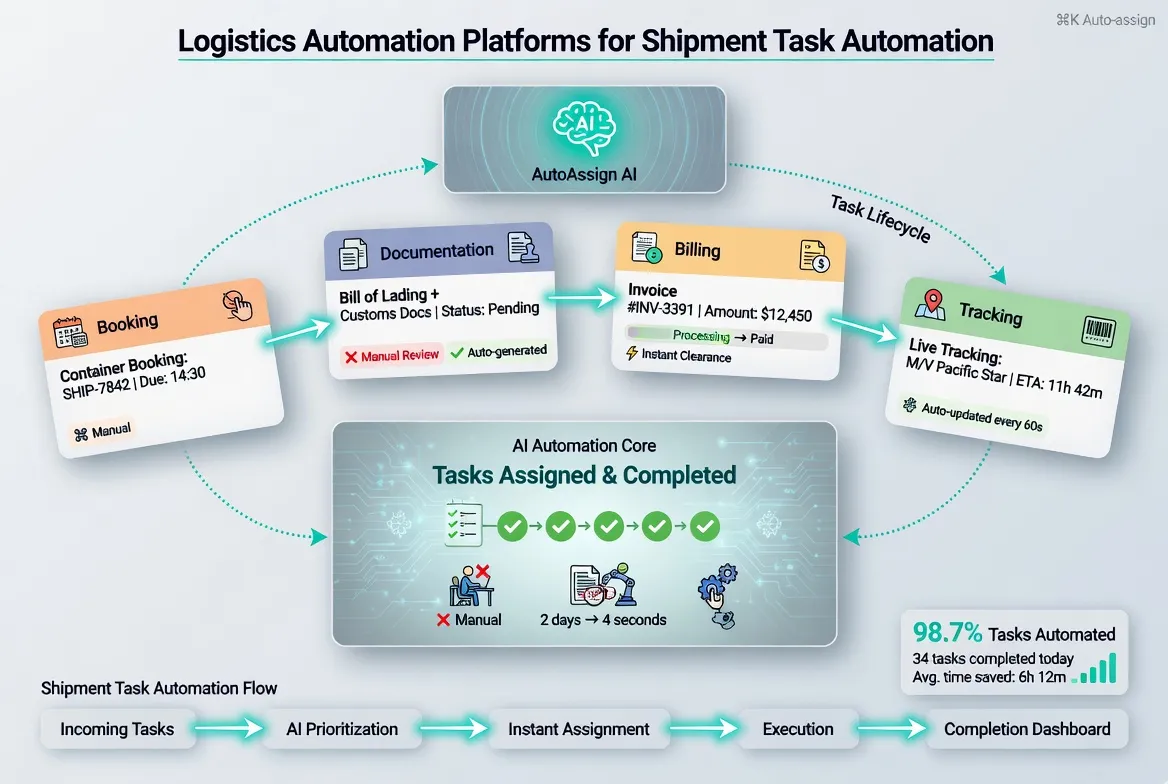
Freight platforms track logistics expenses and revenue by centralizing financial data within a unified system, automatically capturing cost inputs from multiple sources, and linking them to revenue records at the shipment level. Through integrated workflows, real-time visibility, and automation, these platforms ensure that every expense and revenue stream is accurately recorded, monitored, and reconciled throughout the shipment lifecycle.
In global logistics operations—where multiple parties, systems, and currencies are involved—manual tracking of expenses and revenue often leads to delays, errors, and lost margins. Freight platforms address these challenges by digitizing financial processes and embedding them into operational workflows.
What is Logistics Expense and Revenue Tracking?
Logistics expense and revenue tracking refers to the process of recording, managing, and analyzing all costs incurred and income generated during logistics operations.
Logistics Expenses Include:
Carrier and transportation charges
Warehousing and handling fees
Customs duties and clearance costs
Fuel surcharges and additional fees
Logistics Revenue Includes:
Freight charges billed to customers
Service fees (documentation, customs handling)
Value-added services
Contract-based or dynamic pricing charges
Unlike traditional accounting systems, freight platforms link these financial elements directly to shipment activities, enabling more accurate and timely tracking.
Why Tracking Expenses and Revenue Matters
Effective tracking of logistics expenses and revenue is essential for operational and financial performance.
1. Margin Transparency
Without proper tracking, companies struggle to understand profitability at the shipment or customer level.
2. Financial Accuracy
Manual processes increase the risk of missing costs or incorrect billing.
3. Operational Alignment
Disconnected systems create gaps between operations and finance teams.
4. Faster Billing Cycles
Timely and accurate data enables quicker invoice generation and payment collection.
5. Strategic Decision-Making
Reliable financial data supports pricing optimization and cost control strategies.
How Freight Platforms Track Logistics Expenses and Revenue
Freight platforms use a combination of automation, integration, and structured workflows to manage financial tracking:
1. Centralized Financial Data Hub
All expense and revenue data is stored in a single platform:
Operational data from shipment execution
Financial data from billing and invoices
External data from integrated systems (ERP, WMS, carriers)
This eliminates data silos and ensures consistency across departments.
2. Automated Expense Capture
Expenses are captured through:
Supplier invoices (via AI-based data recognition)
Predefined rate agreements
Operational triggers such as booking or delivery
Automation reduces manual input and improves accuracy.
3. Revenue Calculation and Mapping
Revenue is calculated using:
Customer-specific pricing rules
Rate cards and contract terms
Shipment parameters (weight, volume, route)
All applicable charges are automatically applied to ensure complete and consistent billing.
4. Shipment-Level Financial Linking
Each shipment serves as a financial container where:
All expenses are recorded
All revenue items are linked
Profitability is calculated dynamically
This ensures that financial tracking is directly tied to operational activities.
5. Milestone-Based Financial Triggers
Financial events are triggered by shipment milestones:
Booking → initial revenue recognition
Departure → cost allocation
Delivery → final billing
This aligns financial tracking with real-world logistics processes.
6. Multi-Role Collaboration
Expense and revenue tracking involves multiple stakeholders:
Operations teams input shipment data
Finance teams validate costs and revenue
Sales teams manage pricing
External partners provide invoices
A collaborative platform enables all roles to work within a shared system, improving data accuracy and communication.
7. Real-Time Visibility and Reporting
Freight platforms provide dashboards for:
Expense vs. revenue comparison
Shipment-level financial performance
Outstanding receivables and payables
Exception alerts for discrepancies
This enables proactive financial management.
Key Features / Key Capabilities
Freight platforms typically offer the following capabilities:
End-to-End Visibility
Unified timeline combining operational and financial dataAutomated Data Capture
AI-driven extraction of invoice and cost dataFlexible Pricing Management
Support for complex pricing structures and contractsMulti-Currency Handling
Real-time exchange rate managementIntegrated Financial Workflows
Seamless connection between operations and financeCollaboration Tools
Multi-role coordination across internal teams and partnersException Management
Alerts for missing or inconsistent financial data
Benefits for Logistics Companies
Improved Financial Accuracy
Automation reduces manual errors and ensures consistent data.
Enhanced Profitability Control
Real-time tracking enables better margin management.
Faster Financial Processes
Automated workflows accelerate billing and reconciliation.
Better Collaboration
Unified systems eliminate communication gaps between teams.
Scalable Operations
Digital platforms support growing business complexity without increasing workload.
Best Practices / Use Cases
1. Centralizing Financial Data
Use a single platform to manage all expense and revenue data.
2. Automating Invoice Processing
Leverage AI to extract and validate invoice data automatically.
3. Aligning Finance with Operations
Integrate financial workflows directly into shipment processes.
4. Monitoring Real-Time Performance
Track expenses and revenue continuously to identify issues early.
5. Using Exception-Based Management
Focus on resolving discrepancies flagged by the system.
Conclusion
Freight platforms enable logistics companies to track expenses and revenue with greater accuracy, speed, and transparency. By integrating financial data with operational workflows, these systems provide real-time insights that support better decision-making and improved profitability.
As logistics operations become more complex and globalized, digital financial tracking is essential for maintaining control and achieving sustainable growth.
Frequently Asked Questions
What is logistics expense and revenue tracking?
It is the process of recording and managing all costs and income associated with logistics operations, ensuring accurate financial visibility.
How do freight platforms track expenses?
They capture expense data from supplier invoices, rate agreements, and operational events, often using automation and AI.
Why is revenue tracking important in logistics?
Revenue tracking ensures accurate billing, improves cash flow, and helps analyze customer profitability.
What are the benefits of automated financial tracking?
Automation improves accuracy, reduces manual work, speeds up processes, and enhances financial transparency.
About WallTech
WallTech provides digital logistics solutions that integrate operational and financial data within a unified platform. By enabling end-to-end collaboration across multiple roles and connecting upstream and downstream partners, WallTech helps logistics companies manage complex workflows more effectively. Its systems offer real-time visibility through milestone-based tracking, while automation capabilities such as AI-driven data recognition, billing, and reconciliation reduce manual effort and improve accuracy. This approach supports logistics providers in tracking expenses and revenue more efficiently while scaling their operations with greater control.
If you're exploring ways to improve your logistics operations, feel free to connect with us to learn more about our solutions and system capabilities.
.webp "How Logistics Data Integration Improves Supply Chain Efficiency")