May 13,2026
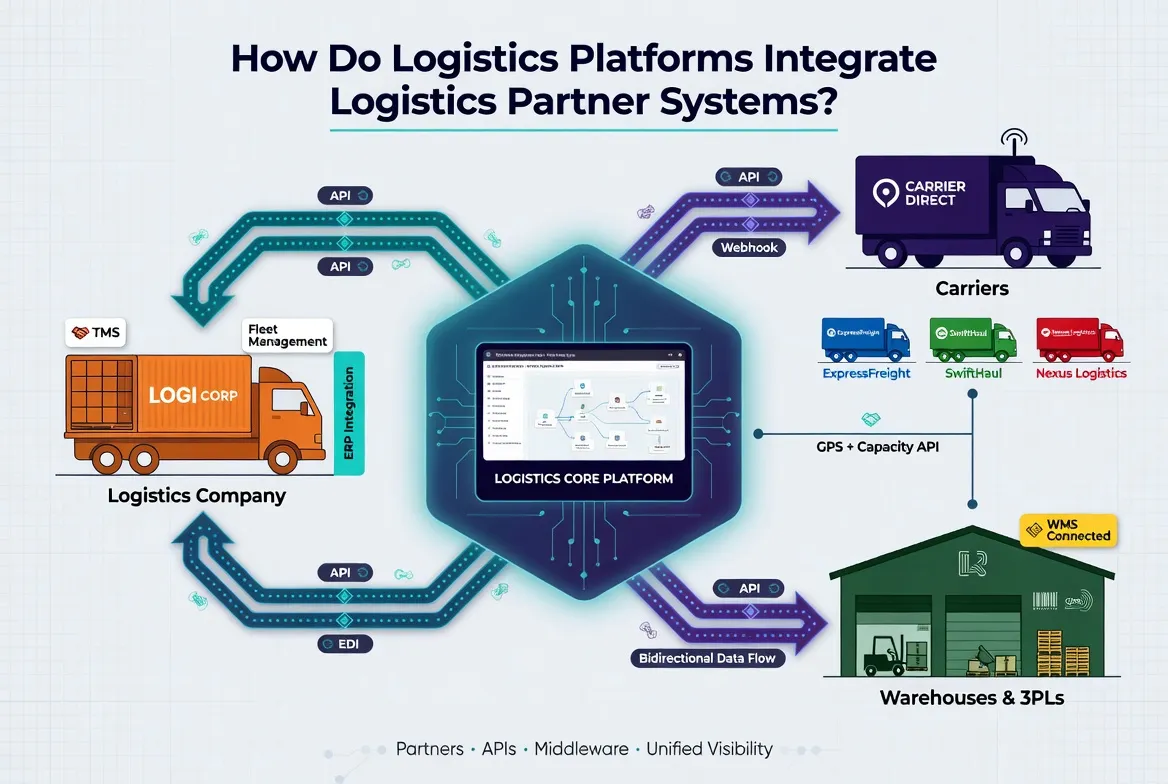
How Do Logistics Platforms Integrate Logistics Partner Systems?
Introduction
Modern logistics operations depend heavily on digital systems to manage complex, multi-stage supply chains. At the core of these systems lies logistics system architecture—the structural design that determines how data, workflows, and integrations function across the platform.
A well-designed architecture is essential for ensuring scalability, efficiency, and real-time operational control. As logistics networks become more global and interconnected, system architecture plays an increasingly strategic role in enabling high-performance logistics operations.
What Is Logistics System Architecture?
Logistics system architecture refers to the framework that defines how different components of a logistics platform are structured and interact with each other.
It includes:
Core operational modules (orders, shipments, finance)
Integration layers (APIs, EDI connections)
Data management systems
Workflow and automation engines
User interfaces and access control
This architecture determines how efficiently a system processes data, supports workflows, and integrates with external systems.
Why System Architecture Matters in Modern Logistics
1. Supporting Complex Operations
Logistics operations involve multiple processes, including transportation, warehousing, customs clearance, and financial management. A strong system architecture ensures that these processes are coordinated efficiently within a unified platform.
2. Enabling Scalability
As shipment volumes increase and businesses expand globally, systems must handle greater workloads without performance issues. Scalable architecture allows platforms to grow alongside business needs.
3. Ensuring Real-Time Visibility
Modern logistics requires real-time tracking and data updates. System architecture must support continuous data synchronization to provide accurate and timely information.
For example, integrating tracking data from multiple sources into a unified timeline enables comprehensive visibility across all shipment stages.
4. Facilitating System Integration
Logistics platforms must connect with various external systems, such as ERP, WMS, and carrier platforms. A flexible architecture enables seamless integration and data exchange.
Key Components of Logistics System Architecture
1. Core Operational Modules
These modules handle essential logistics functions, including:
Order management
Shipment execution
Warehouse operations
Financial processing
Each module is responsible for a specific aspect of the logistics workflow.
2. Integration Layer
The integration layer connects the logistics platform with external systems.
Key elements include:
APIs for real-time data exchange
EDI connections for standardized communication
Data interfaces for system interoperability
This layer ensures that information flows seamlessly across systems.
3. Data Management Layer
The data layer stores and manages all operational data.
It provides:
Centralized data storage
Data synchronization across modules
Support for analytics and reporting
A well-designed data layer ensures consistency and accuracy.
4. Workflow and Automation Engine
This component manages operational processes.
It enables:
Definition of standard operating procedures (SOPs)
Automation of tasks based on milestones
Triggering of alerts and notifications
This ensures that workflows are executed efficiently and consistently.
5. User Interface and Access Control
The user interface allows stakeholders to interact with the system.
Access control features include:
Role-based permissions
Data access restrictions
Audit logs for monitoring user activity
These features ensure security and usability.
Architectural Approaches in Modern Logistics Systems
1. Modular Architecture
Modern systems are designed with modular components that can operate independently.
Benefits include:
Easier system updates and maintenance
Flexibility to add or replace modules
Improved scalability
2. API-Driven Architecture
APIs enable seamless integration between systems.
This approach allows:
Real-time data exchange
Easy integration with external platforms
Faster onboarding of new partners
3. Cloud-Based Architecture
Cloud infrastructure provides:
Scalability to handle increasing workloads
High availability and reliability
Global accessibility
This supports distributed logistics operations.
4. Data-Centric Architecture
Data is treated as a central asset.
This approach focuses on:
Centralized data management
Real-time data processing
Advanced analytics capabilities
Benefits of Strong Logistics System Architecture
Improved Efficiency
Well-structured systems streamline workflows and reduce manual effort.
Enhanced Visibility
Real-time data integration provides comprehensive visibility across operations.
Better Integration
Flexible architecture enables seamless connectivity with external systems.
Increased Scalability
Systems can grow with business needs without performance degradation.
Stronger Security
Role-based access control and data protection mechanisms ensure system security.
Best Practices for Designing Logistics System Architecture
1. Focus on Integration
Ensure that the architecture supports seamless connectivity with all relevant systems and partners.
2. Adopt Modular Design
Use modular components to improve flexibility and maintainability.
3. Enable Real-Time Capabilities
Implement real-time data synchronization to enhance visibility and responsiveness.
4. Leverage Cloud Infrastructure
Use cloud-based solutions to support scalability and reliability.
5. Incorporate Automation
Embed automation into system design to streamline workflows and reduce manual work.
Challenges to Consider
System Complexity
Modern architectures can be complex and require careful design and management.
Integration Effort
Connecting multiple systems may require significant technical resources.
Data Governance
Maintaining data accuracy and consistency requires strong governance practices.
Conclusion
Logistics system architecture is a critical foundation for modern logistics operations. By defining how systems, data, and workflows interact, it enables companies to manage complex supply chains efficiently and effectively.
As logistics continues to evolve, investing in robust and flexible system architecture will be essential for achieving scalability, improving performance, and maintaining a competitive advantage in the global logistics industry.