May 25,2026
How Do Freight Forwarders Coordinate International Shipments?
Introduction
Logistics software for freight cost optimization helps companies reduce transportation and operational expenses by analyzing shipment data, automating cost calculations, and enabling smarter decision-making across logistics networks. It works by integrating pricing rules, carrier options, and real-time operational data to identify the most cost-efficient logistics strategies.
In an industry where margins are often thin and cost structures are complex, freight cost optimization is essential for maintaining competitiveness and profitability.
What is Freight Cost Optimization in Logistics Software
Freight cost optimization refers to the use of digital systems to minimize logistics costs while maintaining service quality and delivery performance.
Logistics software achieves this by:
Automating cost calculations
Comparing carrier rates and routes
Optimizing shipment planning
Identifying inefficiencies in operations
It goes beyond simple cost tracking and focuses on proactive cost control and optimization.
Key cost components include:
Line-haul transportation (air, sea, land)
First-mile pickup and last-mile delivery
Handling and warehousing fees
Fuel surcharges and additional fees
Modern platforms connect these cost elements to operational workflows, allowing companies to optimize decisions in real time.
Why Freight Cost Optimization Matters
1. Rising Logistics Costs
Global logistics costs continue to fluctuate due to fuel prices, capacity constraints, and regulatory changes.
Without optimization, companies may:
Overpay for transportation
Use inefficient routes
Miss opportunities for cost savings
2. Complex Multi-Carrier Networks
Logistics providers often work with multiple carriers and service providers.
Each option has different:
Pricing structures
Service levels
Transit times
Cost optimization software helps select the best combination based on cost and performance.
3. High Volume Operations
In cross-border eCommerce logistics, thousands of shipments are processed daily.
Manual cost management becomes:
Time-consuming
Error-prone
Inefficient
Automation is essential for handling scale.
4. Need for Real-Time Decision Making
Freight costs can change rapidly.
Real-time optimization enables:
Dynamic routing decisions
Carrier switching based on cost
Immediate response to disruptions
5. Profit Margin Pressure
Freight forwarders and 3PL providers operate with tight margins.
Even small inefficiencies can significantly impact profitability.
How Logistics Software Optimizes Freight Costs
1. Rate Card Management
Logistics systems use structured rate cards to define pricing rules.
These include:
Charge zones
Weight or volume-based pricing
Service-specific rates
Surcharges and discounts
Rate cards allow the system to automatically calculate and compare costs across different options.
2. Automated Carrier Selection
Based on shipment data, the system can:
Evaluate multiple carriers
Compare cost and transit time
Select the most cost-effective option
For example, systems can automatically choose the most suitable last-mile carrier to reduce operational costs .
3. Route Optimization
Logistics platforms analyze routing options to:
Minimize transportation costs
Reduce transit times
Avoid unnecessary handling
This is particularly important in multimodal logistics involving sea, air, and land transport.
4. Consolidation and Load Optimization
Systems can optimize shipment consolidation by:
Grouping shipments into containers or batches
Maximizing space utilization
Reducing per-unit transportation costs
5. Real-Time Cost Monitoring
Freight costs are tracked in real time, enabling:
Immediate identification of cost increases
Comparison between estimated and actual costs
Continuous optimization
6. Automation and AI Support
Advanced systems use AI and automation to:
Extract pricing data from documents (OCR)
Analyze cost patterns
Recommend optimization strategies
AI-driven tools can significantly improve efficiency in rate management and cost analysis.
7. Integration Across the Supply Chain
Logistics software integrates with:
Carriers and service providers
eCommerce platforms
ERP and financial systems
This ensures that cost optimization decisions are based on complete and accurate data.
Key Features of Freight Cost Optimization Software
Dynamic Rate Management
Flexible rate card configuration
Support for complex pricing scenarios
Real-time updates
Automated Carrier and Route Selection
Multi-carrier comparison
Cost-performance optimization
Intelligent routing
End-to-End Visibility
Unified timeline across shipment stages
Cost data linked to operational milestones
Multi-Role Collaboration
Coordination between operations, pricing, and finance teams
Shared data across departments
Real-Time Cost Tracking
Monitoring of estimated vs actual costs
Immediate identification of deviations
Automation and AI Capabilities
OCR for rate extraction
Automated cost calculation
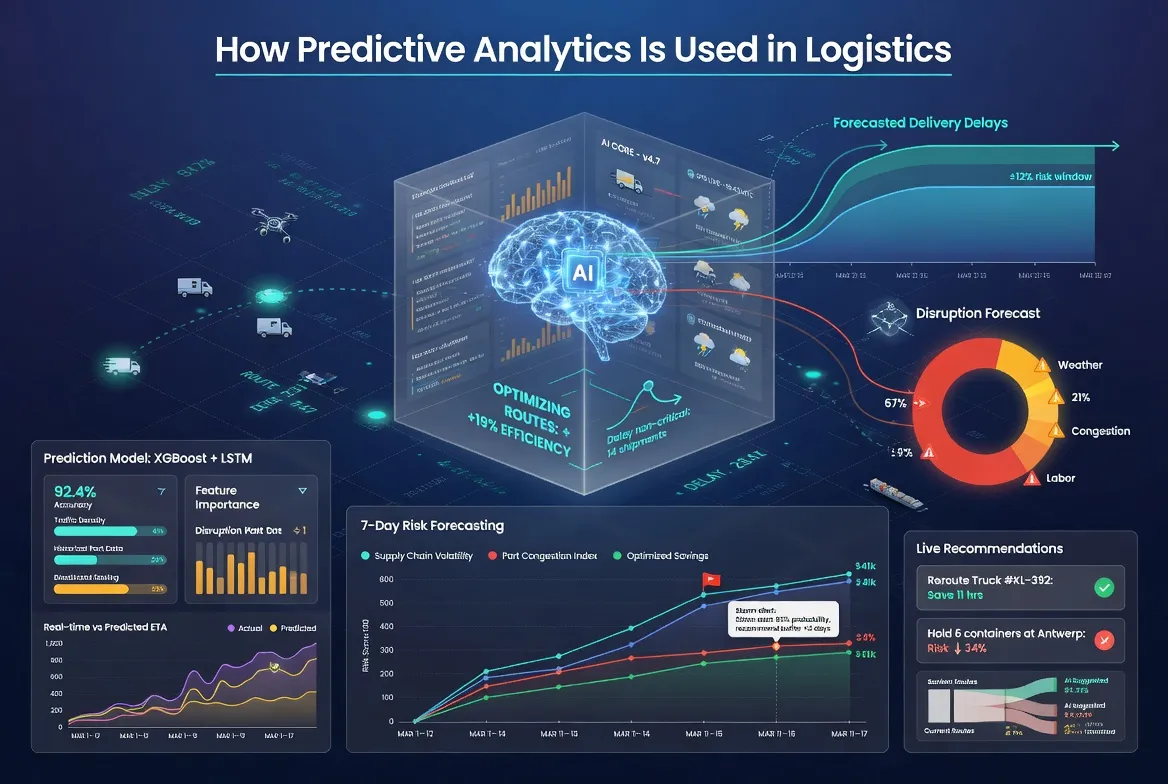
Predictive analytics for cost optimization
Benefits for Logistics Companies
Reduced Transportation Costs
Optimized carrier selection and routing lower overall freight expenses.
Improved Profit Margins
Better cost control directly enhances profitability.
Increased Operational Efficiency
Automation reduces manual work and speeds up decision-making.
Better Scalability
Systems can handle large shipment volumes without increasing complexity.
Enhanced Customer Competitiveness
Lower costs enable more competitive pricing for customers.
Best Practices and Use Cases
Maintain Accurate Rate Cards
Ensure pricing data is up to date for accurate cost calculation.
Use Data-Driven Decision Making
Leverage system insights to choose carriers and routes.
Monitor Cost Performance Continuously
Track deviations between planned and actual costs.
Automate Repetitive Processes
Reduce manual effort in cost calculation and analysis.
Use Case: Freight Forwarders
Freight forwarders can compare multiple carriers and optimize routing to reduce transportation costs while maintaining service quality.
Use Case: Cross-Border eCommerce Logistics
High-volume parcel operations benefit from automated carrier selection and cost optimization across global networks.
Use Case: 3PL Providers
3PL companies can optimize costs across multiple clients and service offerings.
Conclusion
Logistics software for freight cost optimization enables companies to control expenses, improve efficiency, and enhance profitability in complex logistics environments. By combining automation, real-time data, and intelligent decision-making, these systems provide a strategic advantage in managing transportation costs and scaling operations effectively.
Frequently Asked Questions
What is freight cost optimization in logistics?
It is the process of reducing logistics costs through better planning, carrier selection, and use of digital systems.
How does logistics software optimize freight costs?
It uses rate cards, real-time data, and automation to calculate costs, compare options, and select the most efficient solutions.
Why is freight cost optimization important?
It helps reduce expenses, improve margins, and maintain competitiveness in the logistics industry.
What are the benefits of freight cost optimization software?
Benefits include lower costs, improved efficiency, better decision-making, and scalability.
Who uses freight cost optimization software?
Freight forwarders, 3PL providers, and cross-border logistics companies commonly use it.
About WallTech
WallTech provides digital logistics solutions that help companies optimize freight costs through integrated operational and financial management. Its platforms enable end-to-end collaboration across logistics partners, real-time shipment visibility through milestone-based tracking, and automated workflows for cost calculation, billing, and decision-making. By combining data integration, automation, and intelligent optimization, WallTech supports logistics companies in improving efficiency, controlling costs, and scaling their global operations.
If you're exploring ways to improve your logistics operations, feel free to connect with us to learn more about our solutions and system capabilities.