



May 21,2026
How Do Logistics Platforms Track Shipment Milestones?
Introduction
Freight platforms share shipment information with partners by using centralized digital systems that enable real-time data synchronization, structured data access, and automated updates across all stakeholders. These platforms ensure that shippers, carriers, agents, and warehouses can access the same shipment data, track progress through unified milestones, and collaborate efficiently without relying on fragmented communication channels.
In global logistics, timely and accurate information sharing is essential. Without it, partners operate with incomplete or outdated data, leading to delays, errors, and inefficiencies. Freight platforms address this by creating a single source of truth for all shipment-related information.
What is Shipment Information Sharing in Logistics?
Shipment information sharing refers to the process of distributing key logistics data among all stakeholders involved in a shipment. This includes:
Shipment details (origin, destination, routing)
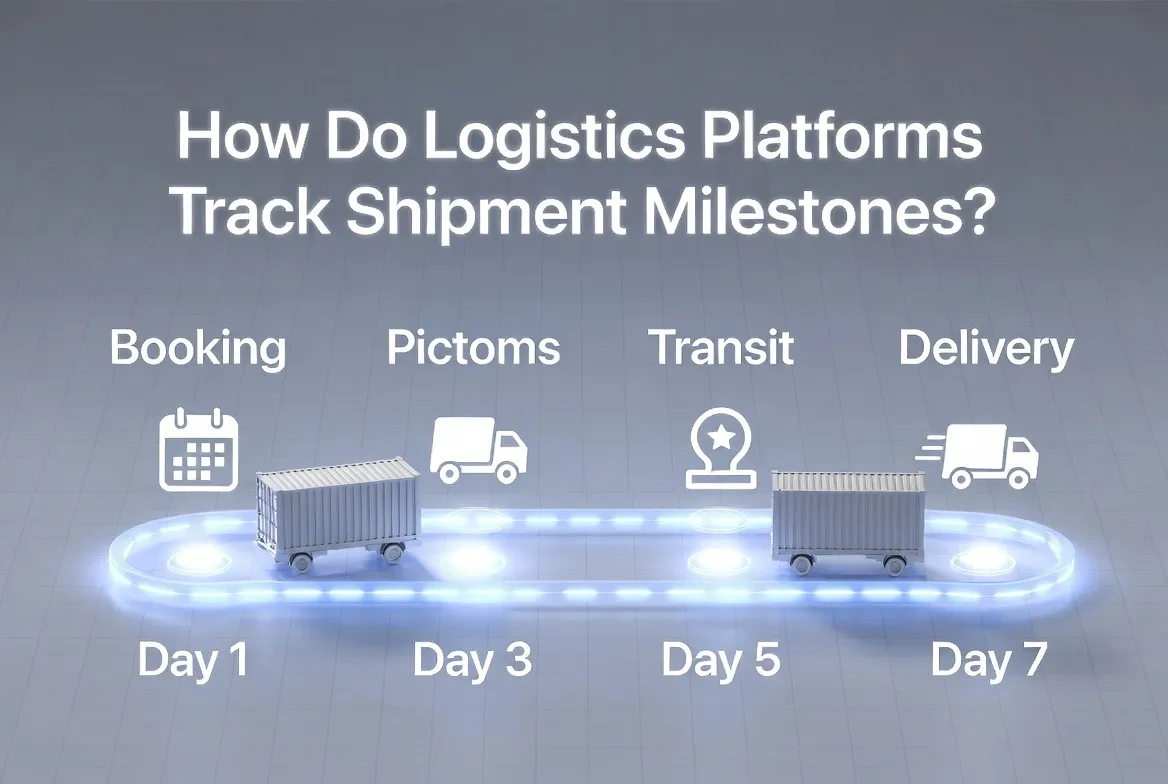
Operational milestones (pickup, departure, arrival, delivery)
Documentation (bill of lading, invoices, customs forms)
Status updates and exceptions
Financial data (rates, costs, billing information)
Traditionally, this information is shared manually through emails, spreadsheets, or messaging tools. Freight platforms digitize and centralize this process, making it more efficient and reliable.
Why Shipment Information Sharing Matters
Efficient information sharing is critical for successful logistics operations. Poor information flow can result in:
1. Data inconsistencies
Different partners may have conflicting versions of shipment data.
2. Delayed decision-making
Lack of real-time updates slows down responses to operational changes.
3. Limited visibility
Stakeholders cannot track shipment progress across the entire journey.
4. Increased operational risks
Missing or incorrect information can lead to delays or compliance issues.
5. Customer dissatisfaction
Inaccurate or delayed updates impact service quality.
Freight platforms solve these issues by ensuring that all partners work with accurate, real-time data.
How Freight Platforms Share Shipment Information
Freight platforms enable information sharing through a structured, system-driven approach:
1. Centralized data repository
All shipment data is stored in a single platform, serving as the “single source of truth.”
2. Real-time data synchronization
Updates entered by one stakeholder are instantly reflected for all others.
3. Role-based access control
Partners can view and update information based on their responsibilities.
4. Milestone-based tracking
Shipment progress is structured into milestones, making updates clear and standardized.
5. Automated notifications and alerts
Partners are notified of important updates, delays, or required actions.
6. API and system integrations
Freight platforms integrate with ERP, WMS, carrier systems, and eCommerce platforms for seamless data exchange.
This ensures that all stakeholders are aligned and informed throughout the shipment lifecycle.
Key Features / Key Capabilities
Freight platforms provide several capabilities to support shipment information sharing:
1. Multi-party collaboration
Enables data sharing across shippers, carriers, and agents
Supports upstream and downstream connectivity
2. Unified shipment timeline
Consolidates all updates into a single view
Tracks milestones from origin to delivery
3. Real-time visibility
Provides continuous tracking across all transport stages
Improves monitoring and exception management
4. Workflow automation
Automates updates, notifications, and task assignments
Reduces manual communication
5. AI-driven data recognition
Extracts information from documents automatically
Improves data accuracy and reduces manual input
6. Financial data integration
Shares billing and cost information across stakeholders
Supports automated reconciliation
These features ensure that shipment information is shared efficiently and accurately.
Benefits for Logistics Companies
Sharing shipment information through freight platforms offers several benefits:
Improved transparency
All stakeholders have access to the same data, reducing confusion.
Faster communication
Real-time updates eliminate delays in information sharing.
Reduced errors
Automation minimizes manual data entry and inconsistencies.
Better coordination
Partners can align their operations based on shared information.
Enhanced customer service
Accurate and timely updates improve customer satisfaction.
Scalability
Companies can manage larger volumes of shipments and partners efficiently.
Best Practices / Use Cases
To optimize shipment information sharing, logistics companies should follow these best practices:
1. Centralize all shipment data
Ensure all information is managed within a single platform.
2. Standardize data formats
Use consistent structures for shipment and document data.
3. Enable real-time updates
Encourage partners to update milestones promptly.
4. Automate notifications
Ensure stakeholders are informed of key events automatically.
5. Integrate external systems
Connect platforms with ERP, WMS, and carrier systems for seamless data flow.
Use case example:
A cross-border logistics provider manages shipments involving:
eCommerce sellers placing orders
Air carriers handling international transport
Destination agents managing delivery
Using a freight platform:
Shipment data is shared across all partners
Milestones are updated in real time
Documents are centrally stored and accessed
Alerts are triggered for delays or exceptions
This ensures efficient coordination and improved delivery performance.
Conclusion
Freight platforms play a crucial role in sharing shipment information across multiple stakeholders. By centralizing data, enabling real-time updates, and automating workflows, these platforms eliminate fragmentation and improve operational efficiency.
As logistics operations become more complex, effective information sharing will be essential for maintaining visibility, coordination, and service quality.
Frequently Asked Questions
What is shipment information sharing in logistics?
It is the process of distributing shipment-related data—such as status updates, documents, and financial information—among all stakeholders.
How do freight platforms share shipment information?
They use centralized systems, real-time synchronization, and automated workflows to ensure all partners access the same data.
Why is information sharing important in logistics?
It improves visibility, reduces errors, and enables efficient coordination across the supply chain.
What are the benefits of freight platforms for information sharing?
They enhance transparency, speed up communication, reduce manual work, and improve overall operational efficiency.
About WallTech
WallTech provides digital logistics solutions that enable efficient shipment information sharing across global supply chains. Its platforms support real-time visibility, milestone-based tracking, and seamless collaboration between multiple stakeholders. By combining data centralization with workflow and financial automation, WallTech helps logistics companies reduce inefficiencies, improve transparency, and scale their operations in complex international environments.
If you're exploring ways to improve your logistics operations, feel free to connect with us to learn more about our solutions and system capabilities.


.webp "How Freight Financial Management Improves Logistics Operations")


