Apr 13,2026
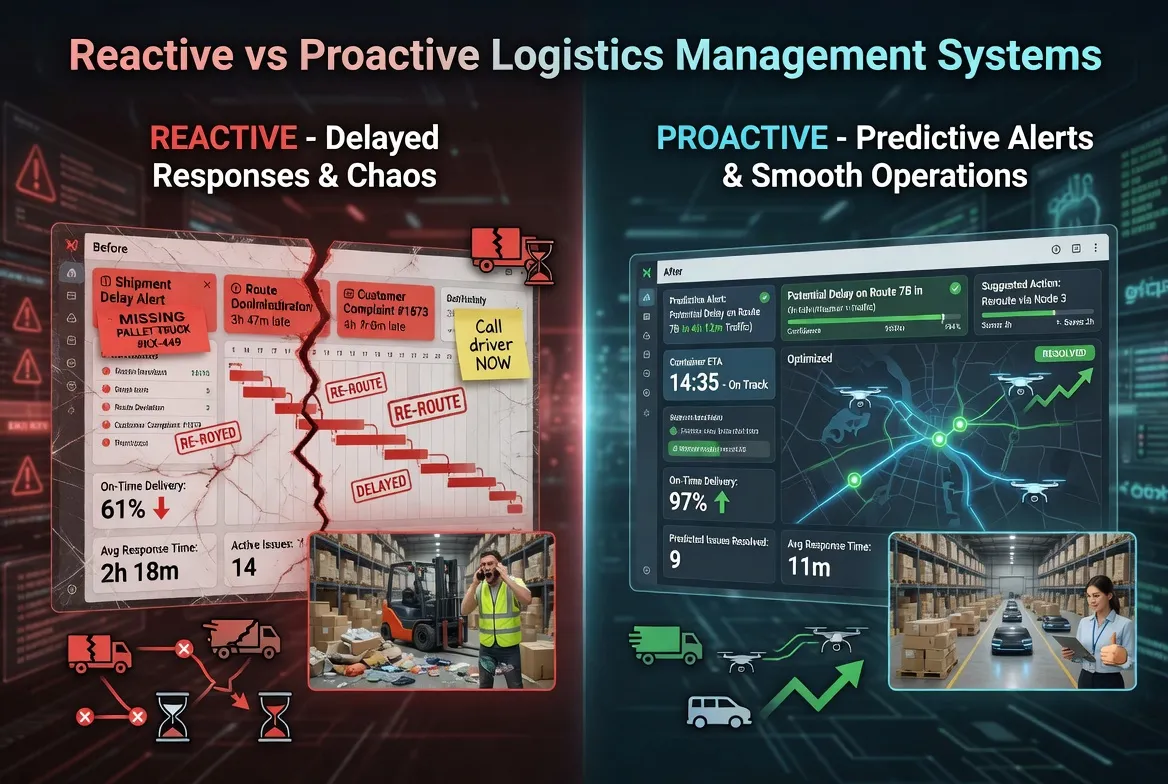
Reactive vs Proactive Logistics Management Systems
Introduction
Logistics platforms reduce manual operational tasks by digitizing data, automating repetitive processes, and standardizing workflows across the entire logistics lifecycle. Through technologies such as AI-driven data recognition, workflow automation, and system integration, these platforms minimize human intervention in routine tasks like data entry, document handling, coordination, and financial processing.
For freight forwarders, 3PL providers, and cross-border eCommerce logistics companies, reducing manual work is essential to improving efficiency, lowering error rates, and enabling scalable operations in increasingly complex global supply chains.
What is Manual Operational Work in Logistics?
Manual operational work in logistics refers to tasks that require human input, coordination, and execution without system automation. These tasks are often repetitive, time-consuming, and prone to errors.
Typical manual tasks include:
Entering shipment data into multiple systems
Preparing and verifying documents
Sending emails to coordinate shipment updates
Tracking shipment status manually across carriers
Calculating costs and preparing invoices
Reconciling accounts with suppliers and customers
In traditional logistics environments, these activities are handled through spreadsheets, emails, and disconnected tools, leading to inefficiencies and inconsistencies.
Why Reducing Manual Tasks Matters
Heavy reliance on manual operations creates several challenges:
High error rates due to repeated data entry
Operational delays caused by manual processing
Limited scalability as workload increases
Lack of standardization across teams and regions
Reduced visibility into real-time operations
Reducing manual tasks is critical because it:
Frees up human resources for higher-value work
Improves data accuracy and consistency
Accelerates operational cycles
Enhances service reliability
Supports business growth without proportional cost increases
How Logistics Platforms Reduce Manual Operational Tasks
Logistics platforms achieve this through automation, intelligent data handling, and centralized system design.
1. Automated Data Entry and AI Recognition
AI-powered tools can extract and process data from:
Shipping instructions
Bills of lading
Commercial invoices
Packing lists
This eliminates the need for repetitive manual input and ensures higher data accuracy.
2. Workflow Automation
Predefined workflows automate routine operational steps:
Task assignment based on shipment stage
Automated status updates
Approval processes for operations and finance
This reduces the need for manual coordination and follow-ups.
3. Centralized Data Management
All shipment data is stored and managed within a unified system:
Single source of truth for all stakeholders
Elimination of duplicate data entry across systems
Real-time synchronization of updates
This significantly reduces administrative workload.
4. Automated Communication and Notifications
Systems automatically trigger notifications:
Shipment milestone updates
Task reminders and alerts
Exception notifications
This replaces manual email communication and ensures timely information flow.
5. End-to-End Visibility and Tracking
Milestone-based tracking provides:
Real-time shipment status updates
Unified timeline across all transportation stages
Users no longer need to manually check multiple carrier platforms.
6. Financial Process Automation
Logistics platforms automate financial operations:
Automatic cost calculation based on predefined rate rules
Invoice generation upon completion of milestones
Accounts receivable and payable tracking
Automated reconciliation with supplier invoices
This reduces manual accounting work and improves financial accuracy.
7. Multi-Role Collaboration
By enabling collaboration across:
Internal departments (sales, operations, finance)
External partners (carriers, warehouses, agents)
All stakeholders work within the same system, eliminating the need for fragmented communication and manual coordination.
Key Features / Key Capabilities
Logistics platforms that reduce manual tasks typically offer:
AI-based document and data recognition
Configurable workflow automation engines
Centralized shipment and data management systems
Real-time milestone tracking and visibility
Automated notification and alert systems
Integrated financial automation (billing, reconciliation)
API/EDI integrations with external systems
These capabilities collectively reduce the need for manual intervention across operations.
Benefits for Logistics Companies
1. Reduced Operational Workload
Less time spent on repetitive tasks
More focus on strategic and customer-facing activities
2. Improved Accuracy
Lower risk of human error
Consistent data across systems
3. Faster Processing Times
Quicker shipment handling
Reduced delays in documentation and approvals
4. Enhanced Visibility
Real-time tracking without manual checks
Better monitoring of operations
5. Increased Scalability
Ability to handle more shipments with the same team size
Reduced dependency on hiring additional staff
Best Practices / Use Cases
1. Freight Forwarders
Automate document processing and shipment tracking
Reduce manual coordination with overseas agents
2. 3PL Providers
Centralize operations across multiple clients
Automate billing and reporting processes
3. Cross-Border eCommerce Logistics
Handle high-volume shipments efficiently
Automate order processing and tracking updates
4. Multi-Office Logistics Companies
Standardize operations across regions
Enable seamless collaboration between branches
Conclusion
Logistics platforms reduce manual operational tasks by transforming fragmented, labor-intensive processes into automated, system-driven workflows. Through AI, workflow automation, and real-time visibility, these platforms eliminate inefficiencies, improve accuracy, and enable scalable logistics operations.
As shipment volumes grow and supply chains become more complex, reducing manual work is essential for maintaining competitiveness and delivering consistent service quality.
Frequently Asked Questions
What are manual operational tasks in logistics?
Manual operational tasks include data entry, document handling, shipment tracking, communication, and financial processing that require human effort without system automation.
How do logistics platforms reduce manual work?
They use AI data recognition, workflow automation, centralized systems, and real-time tracking to minimize human involvement in repetitive tasks.
Why is reducing manual work important in logistics?
It improves efficiency, reduces errors, accelerates operations, and allows companies to scale without significantly increasing resources.
What are the benefits of automation in logistics operations?
Benefits include lower operational costs, improved accuracy, faster processing, better visibility, and enhanced collaboration.
About WallTech
WallTech provides digital logistics solutions that help freight forwarders, 3PL providers, and cross-border eCommerce logistics companies reduce manual operational workload through intelligent automation. Its platforms support end-to-end logistics collaboration, enabling seamless coordination across multiple roles and stakeholders. With real-time shipment visibility based on milestone tracking, along with workflow automation and financial automation capabilities such as automated billing and reconciliation, WallTech helps logistics companies improve efficiency, accuracy, and scalability in complex global operations.
If you're exploring ways to improve your logistics operations, feel free to connect with us to learn more about our solutions and system capabilities.
.webp "What Is a Carrier Management System in Logistics?")