Apr 24,2026
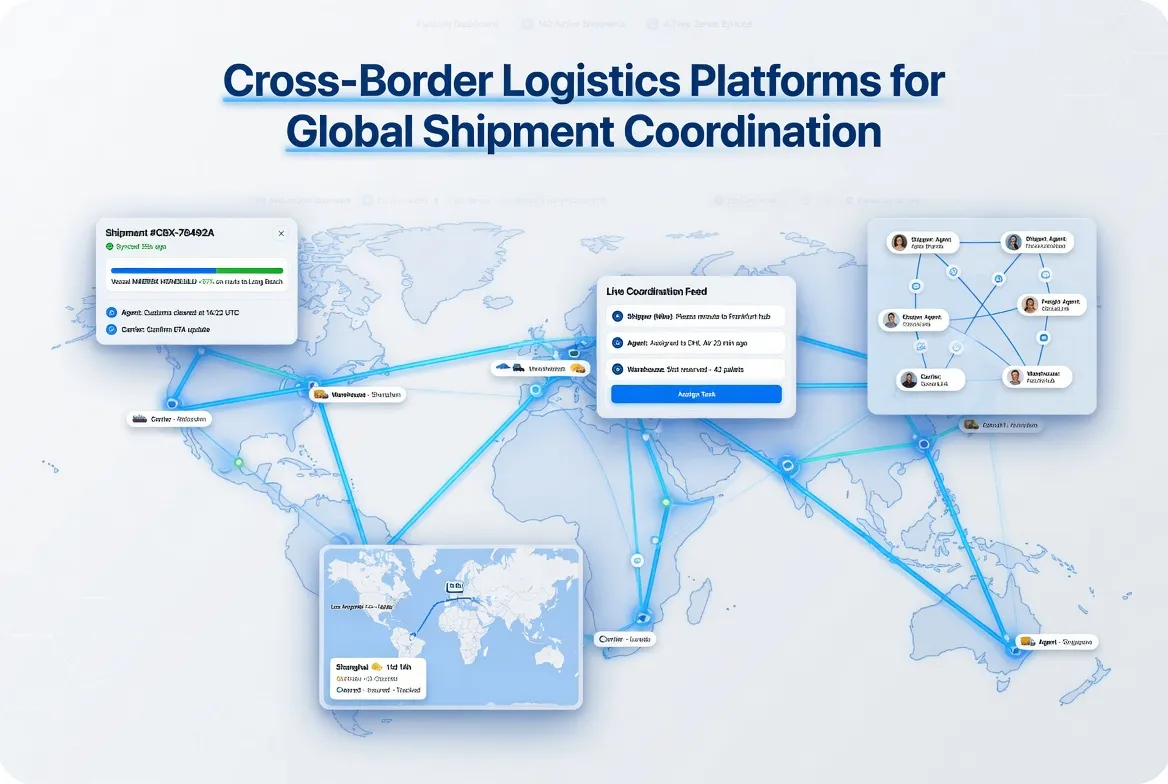
Cross-Border Logistics Platforms for Global Shipment Coordination
Introduction
Logistics platforms manage international freight routes by digitally mapping transportation paths, optimizing route selection, and coordinating execution across multiple carriers, regions, and transport modes. These platforms centralize route data, automate planning processes, and provide real-time visibility into shipment movement along each route.
In international logistics, freight routes are not static—they involve dynamic decisions based on cost, transit time, capacity, and regulatory constraints. Without a structured system, route planning is often manual and fragmented. Modern logistics platforms enable companies to standardize routing strategies, improve coordination, and respond quickly to disruptions across global supply chains.
What are International Freight Routes?
International freight routes refer to the predefined or dynamically selected paths that goods take when moving from origin to destination across countries. These routes include:
Transportation modes (ocean, air, rail, trucking)
Transit hubs and ports
Customs clearance checkpoints
Warehousing and transshipment locations
Last-mile delivery networks
Freight routes can be simple (direct shipment) or highly complex, involving multiple legs and transfers across different regions and service providers.
Why Managing Freight Routes Matters
Effective freight route management is critical for optimizing cost, delivery time, and service reliability.
Key challenges include:
Complex routing decisions: Multiple route options with varying transit times and costs
Capacity constraints: Limited space on vessels, flights, or trucking routes
Regulatory requirements: Customs procedures differ by country
Lack of real-time updates: Route disruptions may not be visible immediately
Manual coordination: Traditional routing relies heavily on human experience and spreadsheets
Without proper route management, companies risk delays, higher costs, and reduced service quality.
How Logistics Platforms Manage International Freight Routes
Logistics platforms manage freight routes through a combination of planning, execution, and monitoring capabilities:
1. Route Planning and Selection
The platform allows users to define routing rules based on cost, transit time, service level, and destination requirements. Pre-configured route templates help standardize operations.
2. Multi-Modal Coordination
Different transportation modes are integrated into a single route plan. The system links each leg of the journey into a unified shipment workflow.
3. Dynamic Route Optimization
Platforms can adjust routes based on real-time conditions such as delays, congestion, or capacity changes.
4. Multi-Party Collaboration
Carriers, agents, and logistics partners collaborate within the system to execute each segment of the route. Role-based access ensures efficient coordination.
5. Milestone-Based Tracking
Each route is monitored through key milestones, such as departure, arrival, and customs clearance. A unified timeline tracks progress across all legs.
6. Exception Handling
The system detects disruptions (e.g., delays, missed connections) and triggers alerts, enabling proactive adjustments to routes.
7. Financial Integration
Route-related costs are automatically calculated and linked to billing and settlement processes.
Key Features / Key Capabilities
Logistics platforms offer several capabilities to manage international freight routes effectively:
1. Route Configuration and Rule Management
Predefined routing templates
Flexible configuration based on business requirements
Support for different shipment types and service levels
2. End-to-End Visibility
Real-time tracking across all route segments
Unified timeline for shipment events
Exception alerts and notifications
3. Multi-Role Collaboration
Coordination across internal teams and external partners
Upstream and downstream connectivity
Shared visibility into route execution
4. Workflow Automation
Automated route assignment based on rules
Task automation for each route stage
AI-driven data capture from shipping documents
5. Financial Automation
Automated cost calculation per route
Billing and invoicing integration
Streamlined reconciliation processes
6. System Integration
Integration with carrier systems, ERP, WMS, and customs platforms
API connectivity for real-time data exchange
Benefits for Logistics Companies
By using logistics platforms to manage freight routes, companies can achieve:
Optimized routing decisions: Balance cost, speed, and reliability
Improved visibility: Real-time tracking across all route segments
Enhanced coordination: Seamless collaboration with global partners
Reduced operational risk: Faster response to disruptions
Scalability: Ability to manage complex routing scenarios at scale
These benefits are particularly important for freight forwarders and cross-border eCommerce logistics providers handling diverse shipment requirements.
Best Practices / Use Cases
To effectively manage international freight routes, companies should adopt the following best practices:
1. Define Standard Routing Strategies
Establish clear routing rules for different regions, shipment types, and service levels.
2. Use Data-Driven Decision Making
Leverage historical and real-time data to optimize route selection.
3. Enable Real-Time Monitoring
Track shipments continuously to identify and respond to disruptions quickly.
4. Automate Route Assignment
Reduce manual intervention by using rule-based automation for route planning.
5. Collaborate with Partners on a Unified Platform
Ensure all stakeholders can access and update route-related information.
6. Integrate Operational and Financial Data
Link route execution with cost tracking and billing to improve financial accuracy.
Conclusion
Managing international freight routes is a complex but critical aspect of global logistics operations. Logistics platforms provide the tools needed to plan, execute, and monitor routes efficiently by integrating data, automating workflows, and enabling real-time collaboration.
As global supply chains become more dynamic, companies that adopt digital routing solutions will be better equipped to optimize performance, reduce costs, and deliver reliable logistics services.
Frequently Asked Questions
What are international freight routes?
International freight routes are the paths that goods take when moving across countries, including transportation modes, transit hubs, and delivery networks.
How do logistics platforms manage freight routes?
They use digital tools to plan routes, automate execution, track shipments, and coordinate stakeholders across all route segments.
Why is route management important in logistics?
Effective route management improves cost efficiency, delivery speed, and service reliability while reducing operational risks.
What features support freight route management?
Key features include route configuration, real-time tracking, workflow automation, and system integration.
What are the benefits of using logistics platforms for routing?
Benefits include optimized route selection, improved visibility, better coordination, and scalable operations.
About WallTech
WallTech provides digital logistics solutions that help companies manage international freight routes through integrated, cloud-based platforms. By enabling end-to-end collaboration across multiple stakeholders, its systems connect upstream and downstream partners within a unified environment. Real-time shipment visibility and milestone-based tracking allow companies to monitor route execution across all transportation legs. In addition, workflow automation and financial automation—such as automated billing and reconciliation—help reduce manual effort and improve accuracy. These capabilities support logistics providers in optimizing routing strategies and scaling their global operations efficiently.
If you're exploring ways to improve your logistics operations, feel free to connect with us to learn more about our solutions and system capabilities.