
Apr 20,2026
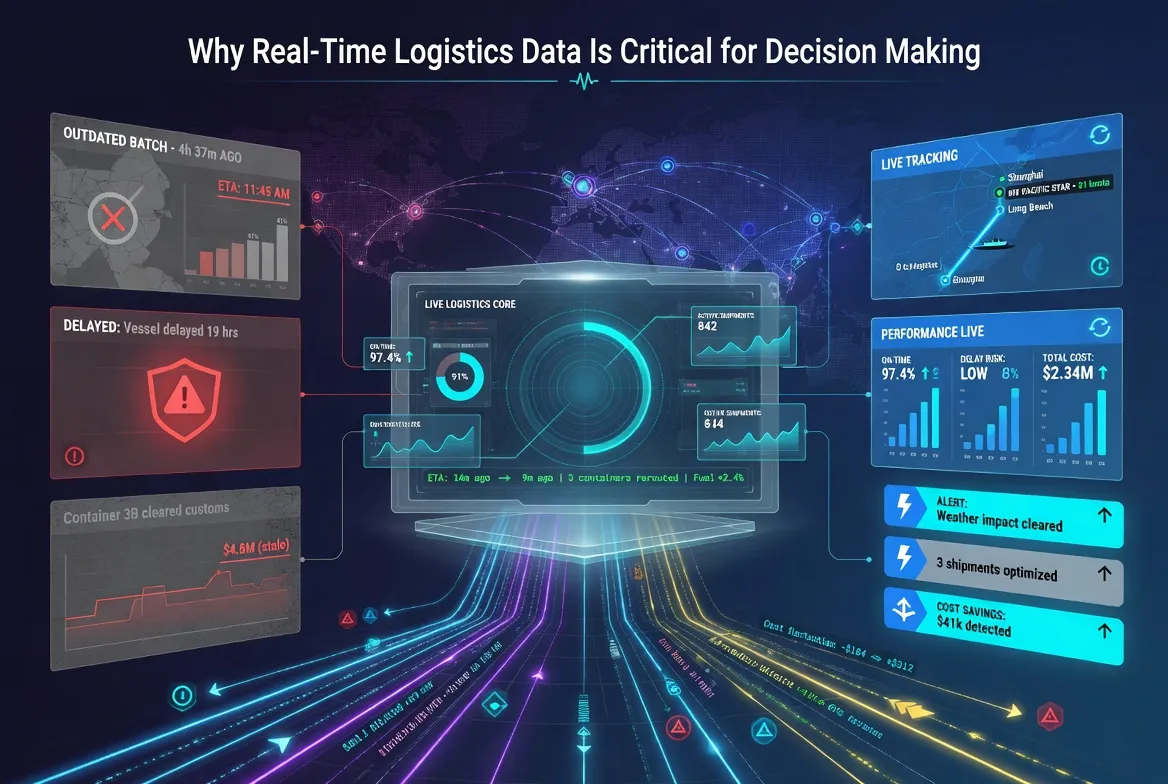
Why Real-Time Logistics Data Is Critical for Decision Making
Introduction
Digital logistics systems improve freight process control by organizing shipment workflows, operational data, and transportation activities within a centralized platform. By replacing manual coordination and fragmented tools, these systems help logistics companies maintain better control over complex freight operations.
Structuring Freight Operational Processes
Freight forwarding operations involve many interconnected activities such as order processing, carrier booking, cargo handling, documentation preparation, customs clearance, and delivery coordination.
When these processes are managed manually through emails and spreadsheets, it becomes difficult to maintain consistent operational control. Tasks may be delayed, information may be incomplete, and shipment status may be unclear.
Digital logistics systems introduce structured workflows that guide shipments through predefined operational stages. This ensures that each step in the freight process is completed in an organized sequence.
Centralizing Operational Data
Process control depends heavily on accurate and accessible operational data. Digital systems centralize shipment information, documents, and operational updates within one platform.
By maintaining a single source of operational data, logistics teams can easily access shipment records and monitor the progress of freight operations. This reduces information fragmentation and helps ensure that teams work with consistent data.
Centralized data management also improves transparency across different departments.
Monitoring Operational Milestones
Digital freight systems allow companies to monitor operational milestones throughout the shipment lifecycle. Key events such as booking confirmation, cargo departure, customs clearance, and delivery can be recorded within the system.
By tracking these milestones, logistics managers gain greater visibility into shipment progress. This allows them to identify delays or disruptions and take corrective action when necessary.
Milestone monitoring helps maintain stronger operational control across complex logistics processes.
Supporting Operational Standardization
Digital systems also help standardize freight operations across logistics organizations. By defining consistent data structures and operational procedures, companies can ensure that shipments are handled according to standardized processes.
Standardization reduces operational variability and helps teams manage large shipment volumes more efficiently. It also supports training and operational scalability as logistics businesses grow.
Conclusion
Digital logistics systems play a critical role in improving freight process control. By structuring workflows, centralizing operational data, and monitoring shipment milestones, these platforms help logistics companies manage freight operations with greater efficiency and reliability.
If you want to learn more about freight process control and digital logistics system solutions, feel free to contact WallTech. Since 2011, WallTech has been dedicated to simplifying operational management for international logistics companies through software, helping businesses reduce costs and improve efficiency.