Apr 22,2026
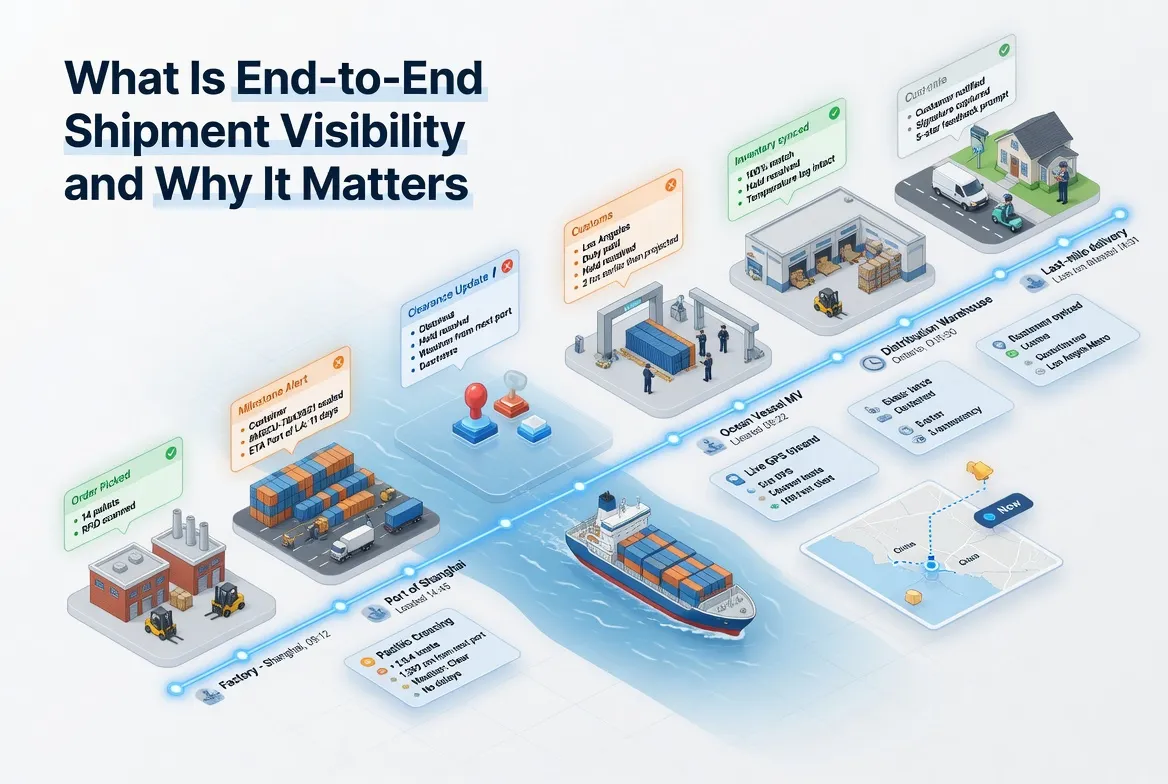
What Is End-to-End Shipment Visibility and Why It Matters
Introduction
Logistics automation platforms for shipment task automation are systems designed to automate individual tasks within the shipment lifecycle, such as order entry, document processing, tracking updates, and billing. By automating these discrete but repetitive tasks, logistics companies can significantly improve efficiency, reduce errors, and accelerate overall shipment execution.
In high-volume freight environments—especially for freight forwarders, 3PLs, and cross-border eCommerce logistics providers—shipment task automation plays a critical role in optimizing daily operations and reducing reliance on manual work.
What is Shipment Task Automation
Shipment task automation refers to the use of technology to automate specific operational tasks involved in managing shipments.
These tasks include:
Entering shipment and order data
Generating and managing shipping documents
Assigning operational tasks to teams
Updating shipment status and milestones
Calculating costs and generating invoices
Unlike full workflow automation, which focuses on end-to-end processes, shipment task automation targets individual actions within the workflow.
By automating these tasks, logistics platforms ensure faster execution, higher accuracy, and consistent performance across operations.
Why Shipment Task Automation Matters
Manual task execution in logistics creates several operational challenges:
Time-consuming processes that slow down shipment handling
High error rates in data entry and documentation
Operational bottlenecks during peak volumes
Limited scalability due to labor dependency
Inconsistent execution across teams
Shipment task automation is essential because it:
Reduces manual workload for operational teams
Improves accuracy and consistency
Speeds up processing times
Enables logistics companies to handle higher volumes efficiently
In cross-border logistics, where shipments involve multiple documents and coordination steps, automating tasks is key to maintaining efficiency.
How Shipment Task Automation Works
Logistics automation platforms enable shipment task automation by applying rule-based and AI-driven mechanisms to individual operational tasks.
A typical process includes:
Automated Data Entry
AI tools extract shipment information from documents using OCR
Data is automatically populated into the system
Task Triggering
Specific tasks are triggered based on shipment events or predefined rules
For example, document generation is triggered once an order is confirmed
Task Assignment
Tasks are automatically assigned to relevant roles
Users receive notifications for required actions
Real-Time Updates
Shipment status and milestones are updated automatically
Data is synchronized across all stakeholders
Automated Documentation
Documents such as invoices and shipping labels are generated automatically
Templates ensure consistency and compliance
Financial Task Automation
Billing is triggered based on shipment milestones
Reconciliation processes are automated
Exception Alerts
The system identifies issues and sends alerts
Manual intervention is required only for exceptions
This approach ensures that individual tasks are executed quickly and accurately without manual intervention.
Key Features / Key Capabilities
Logistics automation platforms for shipment task automation typically include:
1. AI Data Recognition
OCR-based extraction of shipment data from documents
Automatic validation and entry
2. Task Automation Engine
Rule-based task triggering and execution
Automated task assignment to relevant users
3. Real-Time Visibility
Automatic updates of shipment status and milestones
Unified timeline for tracking shipment progress
4. Multi-Role Collaboration
Seamless coordination between departments and partners
Shared access to task and shipment data
5. Automated Documentation
Template-based document generation
Standardized output for compliance and efficiency
6. Financial Task Automation
Automated billing and invoicing
Real-time cost tracking and reconciliation
7. Integration Capabilities
API and EDI integration with external systems
Elimination of manual data transfer between platforms
For example, logistics systems can automatically assign tasks and generate documents based on workflow triggers, reducing manual intervention and improving operational efficiency .
Benefits for Logistics Companies
Shipment task automation provides several key benefits:
Increased Efficiency
Reduces time spent on repetitive tasks
Accelerates shipment processing
Improved Accuracy
Minimizes errors in data entry and documentation
Ensures consistent task execution
Reduced Operational Costs
Lowers labor costs associated with manual processes
Improves overall productivity
Enhanced Visibility
Provides real-time updates on shipment tasks and status
Improves operational control
Better Resource Allocation
Frees up staff to focus on high-value activities
Improves workforce efficiency
Scalability
Enables logistics companies to handle higher shipment volumes without increasing headcount
Best Practices / Use Cases
To effectively implement shipment task automation, logistics companies should follow these best practices:
1. Identify Repetitive Tasks
Focus on automating tasks that are performed frequently and require minimal decision-making.
2. Standardize Task Execution
Ensure tasks follow consistent processes to maximize automation efficiency.
3. Integrate Systems
Connect logistics platforms with ERP, WMS, and carrier systems to eliminate manual data transfer.
4. Use Milestone-Based Triggers
Automate tasks based on shipment milestones for better coordination.
5. Monitor Task Performance
Track task completion times and accuracy to identify optimization opportunities.
6. Enable Collaboration
Ensure all stakeholders have access to task-related data for seamless coordination.
Typical use cases include:
Freight forwarders automating document generation and booking tasks
3PL providers automating warehouse and transportation coordination tasks
Cross-border eCommerce logistics automating order processing and billing tasks
Conclusion
Logistics automation platforms for shipment task automation are essential for improving operational efficiency in modern logistics environments. By automating individual tasks within the shipment lifecycle, these platforms reduce manual workload, improve accuracy, and accelerate processing times.
As shipment volumes continue to grow, task-level automation will play a critical role in enabling logistics companies to scale operations and maintain service quality.
Frequently Asked Questions
What is shipment task automation in logistics?
Shipment task automation refers to automating individual operational tasks such as data entry, document generation, and billing within the shipment lifecycle.
How does shipment task automation work?
It uses rule-based workflows and AI tools to trigger, assign, and execute tasks automatically based on shipment events.
Why is shipment task automation important?
It improves efficiency, reduces errors, and enables logistics companies to handle higher shipment volumes effectively.
What are the benefits of shipment task automation?
Benefits include faster processing, improved accuracy, reduced costs, better visibility, and enhanced scalability.
About WallTech
WallTech provides digital logistics solutions that support shipment task automation across the entire freight lifecycle. Its platforms enable seamless collaboration between multiple roles and partners, with real-time visibility through milestone-based tracking. By integrating workflow automation, AI-driven data recognition, and automated financial processes, WallTech helps logistics companies reduce manual workload, improve operational efficiency, and scale effectively in global logistics environments.
If you're exploring ways to improve your logistics operations, feel free to connect with us to learn more about our solutions and system capabilities.
.webp "What Is a Logistics Customer Portal and How It Works")