

Apr 15,2026
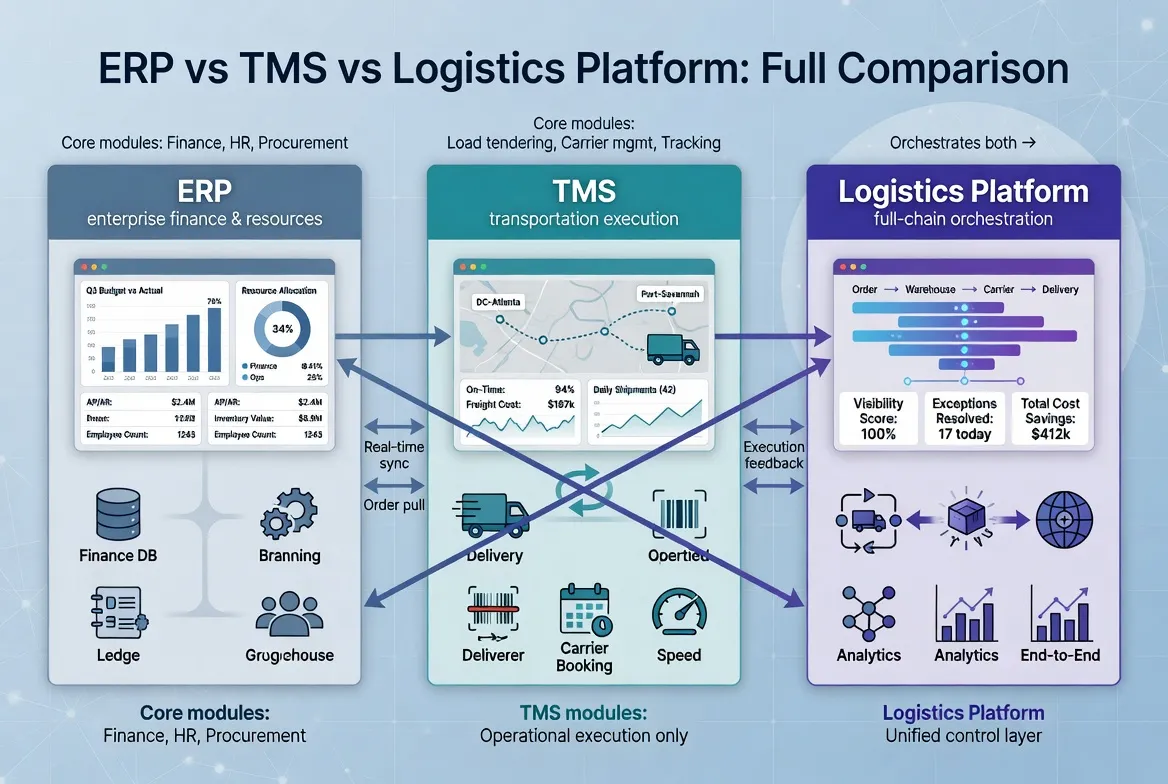
ERP vs TMS vs Logistics Platform: Full Comparison
Introduction
Digital freight forwarding refers to the transformation of traditional freight forwarding operations through the use of digital systems, automation, and data-driven workflows. As global supply chains grow more complex, digital freight forwarding enables logistics companies to move from manual coordination to intelligent, system-driven orchestration.
What is digital freight forwarding
Digital freight forwarding is the use of software platforms and integrated systems to manage freight operations, replacing manual processes such as spreadsheets, emails, and fragmented tools. It covers the entire shipment lifecycle, including booking, documentation, tracking, billing, and collaboration.
Unlike traditional forwarding models, digital freight forwarding emphasizes structured workflows, real-time data visibility, and system-driven coordination across multiple stakeholders. It enables freight forwarders to operate with higher efficiency, consistency, and scalability.
Key challenges or industry context
Despite the growing demand for digitalization, many freight forwarding operations still rely heavily on manual processes. This creates several challenges:
Fragmented communication: Coordination across shippers, carriers, agents, and internal teams often depends on emails and messaging tools, leading to delays and misalignment
Lack of visibility: Shipment status is often updated manually, making it difficult to track progress across multiple transport legs
Inconsistent workflows: Different teams follow different processes, resulting in operational inefficiencies and errors
High dependency on human intervention: Repetitive tasks such as data entry, document handling, and status updates consume significant time
Limited scalability: As shipment volumes grow, manual processes struggle to keep up without increasing headcount
These challenges highlight the need for a more structured and automated approach to freight forwarding operations.
How it works / industry process
Digital freight forwarding systems restructure operations into standardized, system-driven processes. A typical workflow includes:
Order creation and data input
Shipment data is entered manually, via batch import, or through API integration with external systems such as eCommerce platforms or ERPsWorkflow configuration and task assignment
Each shipment follows a predefined workflow with clearly defined milestones, such as booking, pickup, customs clearance, and deliveryMulti-role collaboration
Different roles—including sales, operations, documentation, and finance—interact within the same system, each with assigned responsibilitiesMilestone tracking and updates
Shipment progress is tracked through milestone events, which can be automatically captured from integrated systems or manually updatedException handling and alerts
Delays or disruptions trigger system alerts, enabling proactive interventionFinancial processing and reporting
Costs, revenues, and invoices are generated based on shipment data and predefined rules
This structured approach ensures that all stakeholders operate within a unified framework, reducing reliance on ad hoc communication.
Why it matters (business impact)
The shift to digital freight forwarding has significant implications for logistics businesses:
Operational efficiency: Automation reduces manual workload and accelerates processing times
Improved accuracy: Structured data and workflows minimize errors in documentation and billing
Enhanced visibility: Real-time tracking across all shipment stages improves decision-making
Scalability: Digital systems allow companies to handle higher volumes without proportional increases in staffing
Customer experience: Faster responses and transparent tracking improve client satisfaction
As supply chains become more dynamic, the ability to orchestrate operations intelligently becomes a key competitive advantage.
How modern logistics platforms solve this
Modern logistics platforms are designed to address the limitations of manual freight forwarding by introducing automation, orchestration, and collaboration capabilities.
Workflow automation
Digital systems enable the automation of repetitive tasks such as order creation, document generation, and billing. Rules-based engines can trigger actions automatically when certain conditions are met, reducing manual intervention.
Milestone-based process orchestration
Instead of managing shipments as isolated tasks, modern platforms structure operations around milestone-driven workflows. Each shipment follows a defined sequence of events, ensuring consistency and enabling real-time tracking across multiple transport legs. This approach supports end-to-end visibility by capturing events from both internal operations and external systems.
Multi-role collaboration
Freight forwarding involves multiple stakeholders, including internal teams and external partners. Digital platforms provide a shared environment where all parties can access the same shipment data, update progress, and collaborate in real time. This reduces communication gaps and ensures alignment across the supply chain.
System integration and data connectivity
Modern platforms integrate with carriers, customs systems, and third-party logistics providers through APIs. This allows automatic data exchange, reducing the need for manual updates and improving data accuracy.
AI-driven operations
Advanced systems incorporate AI capabilities such as document recognition, anomaly detection, and predictive analytics. These features help optimize workflows, identify risks early, and support better decision-making.
Key benefits
Adopting digital freight forwarding systems provides several tangible benefits:
Reduced manual workload through automation of repetitive tasks
Consistent operations enabled by standardized workflows
End-to-end shipment visibility across all transport stages
Faster response to exceptions with real-time alerts
Improved collaboration across internal teams and external partners
Better financial control through integrated cost and revenue tracking
These benefits collectively improve both operational performance and customer satisfaction.
Conclusion
Digital freight forwarding represents a fundamental shift from manual coordination to intelligent orchestration. By leveraging workflow automation, milestone-based processes, and multi-role collaboration, logistics companies can transform their operations into scalable, efficient, and data-driven systems. As global logistics continues to evolve, digitalization is no longer optional—it is essential for maintaining competitiveness.
FAQ
1. What is digital freight forwarding in simple terms?
Digital freight forwarding is the use of software systems to manage logistics operations, replacing manual processes with automated workflows and real-time data tracking.
2. How does milestone-based tracking improve freight operations?
Milestone-based tracking provides structured visibility into each stage of a shipment, allowing teams to monitor progress, detect delays, and coordinate actions more effectively.
3. Why is automation important in freight forwarding?
Automation reduces manual workload, minimizes errors, and speeds up operations, enabling logistics companies to handle higher shipment volumes more efficiently.

.webp "Key Features of Logistics Technology Platforms")