May 08,2026
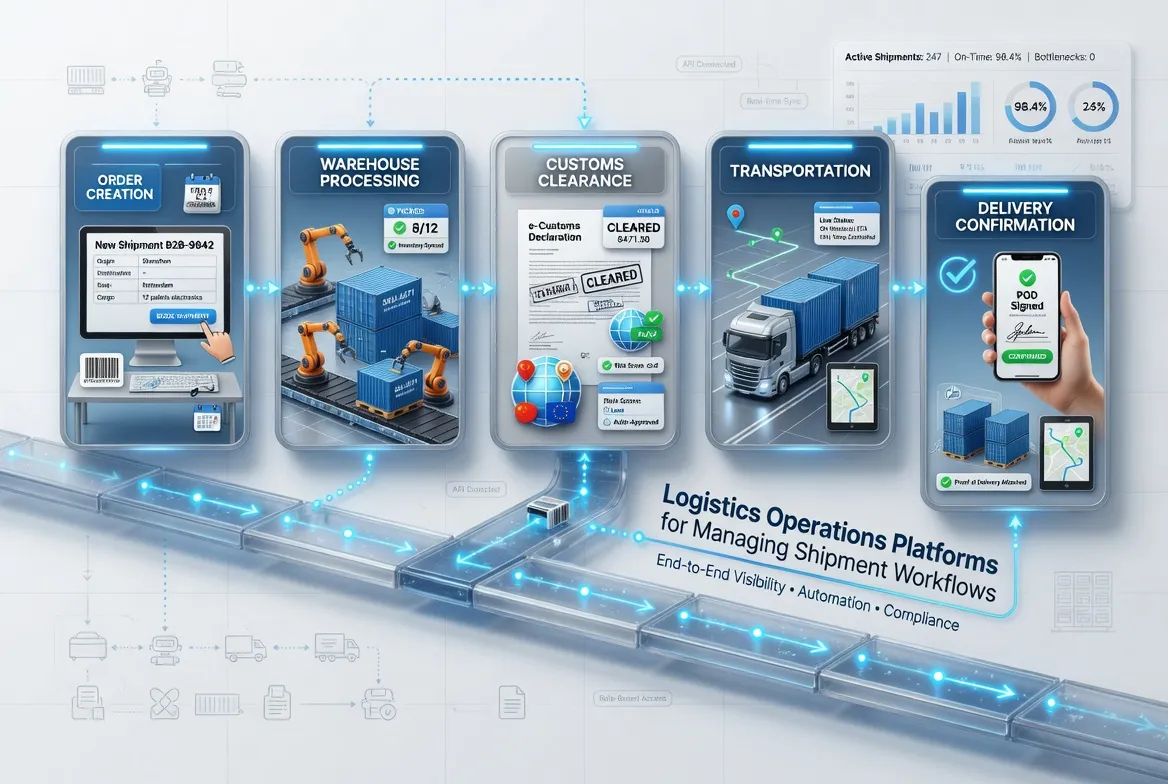
Logistics Operations Platforms for Managing Shipment Workflows
Introduction
Digital logistics platforms for logistics network collaboration are systems that enable seamless coordination and communication across all participants in a logistics network, including freight forwarders, carriers, warehouses, agents, and customers. These platforms create a shared digital environment where all stakeholders can access the same data, workflows, and shipment updates in real time.
In modern global logistics—where operations span multiple countries, partners, and systems—effective collaboration is essential. Digital platforms eliminate communication gaps and ensure that all parties work in sync, improving efficiency and service reliability.
What is a Digital Logistics Platform for Logistics Network Collaboration
A digital logistics platform for network collaboration is a centralized system designed to connect multiple stakeholders within a logistics ecosystem.
It enables:
Multi-role coordination across internal teams (sales, operations, finance, documentation)
Real-time collaboration with external partners (carriers, agents, warehouses)
Shared access to shipment data, documents, and workflows
Standardized communication across the supply chain
Unlike traditional collaboration methods—such as email chains, spreadsheets, and messaging tools—these platforms provide a structured and transparent collaboration framework.
Why Logistics Network Collaboration Matters
Logistics networks involve multiple independent entities working together to move goods globally. Without effective collaboration, companies face challenges such as:
Information silos between departments and partners
Delayed communication across different time zones
Inconsistent data shared through manual channels
Operational inefficiencies due to lack of coordination
Limited visibility across the network
These issues can lead to:
Shipment delays
Increased operational costs
Errors in documentation and execution
Poor customer experience
Digital logistics platforms address these challenges by creating a unified collaboration environment.
How Digital Logistics Platforms Enable Network Collaboration
Digital logistics platforms facilitate collaboration through shared data, workflows, and communication tools.
1. Shared Data Environment
All stakeholders access the same system:
Shipment data is centralized and updated in real time
Documents are stored and shared within the platform
All participants work from a single source of truth
2. Multi-Role Workflow Coordination
Workflows are designed to include multiple roles:
Sales creates or confirms orders
Operations manages execution
Documentation handles compliance and paperwork
Finance manages billing and reconciliation
Each role interacts within the same workflow, ensuring smooth coordination.
3. Upstream and Downstream Integration
The platform connects:
Upstream partners (suppliers, shippers)
Downstream partners (carriers, last-mile providers, customers)
This enables seamless data exchange and collaboration across the entire supply chain.
4. Real-Time Communication and Updates
Collaboration is supported through:
Real-time shipment updates
Automated notifications for key events
Shared tracking timelines
This reduces the need for manual communication.
5. Role-Based Access Control
Different stakeholders have controlled access:
Internal teams access operational and financial data
External partners access relevant shipment information
Customers access tracking and status updates
This ensures secure and efficient collaboration.
Key Features / Key Capabilities
Digital logistics platforms for collaboration typically include:
1. Multi-Role Collaboration Framework
Coordination across departments within one system
Role-based task assignment and visibility
2. Partner Integration
Seamless connection with carriers, agents, and warehouses
Shared workflows across organizations
3. Unified Shipment Timeline
End-to-end visibility for all stakeholders
Milestone-based tracking accessible to all participants
4. Document Sharing and Management
Centralized storage of shipping documents
Real-time document updates and access
5. Automated Notifications
Alerts for shipment updates, delays, or required actions
Configurable notification rules
6. Workflow Automation
Automated task triggering and process coordination
Reduced manual follow-ups between stakeholders
These capabilities create a collaborative ecosystem where all participants can operate efficiently.
Benefits for Logistics Companies
Improved Coordination Efficiency
Faster communication across teams and partners
Reduced delays caused by misalignment
Enhanced Visibility
Shared access to shipment data and progress
Better control over operations
Reduced Errors
Elimination of duplicate data entry
Consistent information across stakeholders
Stronger Partner Relationships
Transparent collaboration environment
Improved trust and cooperation
Scalable Network Operations
Ability to manage larger partner networks
Standardized collaboration processes
Best Practices / Use Cases
1. Freight Forwarders
Coordinate global agent networks
Manage multi-leg shipments with multiple partners
Share real-time updates with customers
2. 3PL Providers
Collaborate with multiple carriers and warehouses
Provide integrated services across the supply chain
Improve service consistency
3. Cross-Border eCommerce Logistics
Coordinate high-volume parcel operations
Integrate with platforms and last-mile providers
Improve delivery transparency
4. Multi-Branch Logistics Enterprises
Enable collaboration between headquarters and overseas offices
Standardize processes across regions
Share operational and financial data
Conclusion
Digital logistics platforms for logistics network collaboration are essential for managing complex, multi-partner logistics operations. By providing a unified system for data sharing, workflow coordination, and communication, these platforms eliminate fragmentation and improve efficiency.
As logistics networks continue to expand globally, the ability to collaborate effectively across all stakeholders will be a key factor in operational success and competitive advantage.
Frequently Asked Questions
What is logistics network collaboration?
Logistics network collaboration refers to the coordination and communication between multiple stakeholders involved in the supply chain to ensure efficient and synchronized operations.
How do digital logistics platforms support collaboration?
They provide a shared system for data access, workflow management, real-time updates, and communication across all participants.
Why is collaboration important in logistics?
Effective collaboration reduces delays, improves efficiency, enhances visibility, and ensures consistent execution across the supply chain.
What are the benefits of logistics collaboration platforms?
Benefits include improved coordination, reduced errors, enhanced visibility, and scalable operations.
Who uses logistics collaboration platforms?
Freight forwarders, 3PL providers, cross-border eCommerce logistics companies, and global supply chain operators use these platforms.
About WallTech
WallTech provides digital logistics platforms that enable seamless logistics network collaboration across global supply chains. By connecting internal teams and external partners within a unified system, the platform supports multi-role coordination and real-time data sharing. With capabilities such as end-to-end shipment visibility, milestone-based tracking, and workflow automation, logistics companies can improve collaboration efficiency and operational control. In addition, integrated financial processes and AI-driven data handling help reduce manual work and enhance scalability across complex logistics networks.
If you're exploring ways to improve your logistics operations, feel free to connect with us to learn more about our solutions and system capabilities.