May 13,2026
How Do Logistics Technology Platforms Support Digital Supply Chains?
Introduction
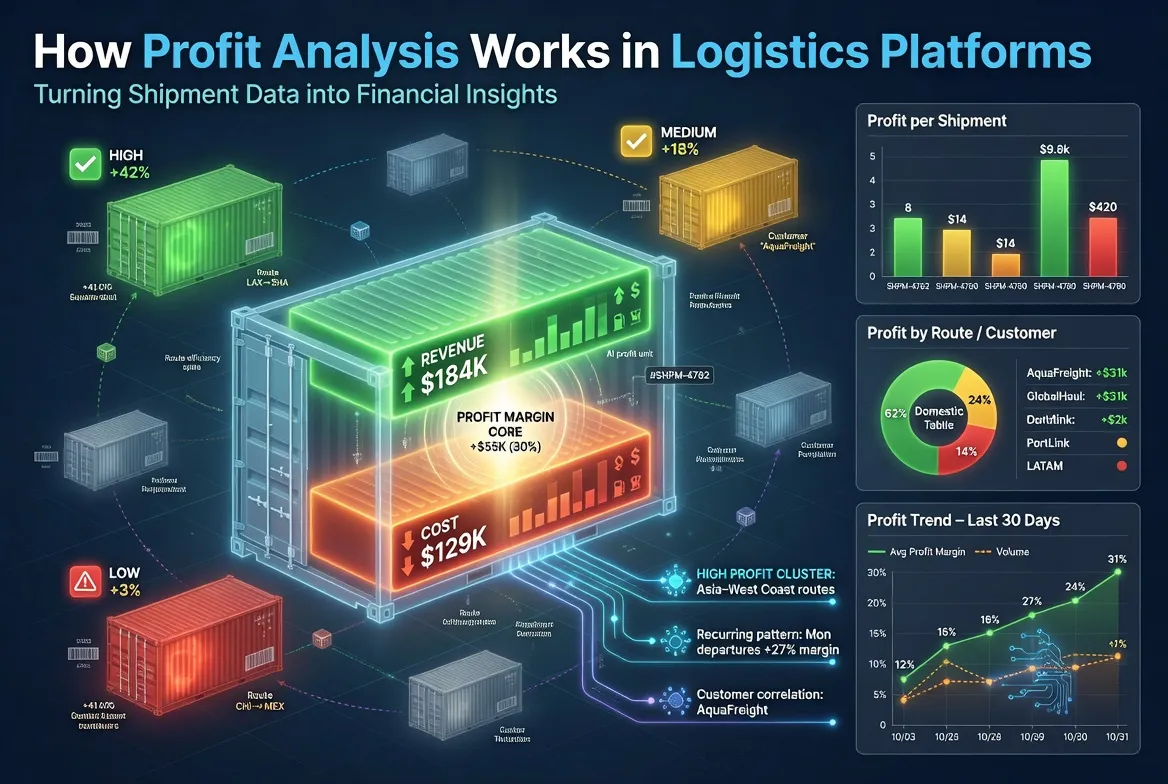
Shipment margin analysis is the process of evaluating the profitability of logistics shipments by comparing revenue with operational costs. Digital logistics systems improve shipment margin analysis by integrating operational data, billing records, and cost information within a single platform.
What Is Shipment Margin Analysis?
Shipment margin analysis focuses on measuring the financial performance of logistics shipments. For each shipment, logistics companies must calculate total revenue from customer invoices and compare it with the operational costs required to complete the shipment.
These costs may include transportation charges, carrier payments, warehouse handling fees, customs costs, and other logistics expenses.
In traditional logistics environments, margin analysis is often performed manually after shipments are completed. Finance teams gather cost data from different systems and use spreadsheets to estimate profitability.
This approach makes it difficult to obtain accurate or real-time insights into shipment performance.
Digital logistics systems allow companies to analyze shipment margins automatically by linking operational activities with financial data.
Why Shipment Margin Analysis Matters
Logistics companies often operate with narrow profit margins. Understanding the profitability of individual shipments helps organizations identify which services, routes, and customers generate sustainable revenue.
Without effective margin analysis, companies may encounter several operational challenges:
Difficulty identifying loss-making shipments
Limited visibility into cost structures
Inefficient pricing strategies
Poor financial planning
Shipment margin analysis provides the financial insights needed to optimize logistics operations and maintain stable profitability.
How Digital Logistics Systems Improve Margin Analysis
Modern logistics platforms provide several capabilities that support accurate and efficient margin analysis.
Integrated Operational and Financial Data
Digital systems connect shipment operations with billing and cost records. When shipments are created or completed, the platform records both revenue and associated operational costs.
This integration ensures that margin calculations are based on accurate and consistent data.
Shipment-Level Profit Tracking
Logistics platforms allow companies to track profit margins for each shipment. By comparing total revenue with operational expenses, companies can evaluate the profitability of individual logistics activities.
Shipment-level tracking provides detailed financial visibility across operations.
Multi-Dimensional Financial Analysis
Modern platforms allow companies to analyze margins across multiple operational dimensions. Profitability can be evaluated by customer, trade lane, transportation mode, or service type.
This analysis helps companies identify high-performing services and areas that require improvement.
Real-Time Financial Dashboards
Digital systems often include dashboards that display operational revenue, costs, and margin indicators in real time. Managers can monitor financial performance continuously rather than waiting for periodic reports.
Real-time insights enable faster operational adjustments.
Benefits of Digital Margin Analysis
When logistics companies implement digital margin analysis tools, they gain several important advantages.
Improved financial visibility
Companies gain a clear understanding of how operational activities affect profitability.
Better pricing strategies
Accurate cost and revenue data support more effective pricing decisions.
Enhanced cost management
Identifying cost drivers helps companies reduce operational inefficiencies.
Stronger strategic planning
Margin insights allow organizations to focus on profitable markets and services.
Best Practices for Shipment Margin Analysis
To maximize the value of shipment margin analysis, logistics companies should follow several best practices.
First, organizations should ensure that operational shipment data is recorded accurately, since financial analysis depends on reliable information.
Second, companies should standardize rate cards and cost calculation rules to maintain consistent margin calculations.
Third, integrating operational and financial systems ensures that revenue and cost data remain synchronized.
Finally, regular margin analysis helps companies monitor operational performance and refine their logistics strategies.
Conclusion
Shipment margin analysis is an essential capability for modern logistics companies seeking to manage profitability and operational efficiency. By analyzing the relationship between shipment revenue and operational costs, companies can better understand the financial performance of their logistics services.
Digital logistics systems improve margin analysis by integrating operational data with financial records and providing real-time visibility into shipment profitability. These capabilities help logistics organizations make more informed decisions and maintain sustainable business growth.