
May 08,2026
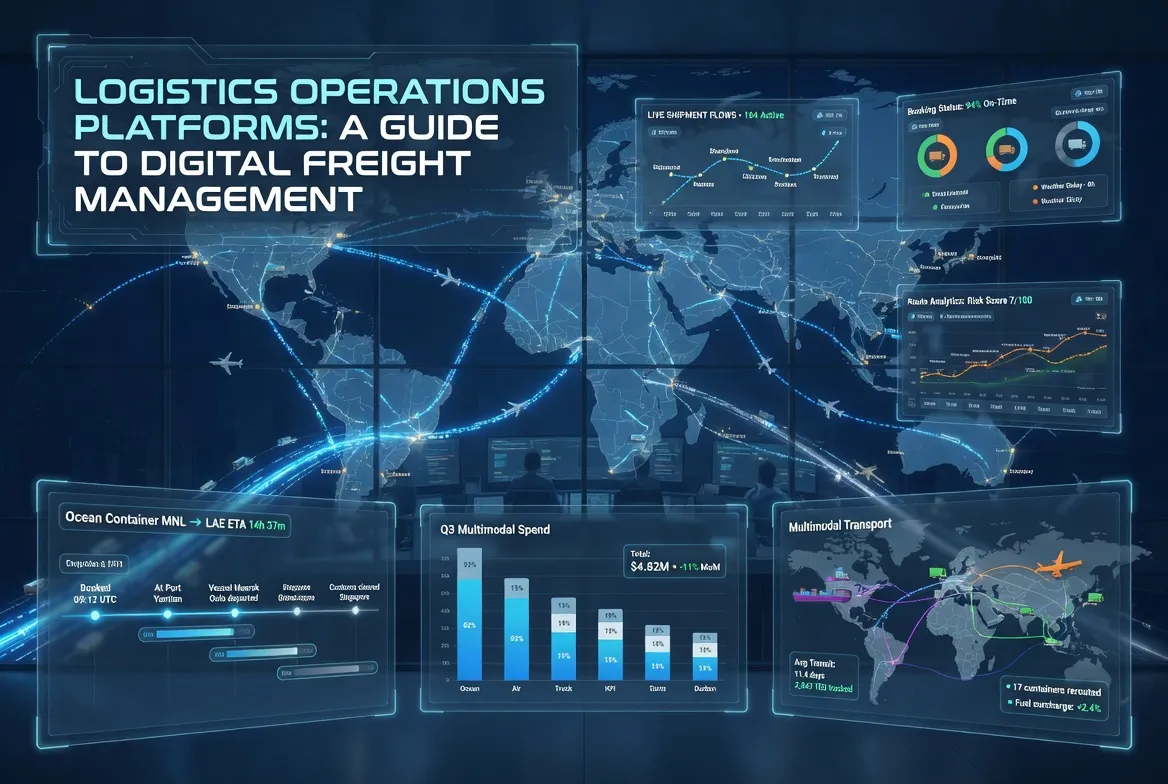
Logistics Operations Platforms: A Guide to Digital Freight Management
Introduction
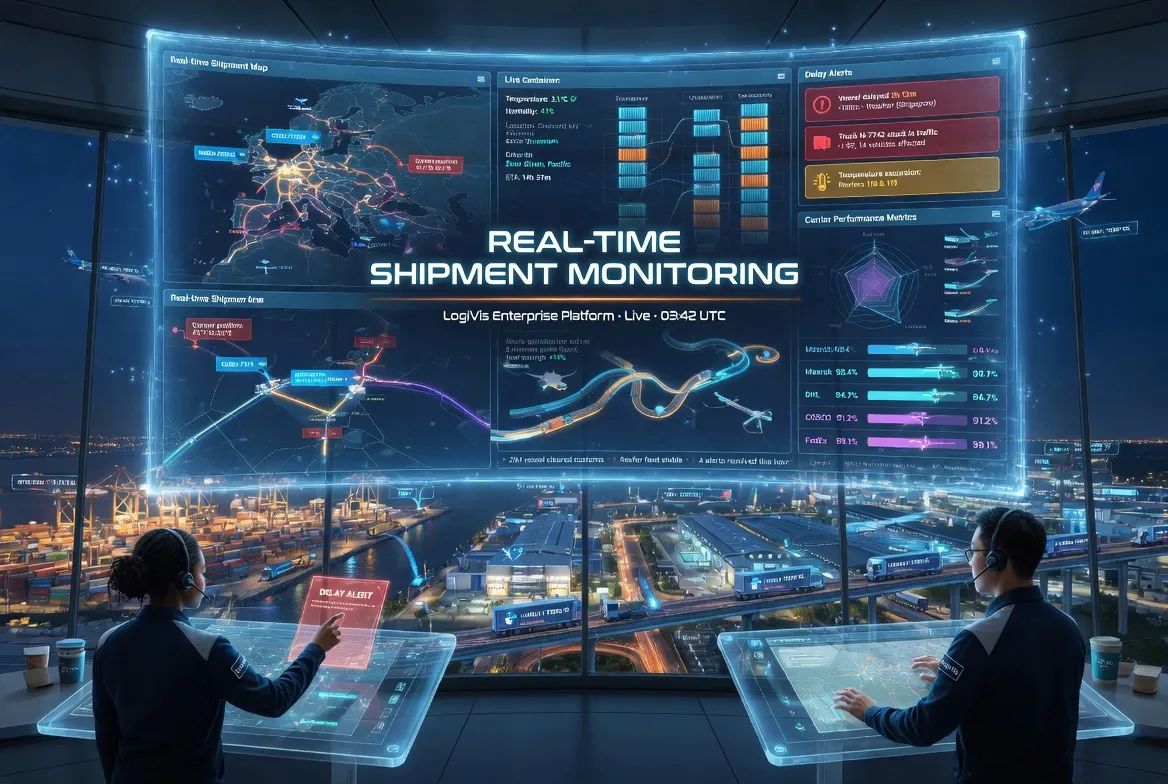
A logistics platform for risk monitoring in global logistics is a centralized system that continuously tracks shipment activities, identifies potential disruptions, and provides real-time insights into operational risks. It works by integrating data from multiple sources, analyzing shipment progress against expected milestones, and triggering alerts when risks are detected.
In today’s complex global supply chains—where shipments cross multiple borders, involve various partners, and face geopolitical and operational uncertainties—risk monitoring is essential for maintaining control, minimizing disruptions, and ensuring reliable delivery performance.
What Is Risk Monitoring in Global Logistics
Risk monitoring in logistics refers to the continuous process of identifying, tracking, and managing potential threats that may impact shipment operations.
Common logistics risks include:
Shipment delays or missed connections
Port congestion and capacity constraints
Customs clearance issues or regulatory delays
Carrier disruptions or route changes
Documentation errors
Inventory mismatches or fulfillment delays
A logistics platform consolidates these risks into a unified view, enabling proactive management.
Why Risk Monitoring Matters
1. Enables Proactive Risk Management
Instead of reacting after disruptions occur, companies can anticipate and mitigate risks early.
2. Improves Operational Visibility
Centralized monitoring provides a clear view of shipment status and potential issues.
3. Reduces Financial Impact
Early intervention helps avoid penalties, storage costs, and lost revenue.
4. Enhances Customer Experience
Proactive updates and faster resolution improve customer satisfaction.
5. Supports Strategic Decision-Making
Data-driven insights help optimize routes, carriers, and operational strategies.
How Logistics Platforms Monitor Risk
1. Real-Time Data Integration
Platforms collect data from multiple sources, including:
Carrier and tracking systems
Port and airport updates
Customs and regulatory systems
Internal operational systems
External partners
This ensures continuous visibility across the entire logistics network.
2. Milestone-Based Monitoring
Shipments are tracked against predefined milestones, such as:
Booking confirmation
Departure and arrival
Customs clearance
Final delivery
Delays or deviations from these milestones indicate potential risks.
3. Risk Detection Rules
The system uses predefined rules to identify risks, such as:
Delays beyond threshold times
Missing or inconsistent data
Lack of status updates
Abnormal route changes
These rules can be customized based on operational requirements.
4. Alerts and Notifications
When risks are detected, automated alerts notify relevant stakeholders:
Operations teams
Customer service
External partners
This ensures immediate awareness and response.
5. Workflow Automation
Predefined workflows guide how risks are managed:
Assign tasks to responsible teams
Trigger escalation processes
Update shipment status
6. Analytics and Reporting
Platforms provide insights into:
Risk trends and patterns
Response times
Operational performance
These insights support continuous improvement.
Key Features of Risk Monitoring Platforms
End-to-end visibility
Unified tracking across all transport modes and regionsReal-time monitoring
Continuous data updates and risk detectionCentralized dashboard
Single interface for monitoring all shipments and risksAutomated alerts
Instant notifications for potential disruptionsRule-based risk detection
Customizable conditions for identifying risksMulti-role collaboration
Coordination across internal teams and external partnersAI-driven capabilities
Intelligent data recognition and predictive insights
Benefits for Logistics Companies
1. Improved Risk Control
Companies can identify and mitigate risks before they escalate.
2. Faster Response Time
Automated alerts enable immediate action.
3. Enhanced Operational Efficiency
Reduced manual monitoring and streamlined workflows.
4. Better Collaboration
All stakeholders have access to the same real-time data.
5. Increased Reliability
Improved ability to meet delivery timelines and service commitments.
Best Practices / Use Cases
1. Implement Unified Risk Dashboards
Use centralized platforms to monitor all shipments and risks in one place.
2. Define Risk Thresholds
Set clear rules for identifying delays, anomalies, and disruptions.
3. Integrate Multiple Data Sources
Connect carrier, customs, and internal systems for comprehensive monitoring.
4. Automate Alerts and Workflows
Ensure rapid response to detected risks.
5. Leverage Data Analytics
Analyze historical data to predict and prevent future risks.
Conclusion
Risk monitoring is a critical capability for managing global logistics operations. As supply chains become more complex and unpredictable, relying on manual processes or fragmented systems is no longer sufficient.
A centralized logistics platform enables companies to monitor risks in real time, respond proactively, and maintain control over their operations. By combining visibility, automation, and data-driven insights, logistics companies can improve efficiency, reduce disruptions, and enhance service reliability.
Frequently Asked Questions
What is risk monitoring in logistics?
It is the process of identifying and tracking potential disruptions that may impact shipment operations.
How do logistics platforms monitor risk?
They use real-time data, milestone tracking, and rule-based detection to identify potential issues.
Why is risk monitoring important in global logistics?
It helps prevent disruptions, reduce costs, and improve operational efficiency.
What are common logistics risks?
Delays, customs issues, carrier disruptions, and documentation errors.
What are the benefits of risk monitoring platforms?
Improved visibility, faster response, better collaboration, and reduced operational risks.
About WallTech
WallTech provides digital logistics solutions designed to support real-time risk monitoring across global supply chain operations. Its platforms enable end-to-end collaboration by connecting internal teams and external partners within a unified system, ensuring that risk information is shared instantly. With milestone-based tracking and unified shipment timelines, logistics companies gain full visibility into potential disruptions and can respond proactively. The system also incorporates automation capabilities such as AI-driven data recognition, workflow automation, and automated billing and reconciliation, helping businesses improve risk control, reduce manual effort, and scale their operations effectively.
If you're exploring ways to improve your logistics operations, feel free to connect with us to learn more about our solutions and system capabilities.