May 26,2023
Cloud Computing Revolutionizing the Logistics Industry
Introduction
International shipment processing involves multiple steps, stakeholders, and systems. From order creation to customs clearance and final delivery, each stage requires coordination and accuracy. Digital logistics systems transform this process by automating workflows, integrating data, and improving operational efficiency.
What is international shipment processing?
International shipment processing refers to the complete workflow of handling shipments across borders.
It typically includes:
Order creation and validation
Booking and transportation planning
Documentation and customs clearance
Shipment tracking and coordination
Billing and financial reconciliation
This process involves multiple parties such as shippers, freight forwarders, carriers, customs brokers, and consignees.
Why international shipment processing is complex
Several factors contribute to the complexity:
Multiple transportation modes and segments
Diverse regulatory and customs requirements
High dependency on documentation accuracy
Coordination across different systems and stakeholders
Limited visibility across shipment stages
Manual or disconnected processes often lead to delays, errors, and increased costs.
How digital systems improve international shipment processing
Digital systems streamline shipment processing by connecting workflows and automating key operations.
1. Automating order creation and data entry
Digital platforms support:
API integration with external systems
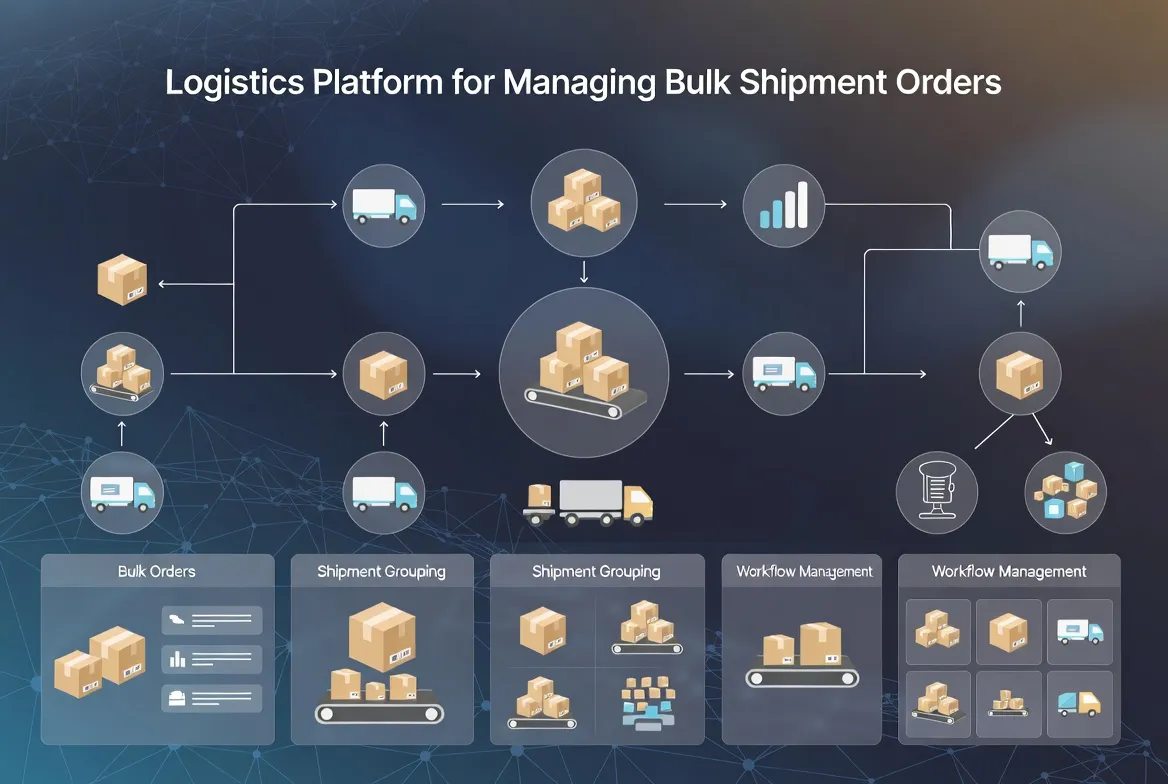
Bulk order import via templates
Standardized data entry
This reduces manual work and minimizes errors.
For example, systems allow multiple roles—customers, sales, and operators—to create and manage orders within a unified platform.
2. Standardizing shipment workflows
Digital systems define structured workflows for each shipment stage:
Inquiry and quotation
Booking and execution
Tracking and delivery
Financial processing
This ensures consistency and reduces operational variability.
3. Integrating multi-transportation processes
International shipments often involve:
Sea freight
Air freight
Land transportation
Express delivery
Digital platforms support multi-transportation segment management, allowing all stages to be coordinated within one system.
4. Centralizing document management
Documentation is a critical part of international logistics.
Digital systems enable:
Template-based document generation
Centralized document storage
Easy retrieval and sharing of shipment documents
This improves compliance and reduces administrative workload.
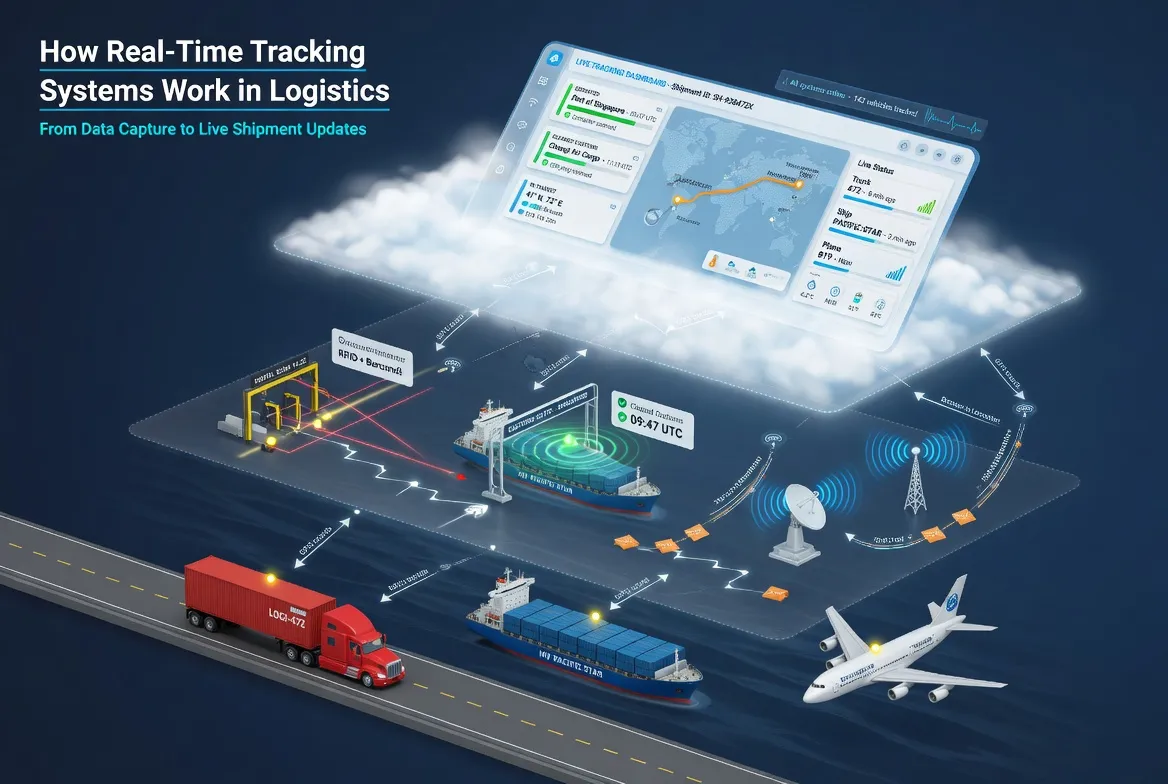
5. Enhancing real-time tracking and visibility
Digital platforms provide:
Multi-source tracking integration
Real-time event updates
End-to-end shipment visibility
Systems can automatically subscribe to tracking events and present a complete shipment lifecycle in one interface.
6. Improving coordination across stakeholders
Digital systems connect all parties involved:
Internal teams (sales, operations, finance)
External partners (carriers, suppliers, customs agents)
They enable:
Real-time data sharing
Unified communication
Collaborative workflow management
This reduces miscommunication and delays.
7. Automating financial and billing processes
Financial processes are integrated with shipment operations:
Automatic billing generation
Accounts receivable and payable management
Cost allocation and profit analysis
This ensures financial accuracy and transparency.
8. Enabling exception management and alerts
Digital systems help manage disruptions by:
Setting rules for key shipment milestones
Automatically detecting delays or abnormalities
Sending alerts to relevant stakeholders
This allows faster response to issues and minimizes impact.
Key features of digital shipment processing systems
Modern systems typically include:
End-to-end order and shipment management
Multi-transportation coordination
Document management and automation
Real-time tracking and visibility
Financial and billing integration
Exception monitoring and alerts
These features create a fully digitalized shipment processing environment.
Benefits of digitalizing international shipment processing
Companies adopting digital systems can achieve:
Faster processing times
Reduced manual errors
Improved operational efficiency
Enhanced shipment visibility
Better financial control
They also gain scalability to handle increasing shipment volumes.
How modern logistics platforms support shipment processing
Modern logistics platforms act as centralized operational hubs.
They:
Integrate multiple systems and partners
Automate workflows across departments
Provide real-time data and insights
Enable end-to-end shipment management
By consolidating all processes into one platform, companies can streamline international shipment processing and improve overall performance.
Conclusion
Digital systems are transforming international shipment processing by making it faster, more accurate, and more transparent. Through automation, integration, and real-time visibility, companies can overcome the complexity of global logistics operations.
As international trade continues to grow, digital shipment processing will become a key driver of efficiency and competitiveness in the logistics industry.