



May 06,2026
Logistics Collaboration Platforms for Coordinating Logistics Partners
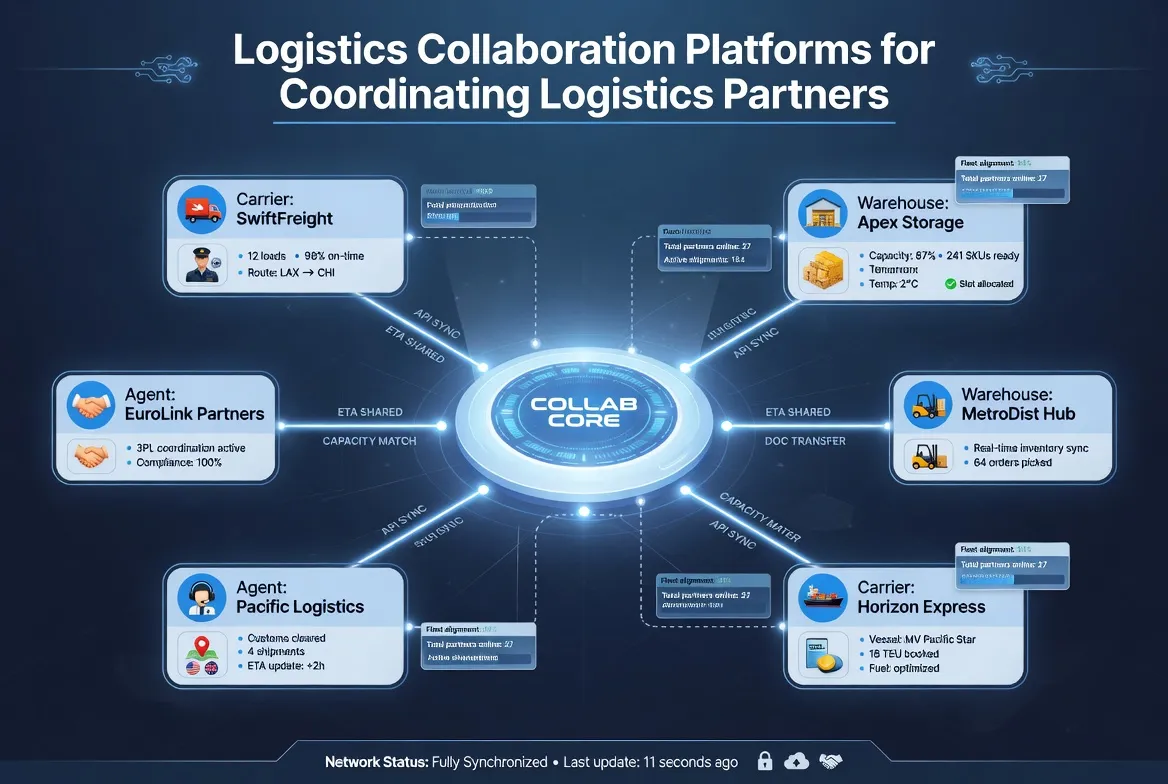
A supply chain collaboration platform is a digital system that enables multiple stakeholders across the logistics and supply chain ecosystem to share data, coordinate workflows, and manage shipments within a unified environment. It connects shippers, logistics providers, carriers, warehouses, and financial teams through structured, role-based collaboration.
Why Is Collaboration Critical in Modern Supply Chains?
Global supply chains involve:
Shippers and exporters
Freight forwarders
3PL and 4PL providers
Ocean carriers and airlines
Inland trucking companies
Warehouses
Customs brokers
Finance departments
When communication relies on email, spreadsheets, and phone calls, it creates:
Data inconsistency
Delayed updates
Duplicate work
Misaligned expectations
Increased operational risk
A supply chain collaboration platform centralizes interaction and ensures all parties work from the same data source.
Core Functions of a Supply Chain Collaboration Platform
1️⃣ Unified Data Environment
All shipment-related information — including:
Orders
Booking status
Transport milestones
Documentation
Cost details
— is stored within one system, creating a single source of truth.
2️⃣ Role-Based Access Control
Different participants can access relevant information based on permissions, such as:
Operations teams
Sales teams
Finance departments
External carriers
Customers
This ensures data security while maintaining transparency.
3️⃣ Workflow Coordination
Support structured workflows such as:
Quotation → Booking → Execution
Order → Warehouse processing → Delivery
Shipment completion → Billing → Settlement
Tasks can be assigned automatically to responsible roles.
4️⃣ Real-Time Status Sharing
Stakeholders can:
View shipment progress
Upload documents
Confirm milestones
Track financial status
This reduces communication delays and manual follow-up.
5️⃣ External System Integration
Modern collaboration platforms integrate with:
ERP systems
Warehouse systems
Carrier APIs
Tracking platforms
Financial systems
This ensures seamless data flow across organizations.
6️⃣ Performance Monitoring
Enable analytics on:
Delivery performance
Partner reliability
Financial performance
Workflow efficiency
Collaboration data becomes actionable business intelligence.
How Is It Different from a Traditional Logistics System?
A traditional logistics system may manage operations internally within one company.
A supply chain collaboration platform:
Extends system access to external partners
Enables cross-company coordination
Synchronizes operational and financial workflows
Eliminates fragmented communication
Creates network-level transparency
It supports ecosystem-level collaboration rather than isolated internal management.
Who Uses a Supply Chain Collaboration Platform?
Typical users include:
Freight forwarders managing agent networks
3PL and 4PL providers
Cross-border logistics integrators
Multinational enterprises
Logistics alliances and ecosystem partners
Companies coordinating multi-party international shipments benefit the most.
Business Benefits
Implementing a supply chain collaboration platform can:
Reduce communication gaps
Improve shipment transparency
Accelerate decision-making
Lower operational risk
Strengthen partner relationships
Increase overall supply chain efficiency
It transforms disconnected stakeholders into a coordinated logistics network.
Conclusion
A supply chain collaboration platform is a unified digital environment that enables structured data sharing and workflow coordination across logistics stakeholders. By centralizing information and connecting multiple parties, it supports transparent, efficient, and scalable supply chain operations.

.webp "Best Practices for Managing Real-Time Shipment Monitoring")


