
May 07,2026
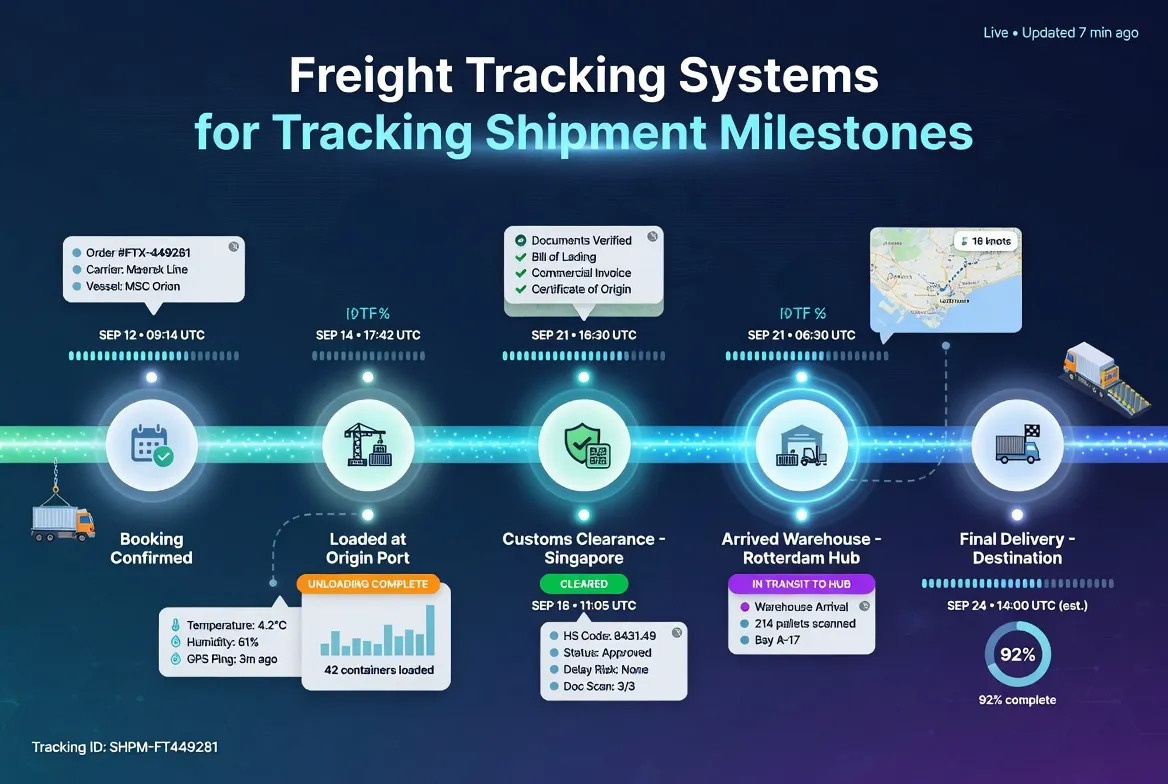
Freight Tracking Systems for Tracking Shipment Milestones
Freight forwarders face significant operational challenges when logistics processes are managed through disconnected tools and manual workflows. Without integrated systems, shipment data, communication, and operational processes can become fragmented, making it difficult to manage complex logistics operations efficiently.
Fragmented Shipment Information
In many freight forwarding companies, shipment information is stored across multiple tools such as spreadsheets, emails, and messaging platforms. Different teams may maintain their own records of shipment status, cargo details, or customer information.
This fragmented approach makes it difficult to maintain a single source of truth for shipment data. Teams may spend time verifying information, reconciling records, or searching for the latest operational updates.
As shipment volumes increase, fragmented data can lead to operational delays and inconsistencies.
Inefficient Communication Between Teams
Freight forwarding operations often require coordination between sales teams, operations staff, warehouse personnel, and external partners.
Without an integrated system, communication frequently depends on emails or messaging tools. Important operational updates may be missed or delayed, and teams may rely on manual follow-ups to confirm shipment status.
This communication inefficiency can slow down operational processes and increase the risk of errors.
Limited Shipment Visibility
Shipment visibility becomes more difficult when logistics information is spread across multiple systems. Tracking events, operational milestones, and shipment documents may be stored in different locations.
As a result, logistics teams may struggle to obtain a complete view of shipment progress. Customers may also experience delays in receiving accurate shipment updates.
Limited visibility can make it harder for companies to identify potential delays or disruptions early.
Increased Operational Errors
Manual processes and disconnected systems often increase the likelihood of operational mistakes. Data may be entered multiple times in different systems, creating opportunities for inconsistencies or missing information.
Operational errors can affect shipment planning, documentation accuracy, and financial reconciliation. Correcting these issues often requires additional time and coordination.
Integrated systems help reduce these risks by ensuring that shipment data is recorded once and shared across the organization.
Conclusion
Freight forwarding operations involve complex coordination between multiple teams and partners. When logistics companies rely on disconnected tools, operational efficiency, visibility, and data accuracy can be negatively affected.
Integrated logistics systems address these challenges by centralizing shipment data, standardizing workflows, and improving communication between stakeholders. As logistics networks continue to grow in complexity, integrated digital platforms are becoming essential for efficient freight forwarding operations.