Apr 20,2026
How Multi-Role Collaboration Works in Logistics Platforms
Introduction
Logistics order management is the process of creating, managing, and tracking shipment orders across the entire logistics lifecycle, from order intake to final delivery. It involves coordinating data, workflows, stakeholders, and transportation resources to ensure that each shipment is executed accurately and efficiently. In modern logistics operations, order management systems act as the central control layer that connects customers, internal teams, and external partners.
For freight forwarders, 3PLs, and cross-border eCommerce logistics providers, logistics order management is essential for maintaining operational consistency, reducing errors, and enabling scalable growth.
What is Logistics Order Management
Logistics order management refers to the structured handling of shipment-related orders within a logistics system. It includes the full lifecycle of a logistics order, such as:
Order creation (manual entry, API integration, or batch import)
Shipment planning and routing
Documentation and compliance handling
Coordination across departments and partners
Tracking and milestone updates
Financial processing (costs, billing, reconciliation)
A logistics order is not just a transaction—it represents a complete operational workflow involving multiple roles, including sales, operations, documentation, finance, and external carriers.
Modern systems enable multiple order input methods, such as manual entry, template-based import, and API integration, allowing businesses to adapt to different operational scenarios .
Why Logistics Order Management Matters
Effective order management is critical because logistics operations are inherently complex and involve multiple stakeholders and processes.
Key challenges without structured order management:
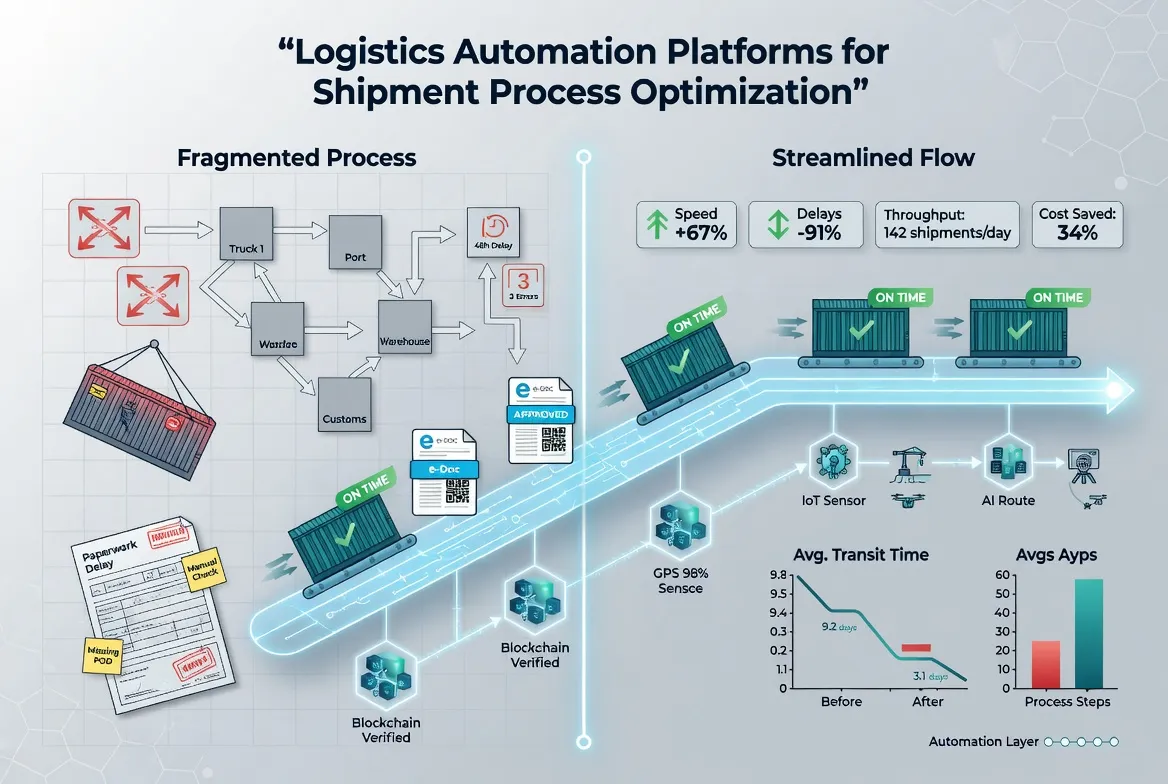
Fragmented systems
Orders are managed across spreadsheets, emails, and disconnected toolsLack of visibility
Teams cannot track shipment status in real timeManual errors
Repetitive data entry leads to inconsistencies and mistakesPoor collaboration
Departments and partners operate in silosInefficient financial tracking
Costs and revenues are not aligned with operational data
Why it matters:
Ensures operational standardization
Improves coordination across teams and partners
Enables real-time decision-making
Reduces delays and errors
Supports scalable growth across regions and business units
In global logistics, where shipments span multiple countries and transport modes, order management becomes the backbone of operational control.
How Logistics Order Management Works
A typical logistics order management workflow follows a structured process:
1. Order Creation
Orders can be created through multiple channels:
Manual entry by operations or sales teams
Bulk import using standardized templates
API integration with customer systems or eCommerce platforms
This flexibility allows logistics providers to handle both low-volume customized shipments and high-volume parcel operations efficiently.
2. Order Enrichment and Validation
Once created, the system enriches the order with:
Customer and partner data
Shipment details (weight, dimensions, cargo type)
Route and carrier options
Pricing and cost structures
Validation rules ensure data accuracy before execution.
3. Routing and Resource Allocation
The system determines how the shipment will be executed:
Selecting carriers based on rules (cost, transit time, destination)
Assigning warehouses, hubs, or transport modes
Defining multi-leg transport (air, ocean, trucking)
Advanced systems use rule-based or automated routing to improve efficiency.
4. Workflow Execution and Collaboration
Orders trigger workflows across multiple roles:
Sales confirms pricing
Operations manage execution
Documentation teams prepare shipping documents
Finance tracks costs and revenue
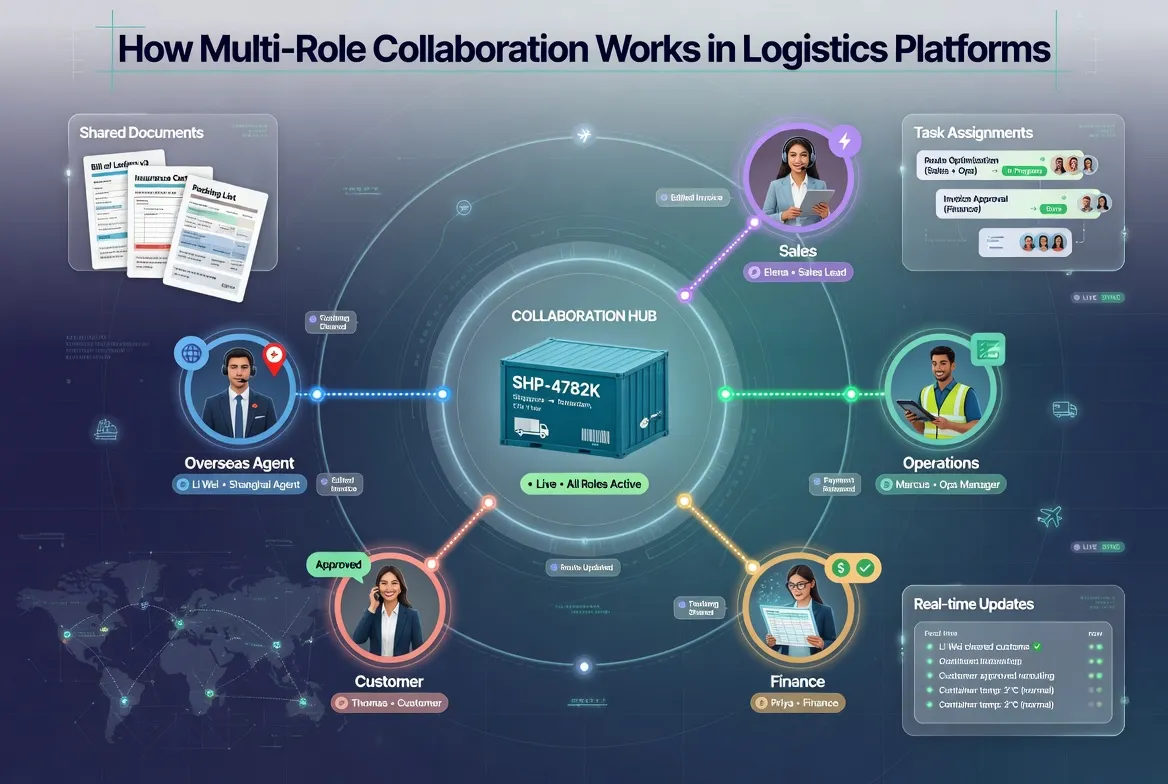
Modern platforms support multi-role collaboration within a unified system, ensuring that all stakeholders work on the same order with synchronized data.
5. Tracking and Visibility
The system provides real-time tracking through:
Milestone-based updates (booking, departure, arrival, delivery)
Integration with carrier tracking systems
Manual or automated status updates
End-to-end visibility allows both internal teams and customers to monitor shipment progress on a unified timeline.
6. Financial Processing
Order management is closely linked with financial operations:
Automatic generation of receivables and payables
Cost allocation across shipment segments
Invoice generation and reconciliation
Automation ensures financial accuracy and reduces manual workload.
Key Features of Logistics Order Management Systems
Modern logistics order management systems provide a wide range of capabilities:
1. Multi-Channel Order Input
Manual entry
Bulk import templates
API integration with external platforms
2. Workflow Automation
Automated task assignment
SOP-based process standardization
Exception handling workflows
3. End-to-End Visibility
Unified shipment timeline
Milestone tracking across transport modes
Real-time status updates
4. Collaboration Across Roles
Multi-department coordination
Shared data across internal teams and partners
Controlled access via role-based permissions
5. Intelligent Routing
Rule-based carrier selection
Multi-leg shipment planning
Cost and transit time optimization
6. Financial Integration
Automated billing and invoicing
Cost and revenue tracking per order
Reconciliation and profit analysis
7. Data Integration and Connectivity
API connections with ERP, WMS, and carrier systems
Data synchronization across platforms
Support for ecosystem collaboration
Benefits for Logistics Companies
Implementing a structured order management system delivers measurable benefits:
Operational Efficiency
Reduces manual work through automation
Standardizes workflows across teams
Improved Visibility
Enables real-time tracking and proactive issue handling
Provides a single source of truth for all stakeholders
Better Collaboration
Connects internal departments and external partners
Eliminates communication gaps
Financial Accuracy
Aligns operational data with financial records
Reduces billing errors and disputes
Scalability
Supports growth in shipment volume without increasing complexity
Enables global operations with consistent processes
Best Practices / Use Cases
1. Freight Forwarders Managing Multi-Modal Shipments
Use centralized order management to coordinate air, ocean, and trucking operations within a single workflow.
2. Cross-Border eCommerce Logistics
Handle high-volume parcel orders with automated routing, label generation, and tracking synchronization.
3. 3PL Companies Managing Multiple Clients
Use role-based access and customer segmentation to manage multiple clients within the same system.
4. Global Operations with Overseas Branches
Enable seamless order handover between origin and destination teams, ensuring consistent data and workflow continuity across regions .
Conclusion
Logistics order management is the foundation of modern logistics operations. It connects order intake, execution, tracking, and financial processing into a unified workflow, enabling logistics companies to operate efficiently in complex, global environments.
As logistics networks become more interconnected and data-driven, having a structured and automated order management system is no longer optional—it is essential for maintaining competitiveness and delivering reliable service.
Frequently Asked Questions
What is logistics order management?
Logistics order management is the process of creating, managing, and tracking shipment orders throughout their lifecycle, including execution, coordination, and financial handling.
How does logistics order management work?
It works by capturing order data, assigning resources, executing workflows across teams, tracking shipment progress, and managing financial transactions within a unified system.
Why is logistics order management important?
It improves operational efficiency, reduces errors, enhances visibility, and enables better coordination across teams and partners.
What are the benefits of logistics order management systems?
They provide automation, real-time tracking, better collaboration, financial accuracy, and scalability for growing logistics operations.
What features should a logistics order management system have?
Key features include multi-channel order input, workflow automation, end-to-end visibility, intelligent routing, financial integration, and system connectivity.
About WallTech
WallTech is a provider of digital logistics solutions designed for freight forwarders, 3PLs, and cross-border logistics companies. Its platforms enable end-to-end logistics collaboration across multiple roles, connecting upstream and downstream partners within a unified system. With real-time shipment visibility, milestone-based tracking, and integrated workflows, logistics teams can manage operations with greater transparency and control. WallTech also supports automation across key processes, including data recognition, billing, and financial reconciliation, helping companies improve efficiency and scale their operations in complex global environments.
If you're exploring ways to improve your logistics operations, feel free to connect with us to learn more about our solutions and system capabilities.