.webp "What Is a Global Freight Coordination System?")
Mar 10,2026
What Is a Global Freight Coordination System?
Introduction
API integration enables unified logistics tracking by connecting multiple carrier systems, logistics platforms, and operational tools into a single data flow. It works by automatically exchanging tracking data, shipment updates, and operational events between systems in real time, allowing all information to be consolidated into a unified tracking timeline. In modern logistics operations, where shipments involve multiple carriers and systems, API integration is essential for achieving end-to-end visibility and operational efficiency.
What is API Integration in Logistics
API (Application Programming Interface) integration in logistics refers to the process of connecting different software systems so they can exchange data automatically.
In logistics, APIs are used to connect:
Carrier tracking systems
Warehouse management systems (WMS)
Enterprise resource planning (ERP) systems
E-commerce platforms
Customs and compliance systems
Through API integration, these systems can communicate without manual intervention, enabling seamless data flow across the logistics ecosystem.
Instead of manually retrieving tracking updates or entering shipment data, APIs allow systems to automatically send and receive information in real time.
Why API Integration Matters
Logistics operations are inherently fragmented, involving multiple stakeholders and systems.
Without API integration, companies often rely on:
Manual data entry between systems
Copying tracking updates from carrier websites
Email-based communication between partners
Disconnected databases with inconsistent information
This leads to:
Data delays and inaccuracies
Increased operational workload
Limited visibility across shipment stages
Inefficient collaboration
API integration addresses these challenges by:
Enabling real-time data synchronization
Eliminating manual data transfer
Providing a single source of truth for shipment data
Supporting scalable and automated operations
For freight forwarders, 3PL providers, and cross-border eCommerce logistics operators, API integration is a foundational capability for digital transformation.
How API Integration Enables Unified Logistics Tracking
API integration works by creating a continuous data exchange between different systems involved in the shipment lifecycle.
1. Connecting Carrier Systems
APIs connect directly with carrier systems to retrieve:
Tracking events
Shipment status updates
Estimated arrival times
This includes integration with:
Airlines and ocean carriers
Express couriers
Trucking providers
Postal services
This ensures that tracking data is automatically updated without manual input.
2. Aggregating Multi-Source Tracking Data
Once connected, the system aggregates tracking data from multiple carriers into a centralized platform.
This includes:
Line-haul tracking events
Warehouse scan updates
Customs clearance status
Last-mile delivery updates
All data is combined to provide a complete view of the shipment journey.
3. Standardizing Tracking Events
Different systems use different formats and terminology for tracking events.
API-enabled platforms:
Normalize data into standardized formats
Map events into consistent milestones
Eliminate duplication and inconsistencies
This ensures that tracking information is clear and comparable across carriers.
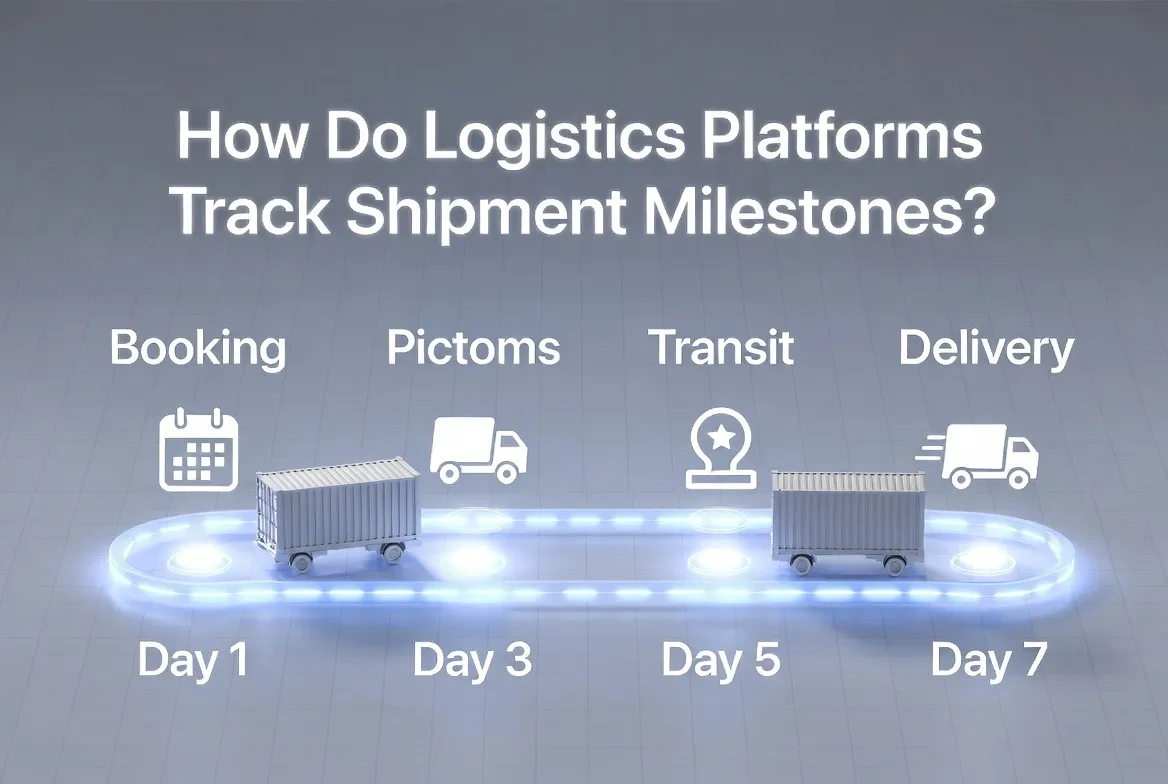
4. Building a Unified Shipment Timeline
All standardized tracking events are displayed in a single timeline, allowing users to:
View the full shipment lifecycle
Identify current shipment status
Track progress across multiple transport segments
This unified timeline is a core component of end-to-end visibility.
5. Real-Time Data Synchronization
APIs enable continuous data updates, ensuring that:
Tracking information is always up to date
All users see the same data simultaneously
Changes in one system are reflected across all connected systems
This supports real-time decision-making and operational control.
6. Enabling Automation and Workflow Integration
API integration also enables automation by triggering actions based on events, such as:
Updating shipment status automatically
Notifying stakeholders of delays
Triggering billing processes upon delivery
This reduces manual intervention and improves efficiency.
Key Features / Key Capabilities
Logistics platforms leveraging API integration typically offer:
Multi-system connectivity
Integrates with carriers, WMS, ERP, and eCommerce platformsReal-time tracking data synchronization
Ensures up-to-date shipment informationMilestone-based tracking standardization
Converts diverse tracking events into consistent milestonesUnified tracking dashboard
Displays all shipment data in a centralized interfaceAutomation triggers and workflows
Enables event-driven operational processesData consistency and validation
Maintains accurate and reliable data across systemsScalable integration framework
Supports expansion to additional carriers and partners
Benefits for Logistics Companies
1. Improved Visibility Across Shipments
Unified tracking provides full transparency across all logistics stages.
2. Reduced Manual Workload
Automated data exchange eliminates manual data entry and tracking.
3. Faster Decision-Making
Real-time updates enable quick responses to changes and disruptions.
4. Enhanced Collaboration
All stakeholders access the same data, improving coordination.
5. Scalability for Growing Operations
API integration supports increasing shipment volumes and system complexity.
Best Practices / Use Cases
1. Prioritize Key System Integrations
Start with integrating major carriers and internal systems to maximize impact.
2. Standardize Data Structures
Define consistent data formats and milestones across all integrations.
3. Monitor Data Quality
Ensure APIs deliver accurate and complete data through validation processes.
4. Use Event-Driven Automation
Leverage API-triggered events to automate workflows and notifications.
5. Expand Integration Gradually
Continuously add new carriers and partners to improve coverage.
Practical Use Cases
Freight forwarders integrating multiple carrier systems for unified tracking
3PL providers connecting warehouse and transportation systems
Cross-border eCommerce logistics integrating order and shipping platforms
Supply chain teams building centralized visibility across global operations
Conclusion
API integration is a critical enabler of unified logistics tracking in modern supply chains. By connecting multiple systems, standardizing data, and enabling real-time synchronization, APIs provide the foundation for end-to-end visibility and operational efficiency. As logistics networks become more complex, leveraging API integration is essential for maintaining control, improving collaboration, and scaling operations effectively.
Frequently Asked Questions
What is API integration in logistics?
It is the process of connecting different logistics systems to enable automatic data exchange and real-time communication.
How does API integration enable unified tracking?
It aggregates tracking data from multiple sources, standardizes it, and displays it in a single system.
Why is API integration important in logistics?
It reduces manual work, improves data accuracy, enhances visibility, and supports scalable operations.
What are the benefits of API integration?
Benefits include real-time data synchronization, improved efficiency, better collaboration, and enhanced decision-making.
About WallTech
WallTech provides digital logistics solutions that leverage API integration to enable unified shipment tracking across global supply chains. Its platforms connect multiple systems and carriers, standardize tracking data into milestone-based workflows, and present shipment progress in a unified timeline. By combining real-time visibility, multi-role collaboration, and workflow automation—including automated billing and reconciliation—WallTech helps logistics companies improve efficiency, accuracy, and scalability in complex operational environments.
If you're exploring ways to improve your logistics operations, feel free to connect with us to learn more about our solutions and system capabilities.