Oct 27,2023
Parcel+Post Expo: 2023 Walltech Make Logistics Sailing Easy and Worry-Free
Introduction
Customer visibility in logistics refers to the ability for clients—such as shippers, eCommerce sellers, and supply chain managers—to track and monitor their shipments, orders, and related processes in real time. It matters because it directly impacts operational transparency, decision-making speed, and customer satisfaction.
In today’s global logistics environment, where shipments involve multiple transport modes, partners, and geographies, limited visibility leads to delays, miscommunication, and inefficiencies. Providing clear, real-time visibility is now a critical requirement for logistics service providers.
What is Customer Visibility in Logistics
Customer visibility in logistics is the real-time access to shipment data, operational milestones, and logistics status updates across the entire supply chain.
It includes visibility into:
Shipment status (in transit, delayed, delivered)
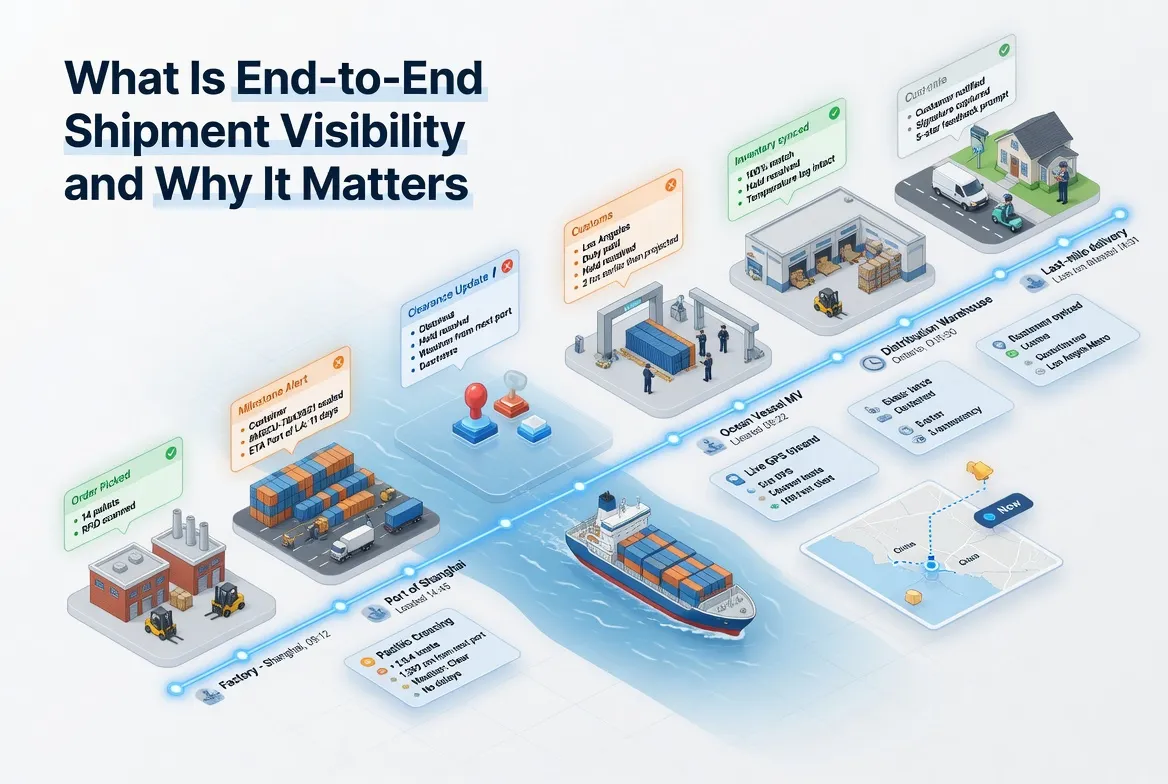
Key milestones (pickup, customs clearance, arrival, delivery)
Documentation (invoices, shipping documents)
Exceptions (delays, damages, compliance issues)
Financial data (billing, payment status)
Modern visibility is not limited to a single transport mode. It spans:
Sea freight
Air freight
Land transportation
Last-mile delivery
It also integrates data from multiple sources, including carriers, warehouses, customs systems, and internal operations.
Why Customer Visibility Matters
1. Reduces Uncertainty in Complex Supply Chains
Global logistics involves multiple handoffs between partners, regions, and systems. Without visibility, customers lack clarity on where their shipments are and what is happening.
Visibility provides a single source of truth, reducing uncertainty and enabling better planning.
2. Improves Customer Experience
Customers expect real-time updates similar to consumer delivery platforms.
Providing visibility allows them to:
Track shipments independently
Receive proactive updates
Avoid repeated follow-ups
This improves trust and long-term relationships.
3. Enables Proactive Issue Management
Without visibility, logistics teams often react to problems after they occur.
With real-time tracking and milestone monitoring:
Delays can be identified early
Exceptions can trigger alerts
Teams can take corrective action proactively
4. Reduces Communication Overload
A large portion of logistics communication consists of status inquiries.
With visibility tools:
Customers can access information directly
Internal teams spend less time responding to repetitive questions
5. Supports Data-Driven Decision Making
Visibility provides access to real-time and historical data, enabling:
Performance analysis
Route optimization
Service improvement
How Customer Visibility Works
Customer visibility is enabled through the integration of multiple systems and data sources into a unified platform.
Step-by-step process:
Data Collection
Data is collected from various sources:Carrier tracking systems
Warehouse operations
Customs updates
Internal logistics workflows
Data Integration
The system aggregates and standardizes data from different formats and sources into a unified structure.Milestone-Based Tracking
Shipments are broken into key milestones such as:Order creation
Pickup
Departure
Customs clearance
Delivery
Real-Time Updates
The system continuously updates shipment status based on new data inputs.Customer Access via Portal
Customers can view shipment status through a centralized interface, including timelines and event details.Exception Alerts and Notifications
Automated alerts notify customers and operators when issues occur, enabling faster response.
Systems that support multi-segment tracking can synchronize events across sea, air, land, and express shipments, providing a unified view of complex logistics flows
Key Features of Customer Visibility Systems
1. End-to-End Tracking
Full lifecycle visibility from order to delivery
Coverage across multiple transport modes
2. Milestone-Based Monitoring
Structured tracking based on key events
Clear shipment progress visualization
3. Multi-Source Data Integration
Aggregation of data from carriers, systems, and partners
Unified data presentation
4. Real-Time Notifications
Alerts for delays, exceptions, and key updates
Customizable notification rules
5. Unified Timeline View
Consolidated shipment journey in one interface
Easy-to-understand visualization
6. Document and Data Access
Access to shipping documents and operational data
Centralized information management
7. Automation Capabilities
Automatic data synchronization
AI-driven data recognition for document processing
Workflow automation for event updates
Benefits for Logistics Companies
1. Increased Customer Satisfaction
Transparent operations build trust and improve customer relationships.
2. Reduced Operational Costs
Self-service visibility reduces the need for manual updates and customer support.
3. Improved Efficiency
Automated tracking and alerts streamline operations and reduce delays.
4. Better Risk Management
Early detection of issues allows proactive intervention.
5. Competitive Differentiation
Providing advanced visibility capabilities helps logistics providers stand out in a competitive market.
Best Practices / Use Cases
1. Freight Forwarders
Provide customers with real-time tracking across multimodal shipments, improving service transparency.
2. Cross-Border eCommerce Logistics
Enable sellers to track high-volume parcel shipments and manage delivery performance.
3. 3PL Operations
Offer visibility across warehousing, transportation, and last-mile delivery in one platform.
4. Global Supply Chain Collaboration
Connect upstream and downstream partners through shared visibility, improving coordination.
Best Practices:
Implement milestone-based tracking structures
Integrate multiple data sources for completeness
Use automation to ensure real-time updates
Provide intuitive dashboards for customers
Enable customizable alerts and notifications
Conclusion
Customer visibility is a foundational capability in modern logistics services. It transforms operations from reactive to proactive, reduces inefficiencies caused by fragmented systems, and enhances the overall customer experience.
As supply chains become more complex and customer expectations continue to rise, logistics providers must invest in visibility solutions to remain competitive and deliver reliable, transparent services.
Frequently Asked Questions
What is customer visibility in logistics?
Customer visibility refers to the ability for clients to track and monitor shipments, milestones, and logistics processes in real time through a centralized system.
Why is visibility important in logistics?
It reduces uncertainty, improves customer satisfaction, enables proactive issue management, and supports better decision-making.
How does logistics visibility work?
It integrates data from multiple sources, tracks shipment milestones, and provides real-time updates through a unified platform.
What are the benefits of logistics visibility systems?
Benefits include improved transparency, reduced operational workload, faster issue resolution, and enhanced customer experience.
Who needs logistics visibility?
Freight forwarders, 3PLs, eCommerce logistics providers, and supply chain managers all benefit from improved visibility.
About WallTech
WallTech provides digital logistics solutions that enable logistics companies to deliver real-time visibility and seamless collaboration across global supply chains. Its platforms support end-to-end shipment tracking with milestone-based monitoring, allowing all stakeholders to access accurate, up-to-date information. By integrating operations, finance, and partner collaboration into a unified system, WallTech helps reduce information silos and improve operational efficiency. Automation features such as workflow management, intelligent data processing, and exception alerts further enhance responsiveness and scalability for logistics businesses.
If you're exploring ways to improve your logistics operations, feel free to connect with us to learn more about our solutions and system capabilities.
.webp "How Logistics Platforms Deliver Operational Shipment Transparency")
.webp "What Is Logistics Exception Management and How It Works")