



Apr 24,2026
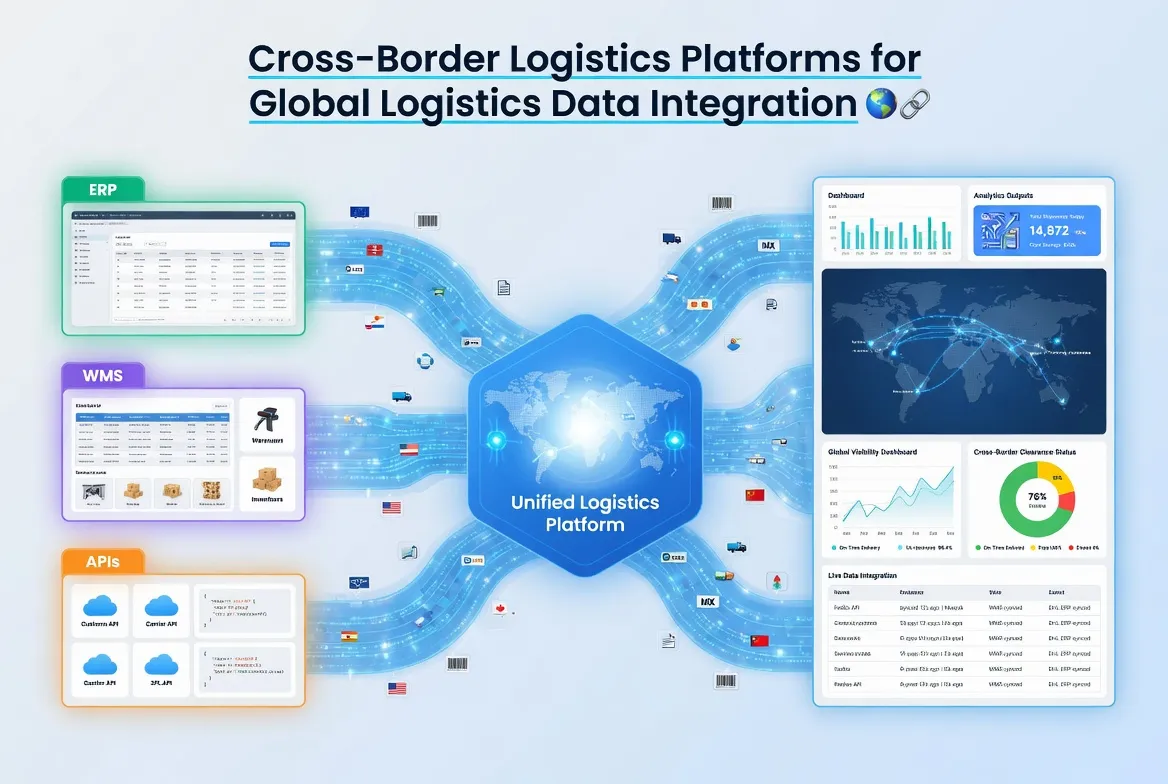
Cross-Border Logistics Platforms for Global Logistics Data Integration
Introduction
Predictive analytics in logistics is used to forecast potential disruptions, optimize operations, and improve decision-making by analyzing historical and real-time data. By applying statistical models, machine learning, and data-driven insights, logistics companies can anticipate delays, demand fluctuations, and operational risks before they occur.
In modern supply chains—especially for freight forwarders, 3PLs, and cross-border eCommerce operators—predictive analytics is becoming a key capability. It shifts logistics management from reactive or even proactive monitoring to forward-looking, intelligent planning.
What is Predictive Analytics in Logistics
Predictive analytics in logistics refers to the use of data analysis techniques to forecast future events and outcomes based on historical patterns and real-time inputs.
It typically involves:
Analyzing past shipment performance
Identifying patterns in delays, disruptions, and demand
Using algorithms to predict future risks or trends
Providing actionable insights for decision-making
Examples of predictive analytics applications include:
Forecasting shipment delays based on route and carrier performance
Predicting peak demand periods in cross-border eCommerce
Anticipating customs clearance risks
Estimating delivery times more accurately
Unlike traditional reporting, which focuses on past performance, predictive analytics focuses on what is likely to happen next.
Why Predictive Analytics Matters
1. Increasing Complexity of Supply Chains
Global logistics involves numerous variables, making it difficult to manage operations without data-driven insights.
2. Limitations of Reactive and Proactive Approaches
While reactive and proactive systems improve operations, they still rely on current or past events. Predictive analytics adds a forward-looking layer.
3. Need for Accurate Planning
Better forecasts enable more efficient resource allocation, route planning, and capacity management.
4. Risk Reduction
By identifying potential disruptions in advance, companies can take preventive actions.
5. Competitive Advantage
Organizations that leverage predictive analytics can offer more reliable and efficient services.
How Predictive Analytics Works in Logistics
1. Data Collection and Integration
Predictive analytics relies on large volumes of data from:
Historical shipment records
Carrier performance data
Route and transit time data
External factors (weather, port congestion, geopolitical events)
Internal operational and financial systems
This data is integrated into a centralized platform.
2. Data Processing and Pattern Recognition
Advanced algorithms analyze the data to identify:
Trends in shipment delays
Seasonal demand patterns
Performance variations across routes or carriers
AI-powered data recognition can also extract structured data from documents, improving data quality.
3. Predictive Modeling
Statistical models and machine learning algorithms are used to:
Forecast potential delays
Estimate delivery times
Predict demand fluctuations
Identify high-risk shipments
These models continuously improve as more data becomes available.
4. Insight Generation and Visualization
The system provides actionable insights through:
Dashboards and reports
Risk scores for shipments
Predicted timelines and outcomes
These insights help teams make informed decisions.
5. Integration with Operational Workflows
Predictive insights are integrated into daily operations:
Alerts are triggered for high-risk shipments
Workflow automation assigns tasks for preventive actions
Teams collaborate to mitigate risks before they occur
This ensures that predictions lead to actionable outcomes.
Key Features / Key Capabilities
Predictive delay forecasting
Estimation of potential delays based on historical and real-time dataDemand forecasting
Prediction of shipment volumes and peak periodsRisk scoring and prioritization
Identification of high-risk shipments requiring attentionReal-time data integration
Continuous updates from multiple data sourcesAI-powered data recognition
Automated extraction and validation of shipment dataWorkflow integration
Automated actions based on predictive insightsEnd-to-end visibility
Unified tracking combined with predictive insightsCollaboration tools
Coordination across teams and partners for preventive action
These capabilities enable logistics companies to move beyond monitoring into intelligent decision-making.
Benefits for Logistics Companies
Improved Planning Accuracy
Better forecasts enable more efficient scheduling and resource allocation.
Reduced Operational Risk
Early identification of potential issues allows preventive action.
Enhanced Efficiency
Optimized operations reduce delays and improve overall performance.
Better Customer Experience
Accurate delivery estimates and proactive communication improve satisfaction.
Data-Driven Decision-Making
Insights from predictive analytics support strategic and operational decisions.
Best Practices / Use Cases
Ensure High-Quality Data
Accurate predictions depend on reliable and consistent data.
Integrate Multiple Data Sources
Combine internal and external data for more comprehensive insights.
Continuously Refine Models
Update predictive models based on new data and changing conditions.
Combine Predictive and Operational Systems
Ensure predictions are integrated into workflows and decision-making processes.
Train Teams on Data Usage
Enable teams to interpret and act on predictive insights effectively.
Common use cases include:
Forecasting delays in international freight routes
Predicting demand surges in cross-border eCommerce
Identifying high-risk shipments for proactive management
Optimizing carrier selection based on performance data
Conclusion
Predictive analytics is transforming logistics by enabling companies to anticipate and prepare for future events rather than simply reacting to them. It provides a powerful tool for improving efficiency, reducing risk, and enhancing service quality.
As supply chains continue to evolve, predictive analytics will play an increasingly important role in enabling intelligent, data-driven logistics operations.
Frequently Asked Questions
What is predictive analytics in logistics?
Predictive analytics uses data and algorithms to forecast future events in logistics, such as delays, demand changes, or risks.
How does predictive analytics work?
It analyzes historical and real-time data, identifies patterns, and uses models to predict future outcomes.
Why is predictive analytics important in logistics?
It helps improve planning, reduce risks, enhance efficiency, and provide better customer service.
What are common applications of predictive analytics in logistics?
Delay forecasting, demand prediction, risk identification, and route optimization.
What are the benefits of predictive analytics systems?
They enable better decision-making, improve efficiency, reduce disruptions, and enhance customer satisfaction.
About WallTech
WallTech provides digital logistics solutions that help freight forwarders, 3PLs, and cross-border logistics operators leverage data for smarter operations. Its platforms enable end-to-end logistics collaboration across multiple roles and partners, offering real-time shipment visibility through milestone-based tracking and unified timelines. By integrating workflow automation, AI-driven data recognition, and financial automation such as billing and reconciliation, WallTech supports the adoption of predictive analytics capabilities—helping logistics companies anticipate risks, optimize performance, and scale with greater intelligence and control.
If you're exploring ways to improve your logistics operations, feel free to connect with us to learn more about our solutions and system capabilities.
.webp "What Is a Global Freight Coordination System?")