Apr 23,2026
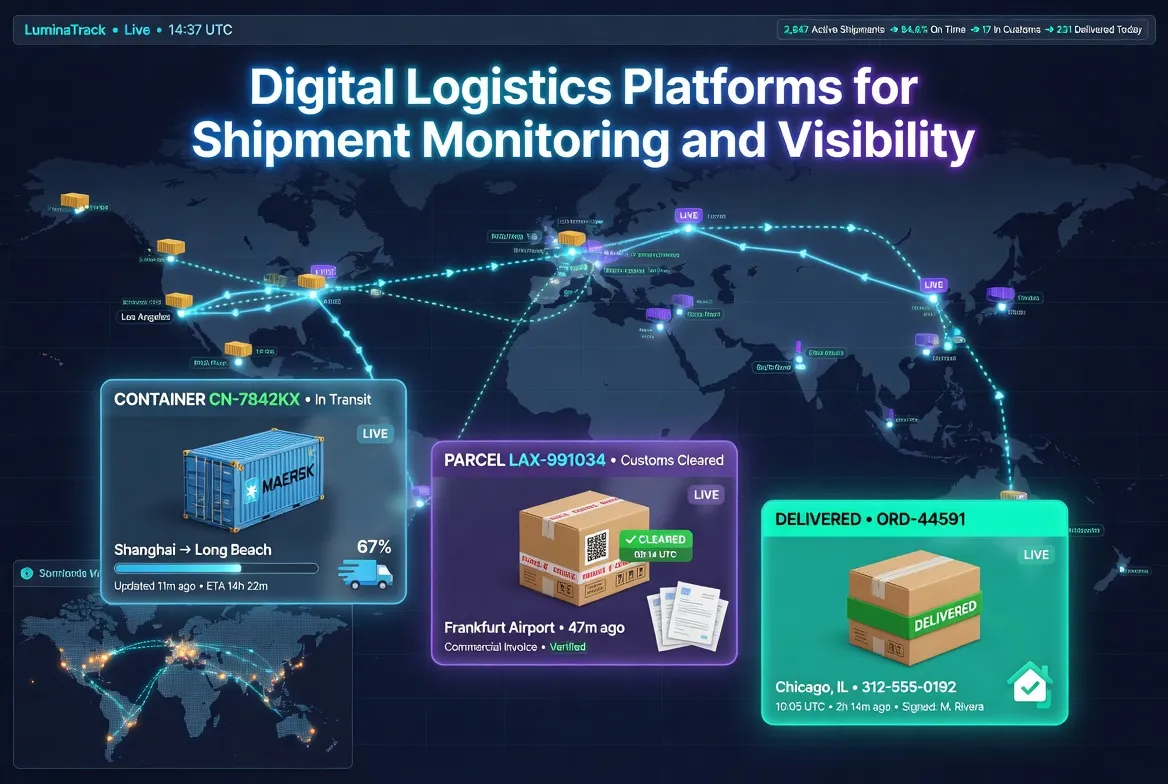
Digital Logistics Platforms for Shipment Monitoring and Visibility
Introduction
Logistics collaboration platforms for multi-partner logistics operations are digital systems that enable companies to coordinate activities across multiple stakeholders involved in the logistics process. These platforms provide a unified environment where different partners—such as carriers, agents, warehouses, and service providers—can collaborate in real time, share data, and execute workflows efficiently.
In modern logistics, where operations rely heavily on distributed partner networks, managing multiple stakeholders simultaneously is a critical challenge. Collaboration platforms address this by creating structured, transparent, and synchronized operations across all partners involved.
What is a Logistics Collaboration Platform for Multi-Partner Logistics Operations
A logistics collaboration platform for multi-partner operations is a centralized system that connects all stakeholders involved in logistics execution, including:
Freight forwarders and 3PL providers
Carriers across different transport modes
Overseas agents and partners
Warehouses and fulfillment centers
Customs brokers and service providers
The platform allows these participants to work within a shared digital environment, where shipment data, workflows, and communication are standardized and synchronized.
Unlike traditional operations—where coordination happens through disconnected tools—these platforms provide a single source of truth for managing multi-partner logistics activities.
Why Logistics Collaboration Platforms Matter
Multi-partner logistics operations are inherently complex due to:
Multiple stakeholders with different systems and processes
Lack of standardized communication and workflows
Limited visibility across partner activities
Manual coordination through emails and spreadsheets
Difficulty tracking responsibilities and performance
These challenges often result in:
Delays in shipment execution
Increased operational costs
Miscommunication and errors
Reduced service quality
A logistics collaboration platform addresses these issues by enabling structured coordination and real-time data sharing across all partners.
How Logistics Collaboration Platforms Work
1. Centralized Operational Environment
All logistics activities are managed within a single platform, including:
Shipment creation and management
Partner assignment
Task tracking
Document management
This ensures consistency and transparency across all operations.
2. Multi-Role and Multi-Partner Collaboration
Different partners interact within the same system based on their roles:
Carriers manage transportation
Warehouses handle storage and handling
Agents coordinate local operations
Customers track shipment progress
Role-based access ensures efficient collaboration and data security.
3. Milestone-Based Shipment Tracking
Shipments are tracked through predefined milestones, such as:
Pickup
Departure
Transit
Clearance
Delivery
All updates from different partners are consolidated into a unified timeline.
4. Real-Time Data Integration
The platform integrates with partner systems to capture real-time data, including:
Carrier tracking updates
Warehouse operations data
Customs status updates
This eliminates manual data entry and ensures accuracy.
5. Workflow Automation
Automation supports multi-partner coordination by:
Assigning tasks automatically
Triggering alerts and notifications
Processing documents using AI recognition
Managing exception handling
6. Financial Coordination Across Partners
Operational data is linked to financial workflows, enabling:
Automated billing based on partner activities
Cost allocation across multiple stakeholders
Accounts payable and receivable management
Reconciliation across partners
Key Features / Key Capabilities
Multi-Partner Collaboration
Coordination across multiple stakeholders
Upstream and downstream connectivity
Role-based access control
End-to-End Visibility
Real-time tracking across all shipment stages
Unified timeline view
Multi-source data integration
Workflow Automation
Automated task assignment
Exception alerts and notifications
AI-driven document recognition
Integration Capabilities
API connectivity with partner systems
Integration with carriers, WMS, ERP, and customs platforms
Financial Automation
Automated billing and invoicing
Cost tracking and allocation
Reconciliation processes
Benefits for Logistics Companies
Improved Coordination Efficiency
Reduced manual communication
Faster execution across partners
Streamlined workflows
Enhanced Visibility
Real-time insight into all partner activities
Better control over operations
Faster identification of issues and delays
Reduced Errors
Standardized processes across partners
Automated workflows minimize manual mistakes
Consistent data across all stakeholders
Stronger Partner Collaboration
Transparent communication and workflows
Clear responsibilities for each partner
Improved trust and cooperation
Scalability
Ability to manage large partner networks
Easy onboarding of new stakeholders
Support for expanding logistics operations
Best Practices / Use Cases
Use Case 1: Global Freight Forwarding Operations
Freight forwarders coordinate multiple partners across regions and transport modes within a single platform.
Use Case 2: Cross-Border eCommerce Logistics
Logistics providers manage complex fulfillment networks involving warehouses, carriers, and last-mile partners.
Use Case 3: Multi-Carrier and Multi-Warehouse Operations
Companies coordinate multiple carriers and warehouses to optimize routing, cost, and delivery performance.
Best Practices
Define clear roles and responsibilities for all partners
Standardize workflows and data formats
Use milestone-based tracking for transparency
Automate repetitive coordination tasks
Monitor partner performance continuously
Conclusion
Logistics collaboration platforms for multi-partner logistics operations are essential for managing the complexity of modern supply chains. By enabling real-time collaboration, providing end-to-end visibility, and automating workflows, these platforms help logistics companies improve efficiency, reduce errors, and enhance service quality.
As logistics networks continue to grow and involve more stakeholders, the ability to coordinate multiple partners within a unified digital environment will be a key driver of success.
Frequently Asked Questions
What is a logistics collaboration platform for multi-partner operations?
It is a digital system that enables coordination and collaboration between multiple logistics stakeholders within a unified platform.
How does it improve multi-partner logistics operations?
It centralizes data, standardizes workflows, provides real-time visibility, and automates coordination processes across all partners.
Why are multi-partner operations challenging in logistics?
They involve multiple stakeholders with different systems and processes, making coordination, communication, and visibility more complex.
What are the benefits of these platforms?
They improve efficiency, enhance visibility, reduce errors, strengthen collaboration, and support scalability.
Who uses these platforms?
Freight forwarders, 3PL providers, logistics integrators, and companies managing complex partner networks.
About WallTech
WallTech provides digital logistics solutions designed to support multi-partner logistics operations through integrated collaboration, real-time visibility, and workflow automation. Its systems enable logistics companies to coordinate with multiple stakeholders within a unified platform, offering end-to-end shipment tracking and milestone-based timelines. By integrating operational workflows with financial processes such as automated billing and reconciliation, WallTech helps organizations improve efficiency, reduce manual work, and scale their logistics operations effectively.
If you're exploring ways to improve your logistics operations, feel free to connect with us to learn more about our solutions and system capabilities.