May 13,2026
How Do Freight Systems Support API-Based Logistics Integration?
Introduction
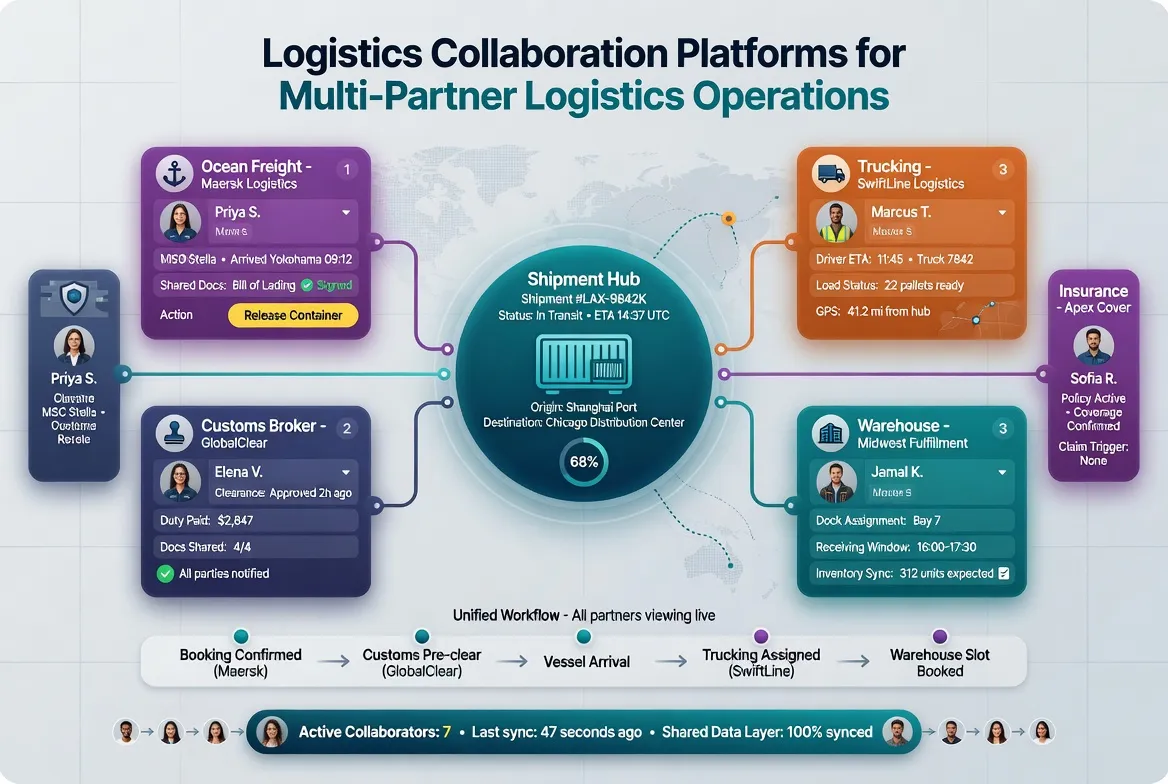
Logistics systems handle multi-carrier coordination by integrating multiple transportation providers into a single platform, enabling unified shipment planning, execution, tracking, and optimization. Instead of managing each carrier separately, logistics teams can coordinate air, ocean, trucking, and last-mile providers within one system. This approach ensures consistent workflows, real-time visibility, and efficient resource allocation across complex supply chains.
In global logistics operations—especially for freight forwarders, 3PL providers, and cross-border eCommerce companies—multi-carrier coordination is essential for delivering flexibility, cost efficiency, and reliable service.
What is Multi-Carrier Coordination
Multi-carrier coordination refers to the process of managing multiple transportation providers across different shipment stages within a unified operational framework.
A single shipment may involve:
Pickup by a local trucking provider
Line-haul transport via ocean or air carrier
Destination handling by a regional partner
Last-mile delivery by courier services
Each carrier has:
Different pricing models
Different tracking systems
Different service levels
Logistics systems coordinate these carriers by:
Standardizing workflows
Integrating data from multiple sources
Aligning operations into a single shipment lifecycle
Why Multi-Carrier Coordination Matters
1. Flexibility in Carrier Selection
Relying on a single carrier limits options. Multi-carrier coordination allows:
Selecting the best carrier based on route, cost, or speed
Switching carriers when disruptions occur
Supporting different service levels
2. Cost Optimization
With multiple carriers:
Rates can be compared dynamically
Cost-effective routing can be selected
Pricing strategies can be optimized
3. Improved Service Reliability
If one carrier experiences delays:
Alternative carriers can be used
Risk is distributed across multiple providers
This improves overall service reliability.
4. Enhanced Visibility Across Transport Stages
Each carrier provides partial tracking. Coordination ensures:
Unified tracking across all legs
Consistent milestone updates
End-to-end shipment visibility
5. Scalability for Global Operations
As logistics networks expand:
More carriers are required
More routes are added
More complexity is introduced
Multi-carrier coordination enables scalable operations.
How It Works
Logistics systems handle multi-carrier coordination through structured processes and integrations:
1. Carrier Integration
The system connects with multiple carriers via:
APIs
EDI connections
Third-party platforms
This enables:
Real-time data exchange
Automated tracking updates
Service availability access
For example, systems can integrate with global carriers such as FedEx, DHL, UPS, and regional providers within a unified framework .
2. Rate Card Management
Each carrier has its own pricing structure. The system:
Stores carrier rate cards
Supports complex pricing rules (weight, zones, surcharges)
Calculates shipping costs automatically
This allows:
Instant quotation
Accurate cost estimation
3. Routing and Carrier Selection
When a shipment is created:
The system evaluates routing rules
Matches shipment requirements (weight, destination, service type)
Automatically selects the most suitable carrier
Advanced systems support:
Rule-based routing
Dynamic carrier selection
4. Shipment Execution Across Multiple Legs
The system coordinates:
Pickup scheduling
Line-haul transport
Destination handling
Last-mile delivery
Each carrier is assigned to specific shipment stages, ensuring smooth handoffs.
5. Unified Tracking and Milestone Management
Tracking data from different carriers is:
Collected and standardized
Mapped to common milestones
Displayed in a unified timeline
This provides:
End-to-end visibility
Consistent shipment status
6. Exception Management
When disruptions occur:
Delays are detected automatically
Alerts are triggered
Alternative carriers or routes can be assigned
This enables proactive issue resolution.
7. Financial Coordination
The system manages:
Carrier costs (payables)
Customer charges (receivables)
Profit calculation
Automated billing ensures alignment between operations and finance.
Key Features / Key Capabilities
Modern logistics systems provide:
Multi-carrier integration
Connect with global and regional carriersAutomated carrier selection
Rule-based or dynamic routingRate card management
Flexible pricing configurationEnd-to-end shipment visibility
Unified tracking across all carriersMilestone-based tracking
Standardized shipment lifecycleWorkflow automation
Automated task assignment and executionException alerts
Real-time notifications for delays or issuesFinancial automation
Billing, reconciliation, and cost trackingCollaboration capabilities
Coordinate internal teams and external partners
Benefits for Logistics Companies
1. Operational Efficiency
Reduce manual coordination
Streamline carrier management
Automate workflows
2. Cost Savings
Optimize carrier selection
Reduce transportation costs
Improve pricing accuracy
3. Better Service Quality
Improve delivery reliability
Provide consistent tracking information
Respond quickly to disruptions
4. Enhanced Visibility
Monitor shipments across all carriers
Track performance across routes
Identify inefficiencies
5. Scalability
Easily onboard new carriers
Expand global networks
Handle increasing shipment volumes
Best Practices / Use Cases
Use Case 1: Cross-Border eCommerce Logistics
High-volume parcel operations require:
Multiple last-mile carriers
Dynamic routing
Real-time tracking
Systems automatically assign carriers based on rules such as destination, weight, and service level.
Use Case 2: Freight Forwarders Managing Multi-Modal Transport
Forwarders coordinate:
Ocean freight
Air freight
Trucking
Courier services
Multi-carrier systems ensure seamless integration across transport modes.
Use Case 3: 3PL Providers Serving Multiple Clients
3PLs benefit from:
Centralized carrier management
Flexible routing options
Scalable operations
Best Practices
Integrate with a wide network of carriers
Standardize milestone definitions
Use rule-based routing for automation
Monitor carrier performance regularly
Align operational and financial data
Conclusion
Multi-carrier coordination is a fundamental capability in modern logistics systems, enabling companies to manage complex transportation networks efficiently. By integrating multiple carriers into a unified platform, logistics providers can optimize routing, reduce costs, and improve service reliability.
As supply chains become more global and dynamic, effective multi-carrier coordination is essential for maintaining competitiveness and operational excellence.
Frequently Asked Questions
What is multi-carrier coordination in logistics?
It is the process of managing multiple transportation providers within a single system, enabling unified shipment planning, execution, and tracking.
How do logistics systems handle multiple carriers?
They integrate carriers via APIs or EDI, manage rate cards, automate routing, and provide unified tracking and workflow management.
Why is multi-carrier coordination important?
It improves flexibility, reduces costs, enhances reliability, and supports scalable global operations.
What are the benefits of multi-carrier logistics systems?
Benefits include better efficiency, cost optimization, improved visibility, and enhanced service quality.
Can multi-carrier systems improve delivery performance?
Yes, they allow dynamic carrier selection and proactive issue management, leading to more reliable deliveries.
About WallTech
WallTech provides digital logistics solutions that enable efficient multi-carrier coordination across global supply chains. Its platforms support end-to-end logistics collaboration, allowing companies to manage multiple carriers, partners, and transport stages within a unified system. With real-time shipment visibility, milestone-based tracking, and automated workflows, logistics teams can coordinate operations more effectively. Financial automation capabilities, including billing and reconciliation, help align operational execution with cost control. By connecting upstream and downstream stakeholders, WallTech helps logistics companies scale their operations while maintaining efficiency and transparency.
If you're exploring ways to improve your logistics operations, feel free to connect with us to learn more about our solutions and system capabilities.