.webp "How Logistics Platforms Deliver Logistics System Integration")
Mar 20,2026
How Logistics Platforms Deliver Logistics System Integration
Introduction
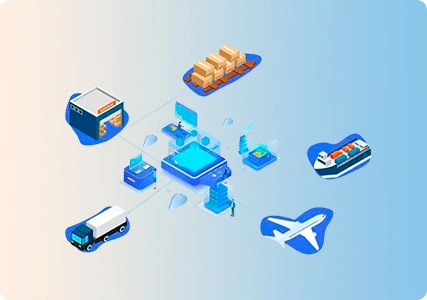
Logistics collaboration platforms for international logistics networks are digital systems that enable companies to coordinate cross-border shipments, partners, and operations within a unified global framework. These platforms connect stakeholders across different countries, ensuring real-time visibility, standardized workflows, and seamless communication throughout the international logistics process.
In global trade, where shipments involve multiple regions, regulations, and service providers, collaboration platforms are essential for maintaining efficiency, compliance, and operational control across international logistics networks.
What is a Logistics Collaboration Platform for International Logistics Networks
A logistics collaboration platform for international logistics networks is a centralized system that connects all stakeholders involved in cross-border logistics operations, including:
Freight forwarders and logistics providers
Overseas agents and branch offices
Carriers (ocean, air, rail, and road)
Customs brokers and compliance partners
Warehouses and distribution centers
End customers
The platform enables these participants to collaborate on shipment execution, share data, and manage workflows across different countries and regions.
Unlike traditional approaches that rely on disconnected systems and manual coordination, these platforms provide a global operational view of shipments and partner activities.
Why Logistics Collaboration Platforms Matter
International logistics networks are inherently complex due to:
Multiple transport modes and shipment segments
Cross-border regulations and customs requirements
Coordination between origin and destination teams
Time zone differences and communication delays
Fragmented systems across regions
These challenges often lead to:
Limited visibility into shipment status
Delays in coordination and decision-making
Increased risk of compliance issues
Operational inefficiencies
A logistics collaboration platform addresses these issues by standardizing processes and enabling real-time collaboration across global networks.
How Logistics Collaboration Platforms Work
1. Global Network Connectivity
The platform connects stakeholders across countries through:
API integrations with partner systems
Centralized data management
Multi-language and multi-region support
This ensures that all participants can operate within the same system regardless of location.
2. Multi-Role and Multi-Region Collaboration
Different roles across regions collaborate within the platform:
Origin teams manage shipment initiation
Destination teams handle arrival and delivery
Partners update status and documentation
All activities are synchronized in real time.
3. Milestone-Based Global Tracking
Shipments are tracked through international milestones, such as:
Export clearance
Departure from origin
Arrival at destination port
Import clearance
Final delivery
All updates are consolidated into a unified timeline accessible to all stakeholders.
4. Real-Time Data Synchronization
The platform integrates with:
Carrier tracking systems
Customs systems
Warehouse systems
This ensures accurate and continuous updates throughout the shipment lifecycle.
5. Workflow Automation Across Regions
Automation is applied to cross-border processes, including:
Task assignment across teams
Status updates and notifications
Document processing with AI recognition
This reduces manual coordination and improves efficiency.
6. Financial Coordination Across Entities
The platform links operational data with financial processes, enabling:
Automated billing across regions
Multi-currency financial management
Reconciliation between international entities
Key Features / Key Capabilities
Global Collaboration
Multi-role coordination across regions
Upstream and downstream partner connectivity
Role-based access control
End-to-End Visibility
Real-time tracking across international shipments
Milestone-based tracking
Unified global shipment timeline
Automation Capabilities
Workflow automation across regions
AI-driven document recognition
Automated alerts and notifications
Multi-System Integration
API connectivity with global systems
Integration with carriers, customs, and ERP platforms
Financial Automation
Multi-currency billing and invoicing
Automated reconciliation
Financial data synchronization
Benefits for Logistics Companies
Improved Global Coordination
Seamless collaboration between origin and destination teams
Reduced communication delays
Streamlined cross-border workflows
Enhanced Visibility
Real-time insight into international shipment status
Better control over global operations
Faster identification of delays and risks
Compliance and Accuracy
Improved handling of customs processes
Reduced risk of documentation errors
Better adherence to regulatory requirements
Operational Efficiency
Reduced manual coordination
Faster processing of cross-border shipments
Optimized resource utilization
Scalability
Ability to expand into new regions
Easy onboarding of international partners
Support for growing global networks
Best Practices / Use Cases
Use Case 1: Global Freight Forwarding Networks
Freight forwarders coordinate shipments across multiple countries, connecting origin and destination agents within a single platform.
Use Case 2: Cross-Border eCommerce Logistics
Logistics providers manage international fulfillment by coordinating warehouses, carriers, and customs processes globally.
Use Case 3: Multi-Region Operations
Companies with multiple offices worldwide synchronize operations and financial processes across regions.
Best Practices
Standardize workflows across regions
Define clear milestone structures for international shipments
Enable real-time data sharing across all stakeholders
Automate cross-border processes where possible
Ensure compliance integration with customs systems
Conclusion
Logistics collaboration platforms for international logistics networks are essential for managing the complexity of global supply chains. By enabling real-time collaboration, providing end-to-end visibility, and automating workflows across regions, these platforms help logistics companies operate efficiently and competitively in international markets.
As global trade continues to grow, the ability to coordinate operations across borders through a unified digital platform will become increasingly important.
Frequently Asked Questions
What is a logistics collaboration platform for international logistics networks?
It is a digital system that connects stakeholders across countries, enabling coordinated management of cross-border shipments and logistics operations.
How does it improve international logistics operations?
It provides real-time visibility, standardizes workflows, and enables seamless communication across global teams and partners.
Why is collaboration important in international logistics?
International logistics involves multiple stakeholders and regulatory requirements. Collaboration ensures smooth coordination, reduces delays, and improves compliance.
What are the benefits of these platforms?
They improve efficiency, enhance visibility, support compliance, and enable scalable global operations.
Who uses these platforms?
Freight forwarders, 3PL providers, cross-border eCommerce logistics companies, and global supply chain operators.
About WallTech
WallTech provides digital logistics solutions that support international logistics networks through integrated collaboration, real-time visibility, and workflow automation. Its platforms enable logistics companies to connect global teams and partners within a unified system, offering end-to-end shipment tracking and milestone-based timelines across regions. By integrating operational workflows with financial processes such as automated billing and reconciliation, WallTech helps organizations improve efficiency, ensure accuracy, and scale their global logistics operations effectively.
If you're exploring ways to improve your logistics operations, feel free to connect with us to learn more about our solutions and system capabilities.