



Apr 16,2026
How Data Integration Improves Supply Chain Visibility
Introduction
International e-commerce logistics platforms are designed to support the complex requirements of global online retail fulfillment. As cross-border e-commerce continues to grow, these platforms enable businesses to manage orders, shipments, inventory, and delivery across multiple countries and logistics networks.
What are international e-commerce logistics platforms?
International e-commerce logistics platforms are digital systems that manage the end-to-end logistics processes for cross-border online orders.
They typically connect:
E-commerce platforms (Amazon, Shopify, etc.)
Order management systems
Warehousing and fulfillment operations
International transportation networks
Last-mile delivery providers
These platforms act as centralized systems to coordinate global e-commerce logistics workflows.
Why international e-commerce logistics platforms are important
Cross-border e-commerce logistics involves high complexity:
High order volumes and frequent transactions
Multiple carriers and delivery networks
Diverse customs requirements
Customer expectations for fast and transparent delivery
Without a dedicated platform:
Order processing becomes inefficient
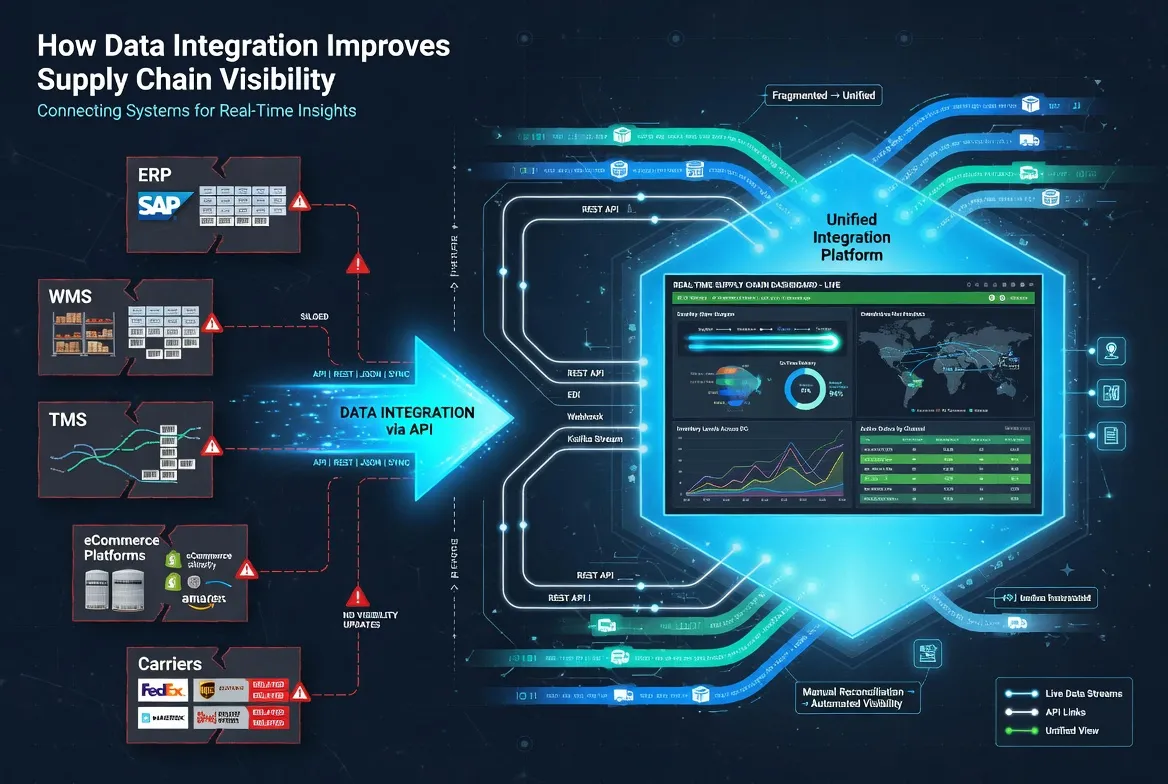
Tracking information is fragmented
Operational errors increase
Customer experience suffers
A logistics platform helps standardize and automate these processes.
How international e-commerce logistics platforms work
These platforms integrate multiple systems and automate logistics workflows from order creation to final delivery.
Typical workflow:
Orders are synchronized from e-commerce platforms or ERP systems
Logistics services and routes are selected automatically
Warehousing operations (sorting, packing, labeling) are executed
Shipments are handed over to international carriers
Tracking data is collected and updated in real time
Financial data is generated for billing and reconciliation
This creates a fully connected logistics execution environment.
Key features of international e-commerce logistics platforms
1. Order integration and management
Platforms support multiple order creation methods:
API integration with e-commerce platforms
Bulk order import via templates
Manual order creation
This ensures flexibility for different business models.
2. Intelligent routing and carrier selection
Systems can automatically select optimal logistics services based on:
Destination
Weight and dimensions
Service rules and pricing
This allows companies to optimize cost and delivery performance.
3. Warehouse and operation hub management
Platforms support operational processes such as:
Scanning and weighing
Sorting and bagging
Inbound and outbound handling
These capabilities ensure efficient parcel processing within operation centers.
4. End-to-end shipment tracking
A core feature is full visibility across the shipment lifecycle:
System-generated tracking events
Integration with third-party tracking systems
Manual and batch updates
All tracking data is consolidated into a single view for users.
5. Global carrier integration
International e-commerce platforms connect with multiple last-mile carriers worldwide.
For example:
Integration with major carriers such as DHL, UPS, USPS
Access to 150+ global delivery providers
This enables seamless execution of cross-border deliveries.
6. Rate card and pricing management
Platforms allow companies to configure complex pricing rules:
Weight-based pricing
Zone-based charges
Discounts and surcharges
This supports accurate and automated quotation and billing processes.
7. Financial and billing management
Financial features include:
Automatic billing generation per shipment
Accounts receivable and payable management
Cost tracking and reconciliation
This connects logistics operations with financial performance.
8. Customer management and credit control
Platforms provide tools to manage:
Customer accounts
Order volume limits
Credit control and payment tracking
This is especially important for logistics service providers managing multiple clients.
Benefits of using international e-commerce logistics platforms
Companies adopting these platforms can achieve:
Faster order processing and fulfillment
Improved delivery performance
Enhanced shipment visibility
Reduced operational costs
Better customer experience
They also enable scalability, allowing businesses to handle increasing order volumes efficiently.
How modern platforms support global e-commerce logistics
Modern platforms function as centralized hubs that connect all participants in the logistics ecosystem.
They:
Integrate upstream e-commerce systems and downstream logistics providers
Automate operational workflows
Provide real-time visibility and analytics
Enable global collaboration across partners
By unifying logistics processes, these platforms help businesses operate efficiently in international markets.
Conclusion
International e-commerce logistics platforms are essential for managing the complexity of global online fulfillment. With capabilities spanning order management, routing, tracking, and financial control, they enable businesses to streamline operations and deliver better customer experiences.
As cross-border e-commerce continues to expand, these platforms will play an increasingly critical role in supporting scalable and efficient global logistics operations.


.webp "WMS vs Traditional Warehouse Operations")


