May 19,2026
How Do Logistics Platforms Support Data-Driven Supply Chains?
Introduction
A logistics system for freight forwarders managing multi-stage shipments is a centralized platform that coordinates, tracks, and controls shipments across multiple transport legs, service providers, and operational teams. It works by integrating shipment data, standardizing workflows, and providing end-to-end visibility through a unified timeline. This is critical because international freight forwarding involves complex, multi-segment operations that require seamless coordination across departments, partners, and geographies.
What is a Logistics System for Multi-Stage Shipments
A logistics system for freight forwarders is designed to manage shipments that pass through multiple stages, such as:
Origin pickup
Export customs clearance
International line-haul (air or ocean)
Import customs clearance
Destination handling and delivery
Each stage may involve different service providers, documentation requirements, and operational teams.
A multi-stage logistics system brings all these components into a single platform, allowing freight forwarders to:
Manage shipment lifecycle from booking to delivery
Coordinate across internal departments and external partners
Track shipment progress in real time
Integrate operational and financial processes
Unlike basic tracking tools, this system supports full operational orchestration across the entire logistics chain.
Why It Matters
Freight forwarders face several challenges when managing multi-stage shipments:
Fragmented systems for booking, tracking, documentation, and finance
Manual coordination across sales, operations, and partners
Lack of real-time visibility across shipment stages
Inconsistent data between departments and stakeholders
Difficulty managing complex workflows for different shipment types
These challenges often lead to:
Delays in shipment execution
Increased operational errors
Poor customer communication
Inefficient financial reconciliation
A dedicated logistics system addresses these issues by:
Centralizing all shipment data into one system
Enabling multi-role collaboration across departments
Providing milestone-based tracking for visibility
Automating workflows and financial processes
This allows freight forwarders to manage complexity more effectively while improving service quality.
How the Logistics System Works
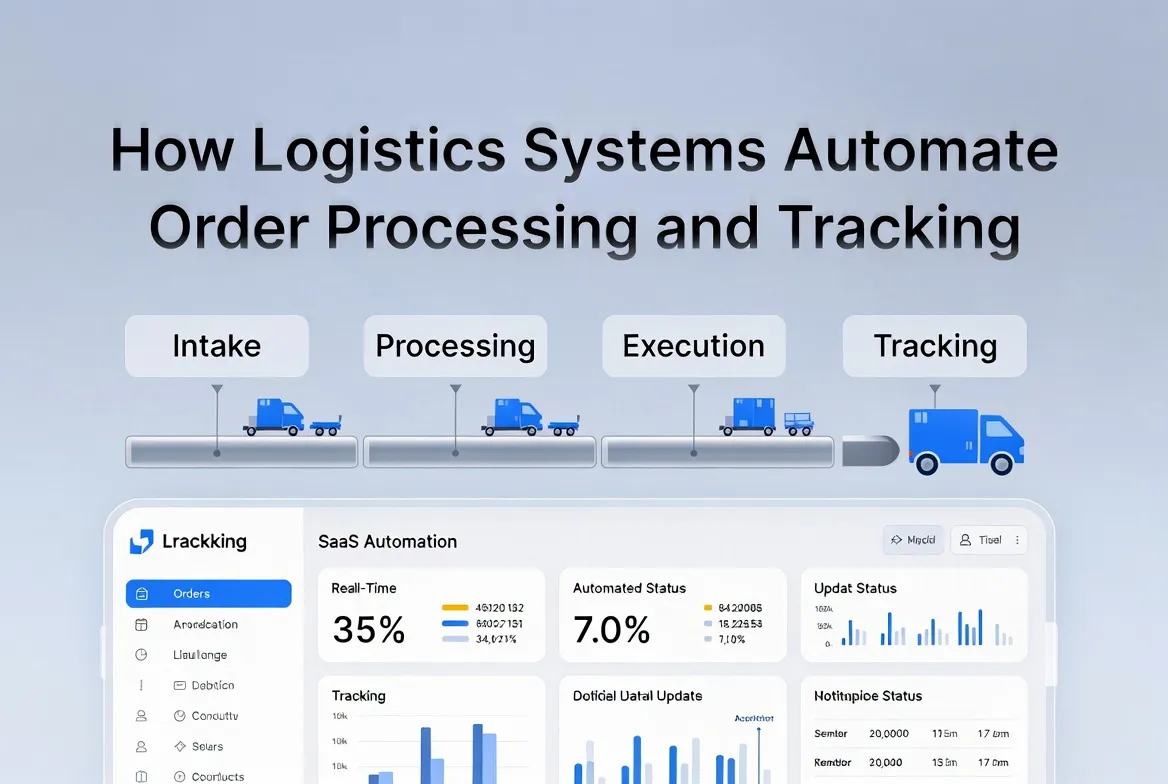
A logistics system for multi-stage shipments operates by connecting workflows, stakeholders, and data into a unified operational environment.
1. Shipment Creation and Order Management
Shipments can be created through:
Manual input by operations teams
Bulk import using structured templates
API integration with customer systems
Each shipment is assigned a unique job or shipment number, which serves as the central reference throughout the lifecycle.
2. Multi-Stage Workflow Management
The system defines standardized workflows for different shipment types, including:
Air freight shipments
Ocean FCL and LCL shipments
Multimodal transport
Each workflow includes predefined milestones and tasks for each stage, ensuring consistent execution across operations.
3. Milestone-Based Tracking and Visibility
Each stage of the shipment is tracked through structured milestones, such as:
Booking confirmed
Cargo received
Departed origin
Arrived at destination
Customs cleared
Delivered
These milestones are updated through:
Automated system integrations
Manual input from operators or partners
All updates are displayed in a unified timeline, providing end-to-end visibility.
4. Multi-Role Collaboration
Freight forwarding operations involve multiple roles working on the same shipment:
Sales teams manage customer relationships and quotations
Operations teams handle booking and execution
Documentation teams prepare shipping documents
Finance teams manage billing and reconciliation
Overseas agents update local shipment status
The system enables all roles to collaborate within one platform, with role-based permissions ensuring controlled access.
5. Document and Data Management
The system centralizes all shipment-related documents, including:
Bills of lading
Commercial invoices
Packing lists
Customs documents
This eliminates the need for scattered document storage and manual sharing via email.
6. Financial Integration
Operational and financial data are tightly integrated:
Costs and revenues are linked to each shipment
Automated billing is triggered based on predefined rules
Profitability can be analyzed at the shipment level
This ensures financial accuracy and transparency.
Key Features / Key Capabilities
A modern logistics system for freight forwarders includes:
End-to-end shipment visibility
Tracks all stages of multi-leg shipmentsMilestone-based workflow management
Standardizes operations across shipment typesMulti-role collaboration framework
Enables coordination across departments and partnersMulti-transport mode support
Manages air, ocean, land, and multimodal shipmentsCentralized document management
Stores and manages all shipment-related filesWorkflow automation
Automates repetitive operational tasksAutomated billing and reconciliation
Reduces manual financial processingData integration capabilities
Connects with external systems such as ERP and carrier platforms
Benefits for Logistics Companies
1. Improved Operational Efficiency
Standardized workflows reduce manual coordination and duplication of work.
2. Enhanced Visibility and Control
Real-time tracking enables proactive management of shipments and exceptions.
3. Better Collaboration Across Teams
All departments work within a shared system, improving communication and alignment.
4. Increased Accuracy in Operations and Finance
Automation reduces errors in both operational processes and financial calculations.
5. Scalability for Growing Business
The system supports higher shipment volumes and more complex operations without increasing operational burden.
Best Practices / Use Cases
1. Standardize Shipment Workflows
Define clear processes and milestones for each shipment type to ensure consistency.
2. Enable Cross-Department Collaboration
Ensure all roles operate within the same system to avoid data silos.
3. Automate Repetitive Tasks
Use automation for tasks such as document generation, tracking updates, and billing.
4. Integrate External Partners
Allow agents and partners to update shipment status directly within the platform.
5. Monitor Shipment Performance
Use data insights to identify delays, bottlenecks, and areas for improvement.
Practical Use Cases
Freight forwarders managing global air and ocean shipments
3PL providers handling multi-stage logistics operations
Companies coordinating shipments across multiple international hubs
Logistics teams managing complex multimodal transport scenarios
Conclusion
Managing multi-stage shipments requires a logistics system that can handle complexity, coordination, and visibility across the entire shipment lifecycle. By centralizing data, enabling collaboration, and providing real-time tracking, such systems allow freight forwarders to operate more efficiently and deliver better service. As global logistics becomes increasingly interconnected, adopting a unified logistics system is essential for maintaining competitiveness and operational control.
Frequently Asked Questions
What is a logistics system for freight forwarders?
It is a platform that manages shipment operations, tracking, collaboration, and financial processes for freight forwarding businesses.
How does a logistics system handle multi-stage shipments?
It uses milestone-based workflows, integrates tracking data, and coordinates multiple stakeholders within a unified system.
Why is such a system important for freight forwarders?
It reduces fragmentation, improves visibility, enhances collaboration, and enables efficient management of complex shipments.
What are the benefits of using a logistics system?
Benefits include improved efficiency, real-time tracking, reduced errors, better financial control, and scalability.
About WallTech
WallTech provides digital logistics solutions designed for freight forwarders managing complex, multi-stage shipments. Its platforms enable end-to-end logistics collaboration by connecting sales, operations, documentation, and finance within a unified system. With milestone-based tracking, real-time shipment visibility, and integrated workflow automation, logistics companies can manage global shipments more efficiently. The system also supports automated billing, reconciliation, and AI-assisted data processing to improve accuracy and scalability across operations.
If you're exploring ways to improve your logistics operations, feel free to connect with us to learn more about our solutions and system capabilities.
.webp "The Role of Supply Chain Tracking in Modern Logistics")
.webp "How Multi-Branch Freight Forwarders Manage Operations in One System")