Apr 23,2026
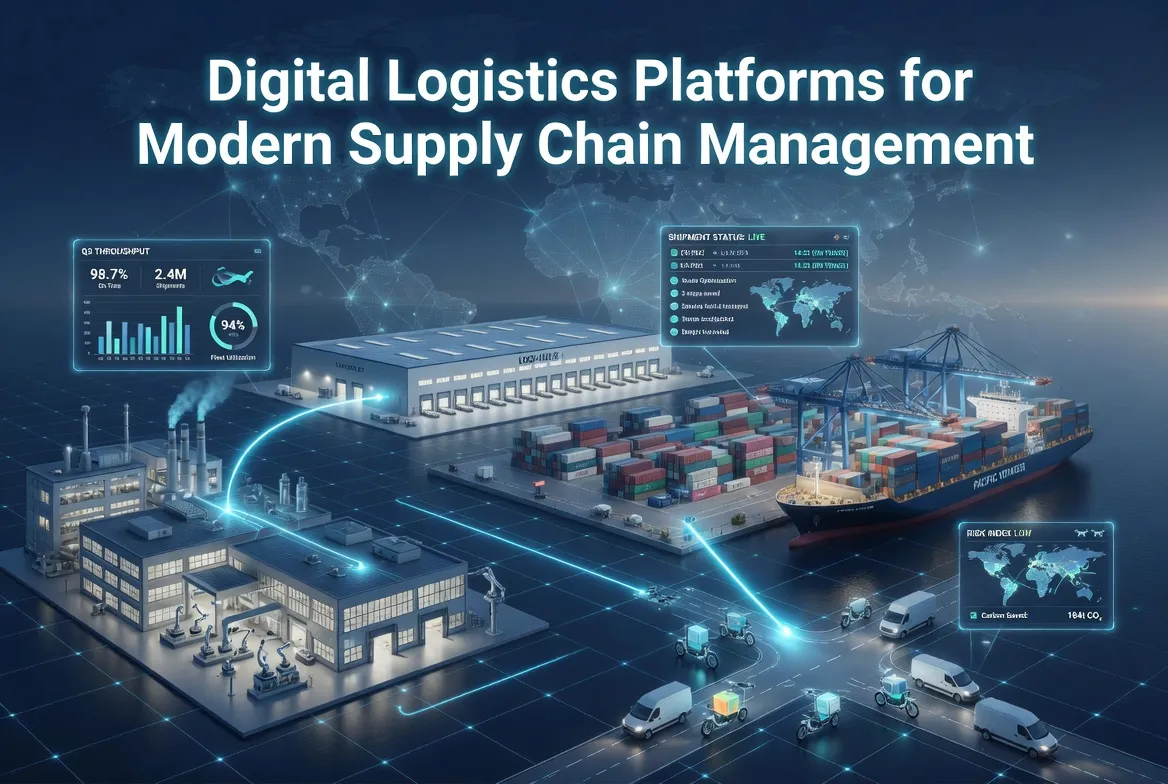
Digital Logistics Platforms for Modern Supply Chain Management
Introduction
Logistics visibility platforms for supply chain transparency are digital systems that help organizations gain clear, real-time insight into logistics operations, shipment movement, inventory status, and partner coordination across the supply chain. These platforms improve operational transparency by centralizing logistics data and providing a unified view of transportation activities from origin to final delivery.
In modern global logistics, supply chains often involve multiple carriers, warehouses, freight forwarders, customs agencies, and distribution partners operating across different systems and regions. Without transparency, companies struggle with delayed communication, fragmented information, operational blind spots, and inefficient decision-making.
A logistics visibility platform helps solve these challenges by enabling real-time tracking, milestone monitoring, multi-party collaboration, and automated operational workflows across the logistics ecosystem.
What is Supply Chain Transparency in Logistics
Supply chain transparency refers to the ability to monitor, access, and share accurate operational information throughout the logistics and transportation process.
In logistics operations, transparency includes visibility into:
Shipment status
Transportation milestones
Inventory movement
Delivery progress
Customs clearance
Operational delays
Partner coordination
Financial workflows
A logistics visibility platform acts as a centralized control layer that connects fragmented systems and provides stakeholders with a shared operational view.
Rather than relying on disconnected spreadsheets, emails, or manual status updates, logistics teams can monitor operations through a unified digital platform.
Modern transparency platforms also support:
Real-time shipment tracking
Automated notifications
Workflow automation
AI-assisted data processing
Cross-company collaboration
Why Supply Chain Transparency Matters
1. Global Supply Chains Are Increasingly Complex
Modern logistics operations involve multiple stakeholders across different countries and transportation networks.
A single shipment may involve:
Shippers
Freight forwarders
Overseas agents
Carriers
Warehouses
Customs brokers
Last-mile providers
Without centralized transparency, operational coordination becomes difficult.
2. Customers Expect Visibility and Accountability
Both B2B and eCommerce customers increasingly expect:
Real-time shipment visibility
Accurate ETAs
Proactive communication
Faster issue resolution
Transparent service performance
Companies that cannot provide operational transparency often struggle with customer satisfaction and retention.
3. Fragmented Systems Create Operational Blind Spots
Many logistics organizations still rely on disconnected systems for:
Transportation management
Warehouse management
Billing
Tracking
Customer communication
This fragmentation reduces operational visibility and slows decision-making.
4. Supply Chain Risks Require Faster Response
Operational disruptions such as:
Port congestion
Customs delays
Inventory shortages
Transportation disruptions
Carrier schedule changes
can quickly affect service performance.
Transparent logistics operations allow companies to identify risks earlier and respond more efficiently.
How Logistics Visibility Platforms Improve Supply Chain Transparency
Visibility platforms improve supply chain transparency by consolidating operational data from multiple systems into a centralized environment.
Step 1: Connecting Logistics Systems
The platform integrates with:
TMS systems
WMS systems
ERP platforms
Carrier APIs
Customs systems
eCommerce platforms
Financial systems
This creates a connected operational ecosystem.
Step 2: Synchronizing Operational Data
Shipment events and operational updates are synchronized automatically, including:
Cargo movement
Warehouse operations
Transportation milestones
Inventory updates
Customs status
Delivery confirmations
Real-time synchronization reduces information delays.
Step 3: Creating Unified Visibility Dashboards
The platform centralizes data into dashboards that display:
Shipment status
Inventory movement
Transportation progress
Operational KPIs
Delay alerts
Exception management
This provides a shared operational view across teams and partners.
Step 4: Enabling Multi-Role Collaboration
Different stakeholders can collaborate through shared workflows and operational timelines.
This may include:
Freight forwarders
Customers
Warehouses
Overseas agents
Transportation providers
Unified collaboration improves communication efficiency and reduces operational silos.
Step 5: Automating Operational Workflows
Modern visibility platforms support workflow automation such as:
Automated milestone updates
Task assignments
Exception alerts
Billing workflows
Financial reconciliation
Customer notifications
Automation improves consistency and operational scalability.
Key Features of Supply Chain Transparency Platforms
End-to-End Shipment Visibility
Users can monitor shipment progress across the entire transportation lifecycle.
Real-Time Data Synchronization
Operational updates are synchronized automatically from multiple systems and logistics partners.
Unified Operational Timelines
Shipment milestones and activities are organized into centralized timelines.
Multi-Party Collaboration
The platform enables collaboration between upstream and downstream logistics participants.
Exception Management
The system identifies operational abnormalities such as:
Delayed shipments
Missing milestones
Customs issues
Inventory shortages
Automated Notifications
Stakeholders receive automatic alerts and shipment updates in real time.
Workflow Automation
Platforms increasingly support:
Automated billing
Reconciliation workflows
SOP execution
Internal task management
AI-driven document processing
Operational Analytics
Historical visibility data supports:
Carrier performance analysis
SLA monitoring
Delay trend analysis
Process optimization
Benefits for Logistics Companies
Improved Operational Control
Centralized visibility helps logistics companies manage complex transportation networks more effectively.
Better Customer Communication
Real-time transparency improves customer trust and service quality.
Faster Decision-Making
Operational teams can identify problems earlier and respond more quickly.
Reduced Communication Fragmentation
Shared visibility reduces dependence on manual emails and disconnected communication channels.
Enhanced Collaboration
Supply chain partners can coordinate more efficiently through unified operational workflows.
Increased Operational Efficiency
Automation reduces repetitive manual work and improves scalability.
Improved Financial Accuracy
Integrated operational and financial workflows help reduce billing discrepancies and reconciliation delays.
Best Practices and Use Cases
Freight Forwarding Operations
Freight forwarders use transparency platforms to:
Track shipment milestones
Coordinate overseas agents
Improve customer visibility
Manage transportation exceptions
Cross-Border eCommerce Logistics
Cross-border logistics providers rely on transparency for:
Parcel tracking
Last-mile visibility
Customs monitoring
Customer self-service portals
Warehouse and Distribution Management
Warehouse operators use visibility platforms to monitor:
Inventory movement
Inbound operations
Outbound shipments
Transfer coordination
Multi-Modal Transportation
Visibility platforms improve transparency across:
Ocean freight
Air freight
Rail transportation
Trucking operations
Financial and Operational Integration
Integrated visibility and financial automation improve operational alignment and reduce manual reconciliation work.
Conclusion
Supply chain transparency has become a critical requirement for modern logistics operations. As global transportation networks become more complex and customer expectations continue to rise, logistics companies need centralized visibility into shipment movement, operational workflows, and partner coordination.
Logistics visibility platforms help organizations improve transparency through real-time tracking, unified operational dashboards, workflow automation, and multi-party collaboration.
For freight forwarders, 3PL providers, and cross-border logistics operators, supply chain transparency improves operational efficiency, customer experience, and long-term scalability while helping organizations respond faster to supply chain disruptions.
Frequently Asked Questions
What is supply chain transparency in logistics?
Supply chain transparency refers to the ability to monitor and share accurate operational information across logistics processes, transportation activities, and shipment movement.
How do logistics visibility platforms improve transparency?
They centralize logistics data from multiple systems and provide real-time shipment tracking, milestone visibility, and collaborative operational workflows.
Why is supply chain transparency important?
Transparency improves operational control, customer communication, collaboration efficiency, and responsiveness to supply chain disruptions.
What are the benefits of logistics visibility platforms?
Benefits include real-time visibility, workflow automation, improved collaboration, reduced manual work, and better customer service.
Who uses supply chain transparency platforms?
Freight forwarders, 3PL providers, warehouses, cross-border logistics companies, and supply chain operators commonly use these systems.
About WallTech
WallTech provides digital logistics solutions that help logistics companies improve operational transparency, shipment visibility, and supply chain collaboration. Its platforms support real-time shipment tracking, milestone-based visibility, and end-to-end coordination across freight forwarding, warehousing, transportation, and cross-border logistics operations.
WallTech solutions also support workflow automation, AI-assisted data recognition, automated billing and reconciliation, and unified operational management across multiple logistics stakeholders. By connecting upstream and downstream partners within centralized digital workflows, logistics companies can improve operational efficiency, scalability, and customer experience.
If you're exploring ways to improve your logistics operations, feel free to connect with us to learn more about our solutions and system capabilities.
.webp "What Is a Trade Compliance Management System in Logistics?")