May 11,2026
Freight Forwarding Software for Managing International Logistics Networks
Introduction
Automated billing improves financial accuracy in logistics by generating invoices directly from shipment data, applying predefined pricing rules, and reducing manual intervention. It ensures that all charges are calculated consistently and recorded in real time, minimizing errors, discrepancies, and revenue leakage.
In logistics operations—where each shipment may involve multiple cost components and stakeholders—automation is essential to maintain accurate and efficient financial processes.
What is Automated Billing in Logistics
Automated billing in logistics refers to the use of software systems to generate invoices and calculate charges based on operational data without manual input.
This includes:
Automatically applying rate cards and pricing rules
Generating invoices based on shipment milestones
Calculating costs and revenues in real time
Managing billing across multiple services and partners
Instead of manually creating invoices from spreadsheets or emails, automated billing systems connect directly to logistics workflows, ensuring that billing reflects actual operations.
Why Automated Billing Matters
1. High Risk of Manual Errors
Manual billing processes often involve:
Re-entering data from multiple sources
Applying complex pricing rules manually
Handling large volumes of transactions
This increases the likelihood of:
Incorrect charges
Missing fees
Duplicate entries
2. Complex Pricing Structures
Logistics pricing can include:
Weight-based and volume-based rates
Zone-based pricing
Fuel surcharges and additional fees
Customer-specific pricing agreements
Managing these manually is inefficient and prone to inconsistencies.
3. High Transaction Volume
Freight forwarders and 3PL providers process thousands of shipments daily.
Manual billing becomes:
Time-consuming
Difficult to scale
Operationally inefficient
4. Delayed Billing Cycles
Manual processes often delay invoice generation.
This leads to:
Slower cash flow
Longer payment cycles
Reduced financial visibility
5. Need for Financial Transparency
Customers expect clear and accurate invoices.
Automated billing ensures:
Consistent billing standards
Detailed charge breakdowns
Improved trust and transparency
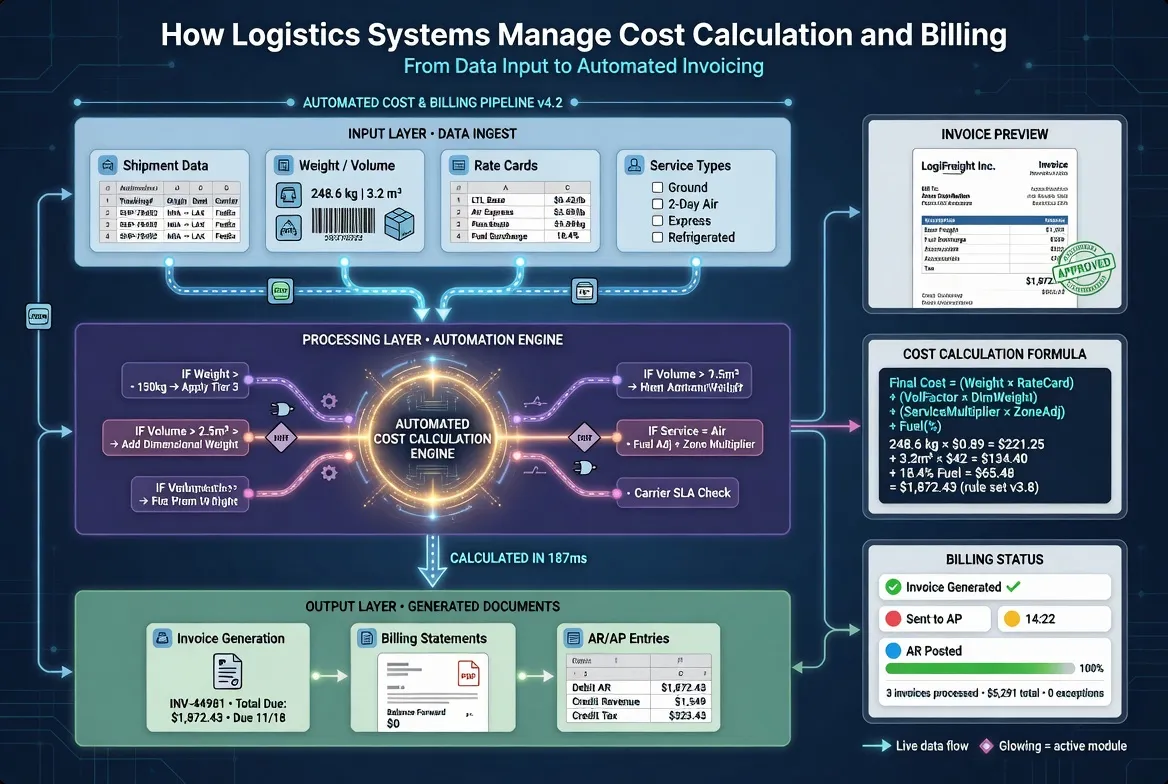
How Automated Billing Works
1. Integration with Shipment Data
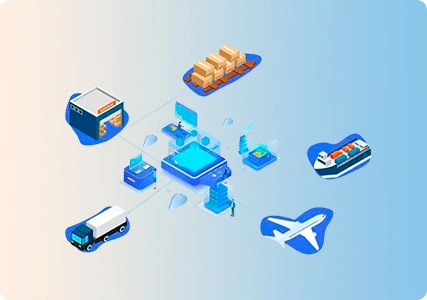
Automated billing systems are directly connected to logistics operations.
When a shipment is created or updated:
Relevant billing data is captured automatically
Charges are calculated based on shipment attributes
2. Application of Rate Cards
Rate cards define pricing rules such as:
Freight charges
Handling fees
Additional surcharges
The system applies these rules automatically to calculate costs and revenues.
3. Milestone-Based Billing
Billing can be triggered by shipment milestones, such as:
Booking confirmation
Departure
Arrival
Delivery
This ensures that invoices are generated at the appropriate time.
4. Real-Time Cost Calculation
As shipment data changes, costs are recalculated dynamically.
For example:
Changes in weight or volume
Route adjustments
Additional services
This ensures billing accuracy throughout the shipment lifecycle.
5. Automated Invoice Generation
Invoices are generated automatically with:
Detailed charge breakdowns
Customer-specific pricing
Multi-currency support
6. Reconciliation and Validation
The system compares:
Expected charges
Actual costs
Discrepancies are flagged for review, improving financial accuracy.
7. Workflow Automation
Billing processes are supported by automated workflows, including:
Approval processes
Notifications and alerts
Exception handling
This ensures smooth and efficient billing operations.
Key Features of Automated Billing Systems
Real-Time Billing Accuracy
Automatic cost and revenue calculation
Immediate updates based on shipment changes
End-to-End Visibility
Billing data linked to shipment milestones
Unified view of operations and financials
Multi-Role Collaboration
Coordination between operations, finance, and sales teams
Shared access to billing data and processes
Flexible Pricing Configuration
Support for complex rate structures
Customer-specific pricing rules
Automated Reconciliation
Matching receivables and payables
Identification of discrepancies
Multi-Currency Support
Handling of international transactions
Exchange rate management
Automation and AI Capabilities
OCR for extracting billing data from documents
AI-driven validation and anomaly detection
Workflow automation for approvals and adjustments
Benefits for Logistics Companies
Improved Financial Accuracy
Automation eliminates manual errors and ensures consistent billing.
Faster Billing Cycles
Invoices are generated quickly, improving cash flow.
Reduced Operational Costs
Less manual work leads to lower administrative costs.
Enhanced Customer Satisfaction
Accurate and transparent invoices improve customer trust.
Better Scalability
Systems can handle large volumes of shipments and transactions.
Best Practices and Use Cases
Maintain Updated Rate Cards
Ensure pricing rules are accurate and reflect current agreements.
Automate Billing Triggers
Use shipment milestones to trigger invoice generation.
Monitor Billing Performance
Track discrepancies and continuously improve processes.
Integrate Systems
Ensure seamless data flow between operational and financial systems.
Use Case: Freight Forwarders
Freight forwarders can automate billing for complex multimodal shipments, ensuring accuracy across all cost components.
Use Case: Cross-Border eCommerce Logistics
High-volume parcel operations benefit from fast and accurate automated billing.
Use Case: 3PL Providers
3PL companies can manage billing across multiple clients and services efficiently.
Conclusion
Automated billing is a critical component of modern logistics financial management. By integrating billing processes with operational data, logistics companies can improve financial accuracy, reduce manual effort, and accelerate billing cycles. As logistics operations grow in complexity and scale, automated billing systems provide the foundation for efficient and reliable financial management.
Frequently Asked Questions
What is automated billing in logistics?
Automated billing is the process of generating invoices and calculating charges automatically based on shipment data and pricing rules.
How does automated billing improve financial accuracy?
It reduces manual errors, ensures consistent application of pricing rules, and updates billing in real time.
Why is automated billing important in logistics?
It improves efficiency, speeds up billing cycles, and enhances financial transparency.
What are the benefits of automated billing systems?
Benefits include improved accuracy, faster invoicing, reduced costs, and better scalability.
Who uses automated billing systems in logistics?
Freight forwarders, 3PL providers, and cross-border logistics companies use these systems.
About WallTech
WallTech provides digital logistics solutions that integrate automated billing with end-to-end operational workflows. Its platforms enable real-time shipment visibility through milestone-based tracking, support multi-role collaboration across logistics teams and partners, and automate cost calculation, invoicing, and reconciliation processes. By combining financial automation with operational data, WallTech helps logistics companies improve billing accuracy, enhance efficiency, and scale their operations with greater transparency and control.
If you're exploring ways to improve your logistics operations, feel free to connect with us to learn more about our solutions and system capabilities.
.webp "How Modern Platforms Enable Freight Compliance Documentation")