



.webp "What Is a Freight Profit Management System?")
Mar 03,2026
What Is a Freight Profit Management System?
Introduction
Logistics systems organize global supply chain processes by structuring operations into standardized, interconnected workflows that unify data, coordinate stakeholders, and automate execution across regions and functions. These systems act as centralized platforms that align procurement, transportation, warehousing, and delivery processes into a single, manageable framework.
In global supply chains, complexity arises from fragmented operations, multiple partners, and varying regional requirements. Without structured organization, companies face inefficiencies, lack of visibility, and coordination challenges. Modern logistics systems address these issues by digitizing and integrating supply chain processes end to end.
What is Global Supply Chain Process Organization?
Global supply chain process organization refers to the systematic structuring and management of all logistics activities involved in moving goods from origin to destination across international networks.
It includes:
Order and demand management
Transportation planning and execution
Warehouse and inventory coordination
Cross-border compliance and documentation
Delivery and last-mile operations
Financial settlement and reporting
The goal is to create a unified operational model that ensures all processes are aligned and executed efficiently.
Why Organizing Supply Chain Processes Matters
Organizing global supply chain processes is critical due to the complexity and scale of modern logistics networks.
Key challenges include:
Disconnected operations: Different functions operate in silos
Data fragmentation: Information is spread across multiple systems
Lack of coordination: Poor alignment between upstream and downstream partners
Limited visibility: Difficulty tracking goods across multiple stages
These challenges often result in:
Operational inefficiencies
Delays and disruptions
Increased costs
Reduced customer satisfaction
A well-organized supply chain ensures that all processes are synchronized, enabling smoother operations and better decision-making.
How Logistics Systems Organize Global Supply Chain Processes
Logistics systems organize supply chain processes by structuring them into interconnected modules and workflows.
1. Centralized Data Management
All supply chain data is stored in a unified system
Standardized data formats ensure consistency
Real-time updates provide a single source of truth
2. Process Standardization
Define clear workflows for each supply chain function
Ensure consistent execution across regions and teams
Reduce variability and operational errors
3. End-to-End Workflow Integration
Connect processes from order creation to final delivery
Link transportation, warehousing, and distribution activities
Ensure seamless handoffs between stages
4. Multi-Role and Multi-Party Coordination
Enable collaboration between internal teams (procurement, operations, finance)
Connect external partners (suppliers, carriers, warehouses, agents)
Facilitate upstream and downstream communication
5. Milestone-Based Process Tracking
Track progress through key supply chain milestones
Provide a unified timeline of activities
Identify bottlenecks and delays early
6. Automation of Repetitive Processes
Automate routine tasks such as data entry, status updates, and document handling
Use AI to extract and validate data from documents
Trigger actions automatically based on predefined rules
7. Integrated Financial Processes
Align operational activities with billing and cost tracking
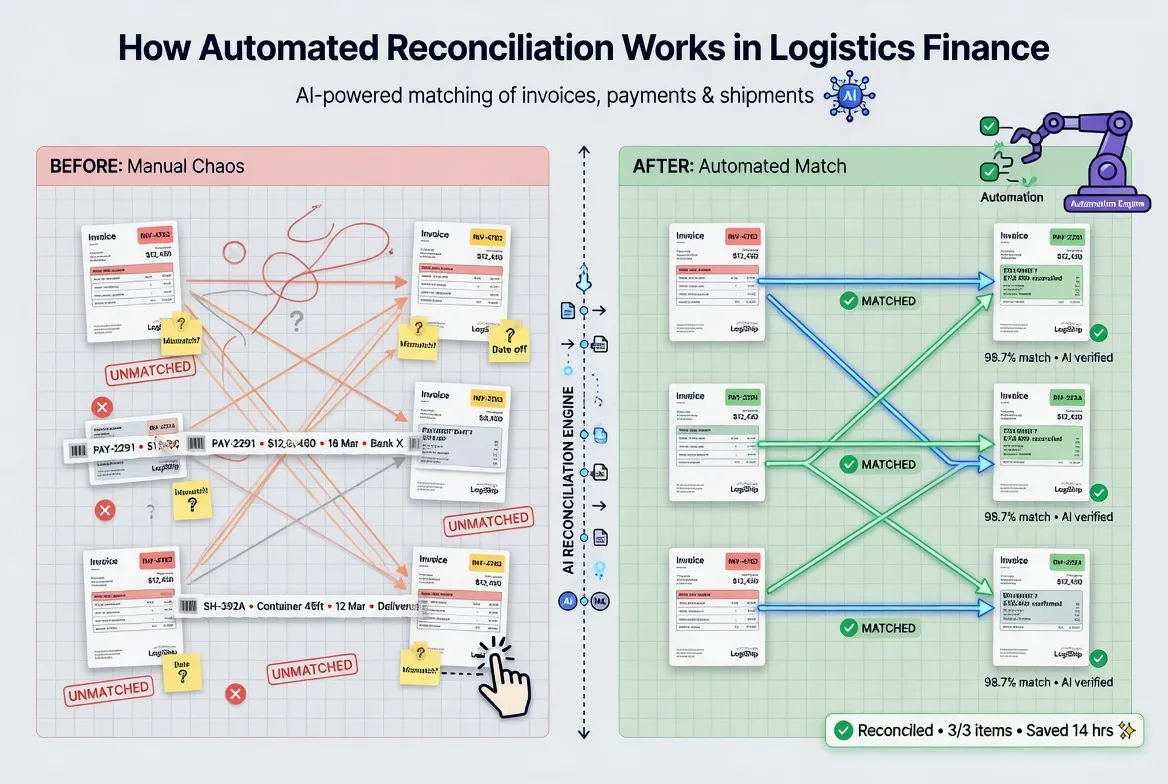
Automate invoicing and reconciliation
Provide real-time financial visibility
Key Features / Key Capabilities
Modern logistics systems offer capabilities that enable effective supply chain organization.
1. Unified Platform Architecture
Centralized system for all supply chain processes
Eliminates data silos
Enables consistent data access
2. Real-Time Visibility
End-to-end tracking of goods and processes
Milestone-based updates
Transparent operational insights
3. Workflow Automation
Automated process execution
Configurable workflow rules
Reduced manual intervention
4. Collaboration Tools
Multi-role coordination within a single platform
Shared access to data and updates
Improved communication across stakeholders
5. AI-Driven Data Processing
Automated document recognition
Data validation and error reduction
Faster processing of supply chain information
6. Financial Integration
Automated billing and cost management
Integration between operations and finance
Improved financial accuracy
Benefits for Logistics Companies
Organizing supply chain processes through digital systems provides significant advantages:
Operational efficiency: Streamlined processes reduce delays and manual work
Improved visibility: Real-time insights into supply chain performance
Enhanced coordination: Better alignment between teams and partners
Higher accuracy: Reduced errors in data and execution
Scalability: Ability to manage complex global operations efficiently
These benefits enable logistics companies to deliver reliable and cost-effective services.
Best Practices / Use Cases
1. Adopt a Process-Driven Approach
Define and standardize workflows before implementing digital systems.
2. Centralize Data and Systems
Use a unified platform to manage all supply chain processes.
3. Enable Cross-Functional Collaboration
Ensure that all departments and partners can access and share data easily.
4. Leverage Automation for Efficiency
Automate repetitive tasks to reduce manual workload and improve speed.
5. Monitor Performance with Milestones
Track key events across the supply chain to identify and resolve issues quickly.
Use Case Example:
A global logistics company managing cross-border supply chains can:
Integrate order data from customers
Coordinate transportation and warehousing across regions
Track shipments through milestones such as pickup, transit, and delivery
Automate billing and financial reconciliation
This structured approach ensures consistent and efficient operations.
Conclusion
Logistics systems play a crucial role in organizing global supply chain processes by transforming fragmented operations into structured, integrated workflows. Through centralized data management, automation, and real-time visibility, these systems enable logistics companies to manage complexity and improve operational performance.
As supply chains continue to expand globally, the ability to organize processes effectively will be a key factor in achieving efficiency, scalability, and competitive advantage.
Frequently Asked Questions
What is global supply chain process organization?
It is the structured management of all logistics activities involved in moving goods across international supply chains.
How do logistics systems organize supply chain processes?
They use centralized platforms, standardized workflows, and automation to coordinate operations and data.
Why is process organization important in logistics?
It improves efficiency, reduces errors, and ensures smooth coordination across complex supply chains.
What are the benefits of using logistics systems?
They provide visibility, automation, collaboration, and scalability for global operations.
How does automation help in supply chain management?
Automation reduces manual tasks, speeds up processes, and improves accuracy in operations.
About WallTech
WallTech provides digital logistics solutions that help companies organize and manage global supply chain processes more effectively. Its platforms enable end-to-end collaboration across multiple roles and partners, deliver real-time shipment visibility through milestone-based tracking, and support workflow and financial automation. By integrating transportation, warehousing, and operational processes into a unified system, WallTech helps logistics companies improve efficiency, reduce operational complexity, and scale their global supply chain operations with confidence.
If you're exploring ways to improve your logistics operations, feel free to connect with us to learn more about our solutions and system capabilities.
.webp "What Is Logistics Rate Management and Why It Matters")
.webp "What Is Logistics Cost Management Software")


