Apr 29,2026
Logistics Data Platforms for Logistics Data Visualization
Intro
The top ocean freight companies 2026 are defined not only by fleet size and global routes, but also by their ability to operate efficiently in an increasingly complex shipping environment. As global trade volumes fluctuate and supply chains become more dynamic, operational efficiency and digital coordination are now critical factors in determining industry leadership.
What are Top Ocean Freight Companies 2026
The ranking of top ocean freight companies evaluates leading carriers and logistics providers involved in maritime transportation. These companies are typically assessed based on:
Fleet capacity (TEU)
Global shipping routes and port coverage
Service frequency and reliability
Operational efficiency
Digital and technological capabilities
In 2026, rankings increasingly reflect how well companies integrate operational workflows and leverage real-time data across shipping networks.
Key Challenges or Industry Context
Ocean freight companies operate within one of the most complex logistics environments, facing several ongoing challenges:
1. Global route complexity
Shipping networks span multiple continents, ports, and transshipment hubs, requiring precise coordination.
2. Schedule reliability issues
Port congestion, weather disruptions, and geopolitical factors can impact vessel schedules.
3. Limited visibility across segments
Tracking shipments across ocean, port handling, and inland transport often involves disconnected systems.
4. Manual coordination processes
Booking confirmations, schedule updates, and documentation are still partially manual in many operations.
5. Cost and capacity pressure
Balancing vessel capacity utilization with fluctuating demand is a constant challenge.
These issues directly affect service reliability and operational performance.
How It Works / Industry Process
Ocean freight operations follow a structured but multi-layered process:
1. Route planning and capacity allocation
Shipping lines define routes and allocate vessel capacity across trade lanes.
2. Booking and space confirmation
Freight forwarders or shippers book container space on vessels.
3. Container handling and port operations
Containers are received, loaded, and managed at origin ports.
4. Ocean transportation
Cargo is transported via vessels across international routes.
5. Transshipment (if applicable)
Containers may be transferred between vessels at hub ports.
6. Destination port and inland delivery
Cargo is discharged, cleared through customs, and delivered inland.
Each stage involves multiple systems and stakeholders, making coordination a key factor in efficiency.
Why It Matters (Business Impact)
For ocean freight companies, operational performance directly impacts:
Schedule reliability and customer trust
Cost efficiency and margin control
Capacity utilization and revenue optimization
Service competitiveness in global trade lanes
Long-term partnerships with shippers and forwarders
Companies that can deliver consistent, predictable services gain a significant advantage in global rankings.
Top 30 Ocean Freight Companies in the World (2026)
This ranking is based on the latest publicly available industry data (2025 TEU volumes) from authoritative sources such as Transport Topics and Armstrong & Associates, widely used as the most reliable benchmark for global freight forwarder performance.
| Rank | Company | Headquarters | Ocean Freight Volume (TEU) |
|---|---|---|---|
| 1 | Sinotrans Ltd. | China | 4,872,248 |
| 2 | Kuehne + Nagel | Switzerland | 4,310,000 |
| 3 | DHL Global Forwarding | Germany | 3,314,000 |
| 4 | DSV A/S | Denmark | 2,686,009 |
| 5 | CEVA Logistics | France | 1,900,000 |
| 6 | Nippon Express | Japan | 1,850,979 |
| 7 | DB Schenker | Germany | ~1,810,000 |
| 8 | LX Pantos | South Korea | 1,569,000 |
| 9 | Ningbo Port Southeast Logistics | China | 1,551,542 |
| 10 | C.H. Robinson | USA | ~1,428,200 |
| 11 | Kerry Logistics | Hong Kong, China | 1,238,108 |
| 12 | COSCO Shipping Logistics | China | 1,086,510 |
| 13 | Hellmann Worldwide Logistics | Germany | ~955,000 |
| 14 | CIMC Wetrans Logistics | China | 900,101 |
| 15 | Worldwide Logistics Group | China | 881,620 |
| 16 | CTS International Logistics | China | ~877,848 |
| 17 | GEODIS | France | 858,301 |
| 18 | Savino Del Bene | Italy | 850,000 |
| 19 | Expeditors | USA | ~846,800 |
| 20 | OOCL Logistics | Hong Kong, China | 800,000 |
| 21 | Fr. Meyer’s Sohn | Germany | 800,000 |
| 22 | Kintetsu World Express | Japan | 723,227 |
| 23 | Allcargo Logistics | India | ~649,070 |
| 24 | Maersk Logistics | Denmark | ~635,000 |
| 25 | Van Donge & de Roo | Netherlands | 635,000 |
| 26 | Logwin AG | Luxembourg | 614,000 |
| 27 | Yusen Logistics | Japan | ~603,000 |
| 28 | Cargo Services Far East | Hong Kong, China | ~571,760 |
| 29 | Pacific Star Group | Taiwan, China | 565,833 |
| 30 | Toll Group | Australia | ~533,740 |
How Modern Logistics Platforms Solve This
Modern logistics platforms are transforming how ocean freight companies manage operations and improve efficiency through a unified logistics management system.
Workflow automation across booking and operations
Digital systems automate booking confirmations, schedule updates, and documentation workflows. This reduces manual intervention and accelerates processing times.
Vessel tracking integration
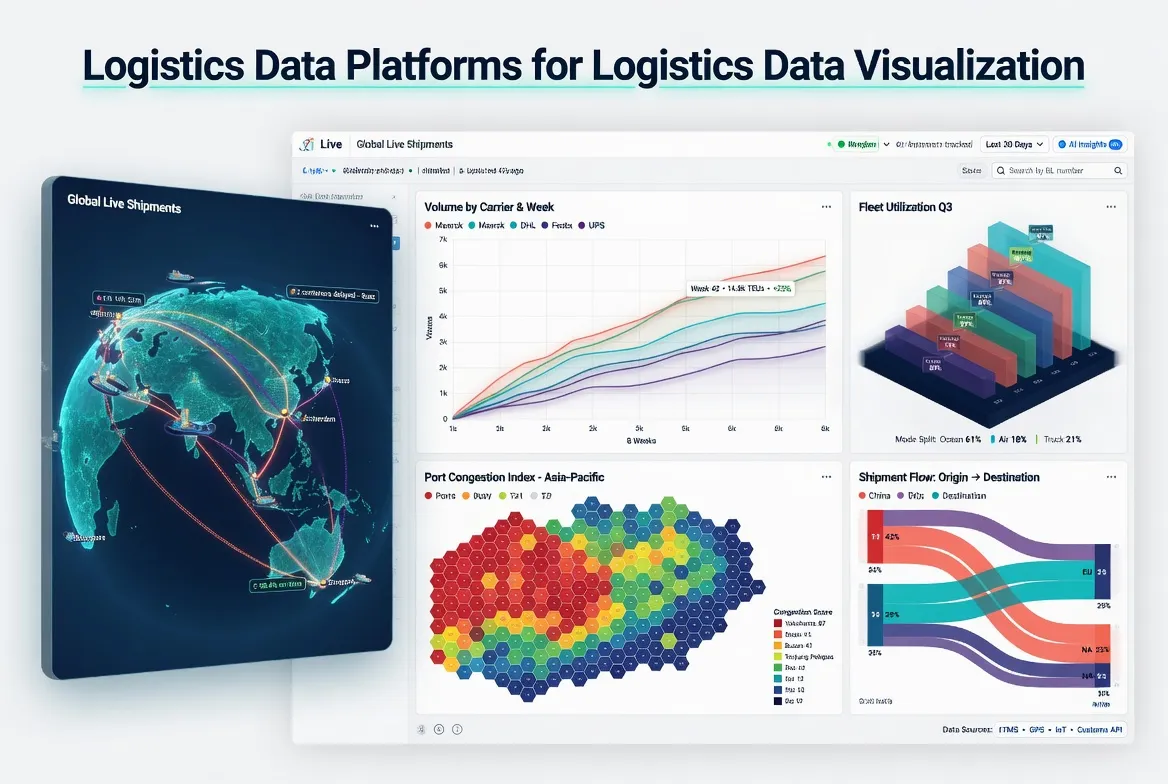
By integrating vessel tracking data from multiple sources, platforms provide real-time updates on vessel positions, estimated arrival times, and delays.
These tracking capabilities enable logistics teams to monitor shipments continuously and adjust plans proactively.
Unified shipment visibility across segments
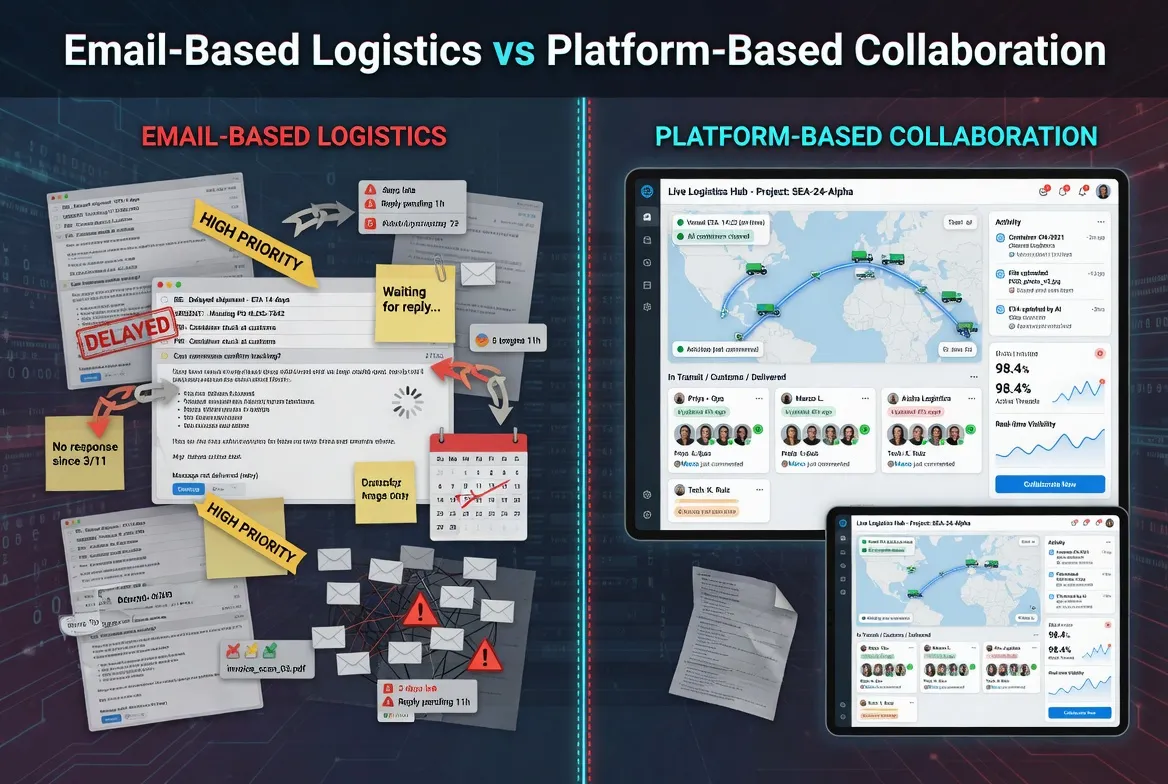
Modern platforms consolidate data from ocean carriers, port operations, and inland transport into a single interface. This eliminates fragmented tracking and improves coordination.
Exception management and alerts
Automated alerts notify operators of delays, missed connections, or schedule changes, allowing faster response.
Cross-party collaboration
Shipping lines, freight forwarders, and logistics partners can share data within the same system through advanced freight forwarding software, reducing communication gaps.
Data-driven operational optimization
Access to historical and real-time data enables companies to optimize routes, improve schedule planning, and enhance service reliability.
Through these capabilities, ocean freight companies can operate more efficiently and maintain higher service standards.
Key Benefits
Adopting modern digital logistics platforms provides several benefits:
Improved schedule reliability through real-time vessel tracking
Faster operational workflows with reduced manual processing
Enhanced visibility across ocean and inland transport segments
Better coordination among global stakeholders
Reduced operational risks with proactive exception handling
Higher capacity utilization through data-driven planning
Conclusion
The top ocean freight companies 2026 are no longer defined solely by fleet size or route coverage. Operational efficiency—driven by workflow automation and integrated vessel tracking—has become a critical differentiator.
Companies that embrace digital logistics platforms can better manage complexity, improve reliability, and strengthen their position in the global shipping industry.
FAQ
1. What defines the top ocean freight companies in 2026?
Key factors include fleet capacity, global route networks, schedule reliability, operational efficiency, and digital capabilities.
2. How does vessel tracking improve ocean freight operations?
It provides real-time visibility into vessel locations and schedules, enabling better planning and faster response to disruptions.
3. Why is workflow automation important in ocean freight?
Automation reduces manual tasks, speeds up operations, and ensures consistent processes, improving overall efficiency and service quality.
.webp "WMS vs Traditional Warehouse Operations")