Apr 23,2026
Digital Logistics Platforms for Global Logistics Operations
Introduction
Logistics Order Management Systems (OMS) are digital platforms designed to manage the full lifecycle of shipment orders—from creation and processing to execution and financial settlement. The key features of these systems include centralized order control, workflow automation, real-time visibility, multi-role collaboration, and integrated financial management. These capabilities enable logistics companies to streamline operations, reduce manual errors, and handle increasing shipment volumes efficiently.
What is a Logistics Order Management System
A Logistics Order Management System (OMS) is a software platform that centralizes and manages all shipment-related activities within a logistics organization.
It connects different operational functions, including:
Order intake and creation
Shipment planning and execution
Document management
Tracking and visibility
Financial processing
For freight forwarders, 3PL providers, and cross-border logistics companies, an OMS acts as the operational backbone that ensures all departments work within a unified system.
Why Logistics OMS Features Matter
1. Addressing Fragmented Operations
Many logistics companies still operate using:
Spreadsheets
Disconnected systems
Manual coordination
A feature-rich OMS eliminates fragmentation by consolidating all processes into one platform.
2. Enabling Scalable Operations
As order volumes increase:
Manual processes become inefficient
Errors become more frequent
Coordination becomes more complex
Advanced OMS features support scalability without requiring proportional increases in manpower.
3. Improving Data Accuracy and Consistency
Standardized system features ensure:
Accurate data entry and validation
Consistent workflows
Reduced duplication and errors
4. Supporting End-to-End Visibility
Modern logistics requires transparency across the entire shipment lifecycle.
OMS features provide:
Real-time tracking
Unified shipment timelines
Centralized data access
5. Enhancing Collaboration
Logistics operations involve multiple stakeholders:
Internal teams (sales, operations, finance)
External partners (carriers, agents, customers)
OMS features enable seamless collaboration across all parties.
How Logistics Order Management Systems Work
1. Order Capture and Integration
The system captures orders from multiple sources:
Customer portals
APIs and system integrations
Manual entry and bulk uploads
All orders are centralized within a unified data structure.
2. Workflow Orchestration
Once an order is created:
Tasks are automatically assigned
Processes follow predefined SOPs
Milestones are tracked throughout execution
This ensures consistent and structured operations.
3. Shipment Execution and Coordination
The system supports:
Carrier selection
Route planning
Document preparation
Operational task management
All activities are managed within the same platform.
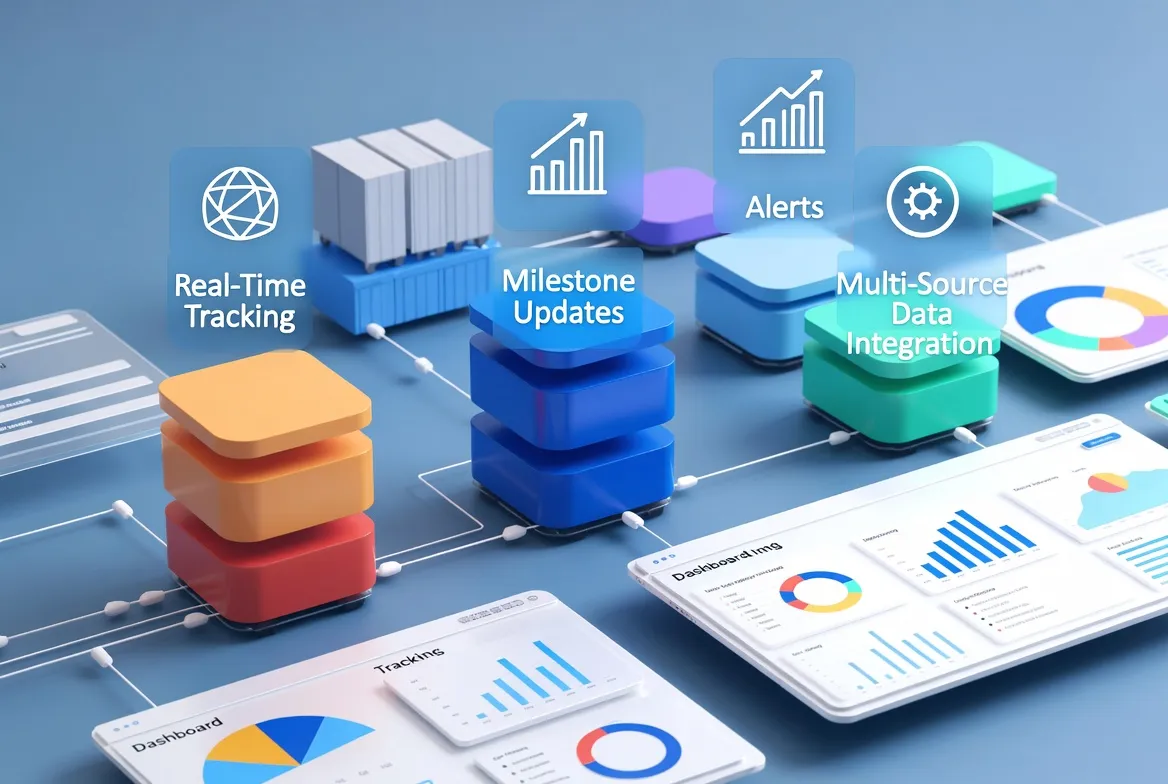
4. Tracking and Visibility
OMS platforms provide:
Real-time status updates
Milestone-based tracking
Exception alerts
This ensures full transparency across the shipment lifecycle.
5. Financial Processing
Operational data is directly linked to financial processes:
Cost calculation
Billing and invoicing
Reconciliation and reporting
Key Features of Logistics Order Management Systems
1. Centralized Order Management
Unified platform for all shipment orders
Standardized order data structure
Multi-channel order integration
2. Workflow Automation
SOP-driven process execution
Automated task assignment
Trigger-based actions and notifications
Automation reduces manual intervention and ensures consistency.
3. End-to-End Visibility
Real-time tracking of shipments
Milestone-based timelines
Unified dashboard for all orders
This provides a single source of truth across operations.
4. Multi-Role Collaboration
Coordination across departments
Shared access for partners and customers
Role-based permissions and data control
This ensures smooth collaboration across the logistics ecosystem.
5. Intelligent Routing and Carrier Selection
Rule-based carrier selection
Route optimization logic
Multi-leg shipment planning
These features improve operational efficiency and service quality.
6. Document Management and Automation
Automated document generation
Centralized document storage
Integration with shipment workflows
This reduces manual paperwork and improves accuracy.
7. Financial Integration
Automated billing and invoicing
Multi-currency support
Cost and profit tracking per shipment
This ensures financial accuracy and transparency.
8. Exception Management
Automated alerts for delays or issues
Structured workflows for handling exceptions
Real-time updates for stakeholders
9. Data Analytics and Reporting
Operational performance dashboards
Financial reports
Customizable analytics
These insights support better decision-making.
10. System Integration Capabilities
API connectivity with external systems
Integration with ERP, CRM, and WMS
Partner and carrier system connectivity
This enables seamless data flow across the logistics ecosystem.
Benefits for Logistics Companies
Improved Efficiency
Reduces manual work
Automates repetitive processes
Streamlines operations
Enhanced Accuracy
Standardized data handling
Reduced errors and duplication
Better Visibility
Real-time tracking across all shipments
Improved monitoring and control
Stronger Collaboration
Aligns internal teams and external partners
Improves communication and coordination
Financial Control
Accurate cost tracking and billing
Improved profitability analysis
Scalability
Supports business growth
Handles increasing order volumes efficiently
Best Practices / Use Cases
1. Freight Forwarders Managing Complex Shipments
Use OMS features to coordinate multi-leg, multi-mode shipments efficiently.
2. Cross-Border eCommerce Logistics
Handle high-volume parcel orders with automated workflows and real-time tracking.
3. 3PL Providers Serving Multiple Clients
Standardize processes while supporting diverse customer requirements.
4. Companies Transitioning from Manual Systems
Replace spreadsheets and disconnected tools with a unified OMS platform.
5. Logistics Networks with Multiple Stakeholders
Enable collaboration across global partners and teams within one system.
Conclusion
Logistics Order Management Systems are essential for modern logistics operations. Their key features—centralized order control, automation, visibility, collaboration, and financial integration—enable companies to manage complex operations efficiently and scale effectively.
As logistics environments become more dynamic and data-driven, adopting a feature-rich OMS is critical for maintaining competitiveness and operational excellence.
Frequently Asked Questions
What is a logistics order management system?
It is a software platform that manages the full lifecycle of shipment orders, including creation, execution, tracking, and financial processing.
What are the key features of an OMS in logistics?
Key features include centralized order management, workflow automation, real-time visibility, multi-role collaboration, and financial integration.
How does an OMS improve logistics operations?
It automates processes, improves data accuracy, enhances visibility, and enables better coordination across teams and partners.
Why is visibility important in an OMS?
Visibility allows logistics companies to monitor shipments in real time, identify issues early, and improve decision-making.
What are the benefits of using a logistics OMS?
Benefits include improved efficiency, scalability, accuracy, financial control, and enhanced customer experience.
About WallTech
WallTech provides digital logistics solutions that help companies manage orders efficiently across global operations. Its platforms enable end-to-end logistics collaboration, allowing multiple roles and partners to work within a unified system. With real-time shipment visibility and milestone-based tracking, logistics teams gain full control over execution processes. WallTech also supports workflow automation, AI-powered data recognition, and integrated financial processes such as billing and reconciliation. These capabilities help freight forwarders and logistics providers improve efficiency, reduce operational complexity, and scale their business effectively.
If you're exploring ways to improve your logistics operations, feel free to connect with us to learn more about our solutions and system capabilities.
.webp "How Digital Systems Improve Shipping Paperwork Automation")