

Apr 03,2026
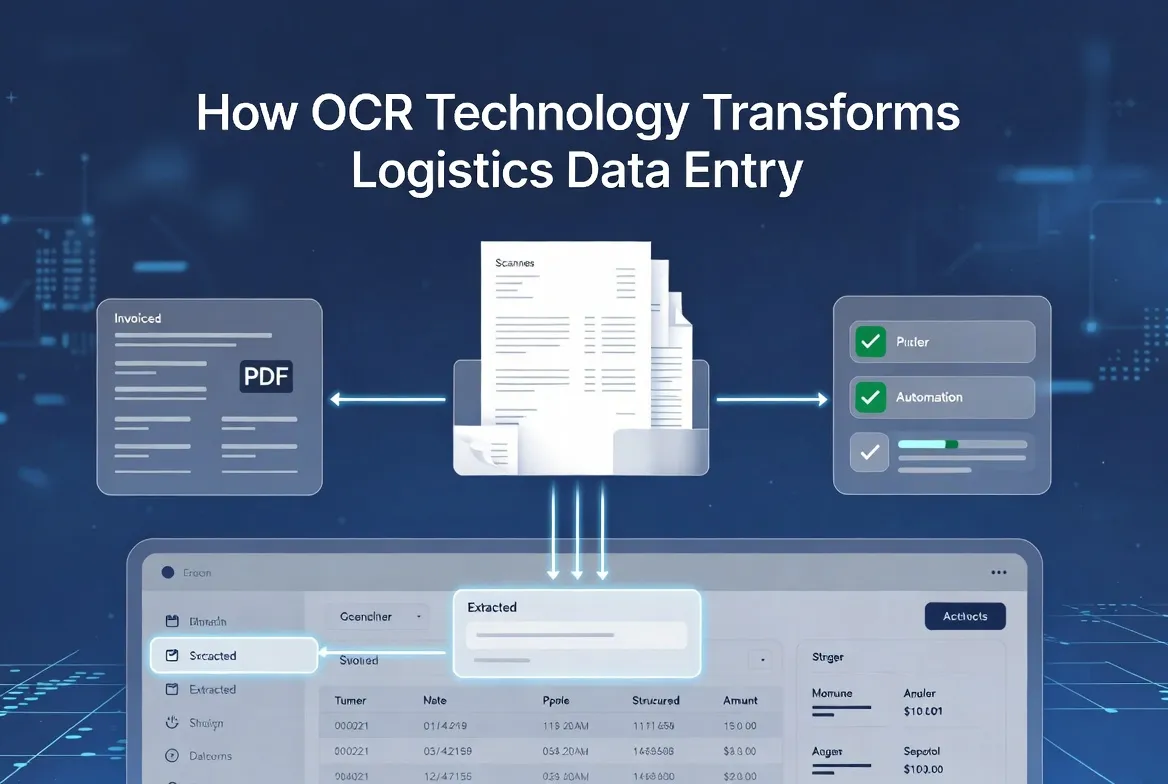
How OCR Technology Transforms Logistics Data Entry
Introduction
Automation and visibility drive logistics efficiency by reducing manual work, improving real-time decision-making, and enabling better coordination across supply chain stakeholders. Together, they allow logistics companies to operate faster, more accurately, and at scale.
What Are Automation and Visibility in Logistics
Automation refers to the use of technology to execute repetitive tasks—such as data entry, billing, and workflow execution—without manual intervention.
Visibility refers to the ability to track shipments, operations, and data in real time across the entire logistics lifecycle.
Why Automation and Visibility Matter
Logistics operations are often complex and fragmented. Without automation and visibility:
Teams rely on manual processes
Shipment status is unclear or delayed
Communication between stakeholders is inefficient
Errors in documentation and billing are common
These challenges directly impact efficiency and customer satisfaction.
How Automation and Visibility Work
Data Input Automation
AI-powered systems extract shipment data from documents, reducing manual entry.Workflow Automation
Tasks are triggered automatically based on predefined rules and milestones.Real-Time Tracking
Shipment data is collected from multiple sources and displayed in a unified timeline.Exception Alerts
Systems detect delays or disruptions and notify relevant teams.Financial Automation
Billing, invoicing, and reconciliation are processed automatically.
Key Features
AI data recognition (OCR for logistics documents)
Automated task assignment and workflow execution
End-to-end shipment visibility
Milestone-based tracking with real-time updates
Automated billing and reconciliation
Benefits for Logistics Companies
Reduced manual workload and operational costs
Faster processing and response times
Improved accuracy in data and financial management
Enhanced customer experience through transparency
Best Practices / Use Cases
Automating document processing for high-volume shipments
Using real-time tracking to manage exceptions proactively
Integrating visibility tools across multiple transport modes
Conclusion
Automation and visibility are fundamental drivers of efficiency in modern logistics operations. By combining these capabilities, logistics companies can streamline workflows, reduce errors, and improve overall performance.
Frequently Asked Questions
What is automation in logistics?
It is the use of technology to perform repetitive tasks such as data entry, workflow execution, and billing without manual input.
What is logistics visibility?
It is the ability to track shipments and operations in real time across the supply chain.
Why are they important?
They improve efficiency, reduce errors, and enable better decision-making.
What are the benefits?
Faster operations, lower costs, and improved service quality.
About WallTech
WallTech enables logistics companies to improve efficiency through automation and real-time visibility. Its platforms support AI-driven data recognition, workflow automation, and milestone-based shipment tracking, while also integrating financial processes such as billing and reconciliation. These capabilities help logistics teams reduce manual effort, enhance accuracy, and manage operations more effectively at scale.
If you're exploring ways to improve your logistics operations, feel free to connect with us to learn more about our solutions and system capabilities.

.webp "Operational Challenges Freight Forwarders Face Without Integrated Systems")