

Apr 09,2026
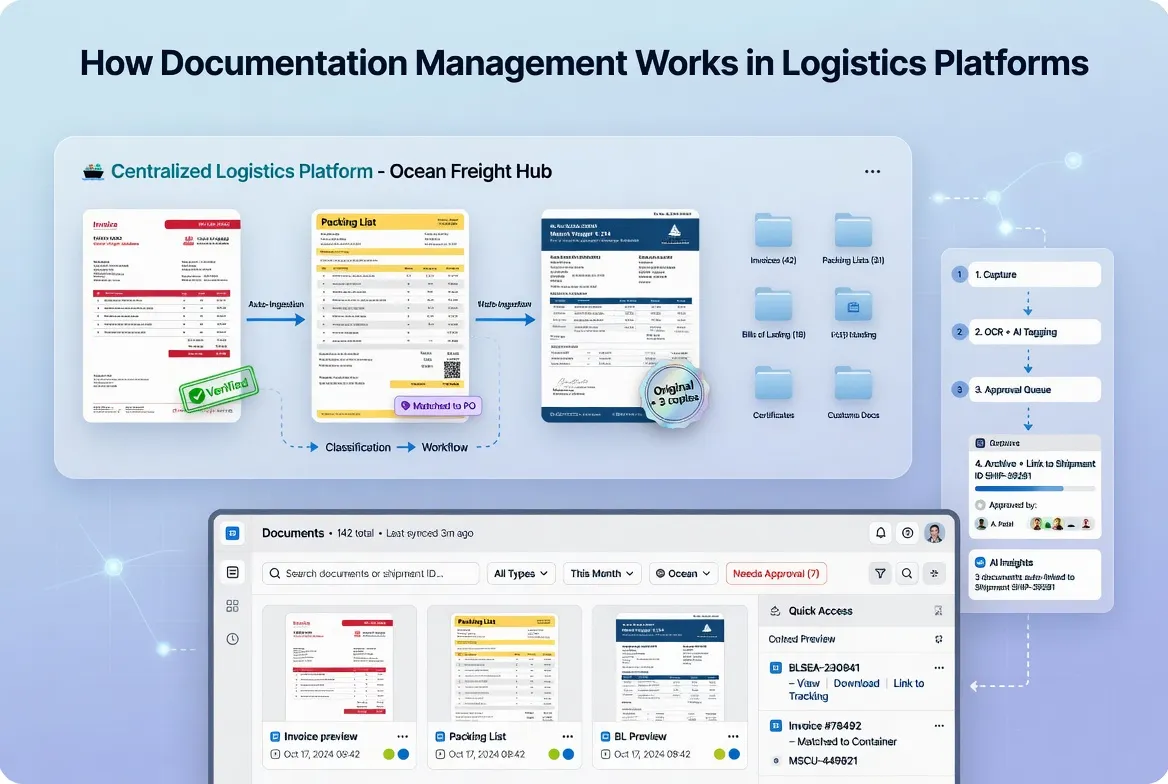
How Documentation Management Works in Logistics Platforms
Introduction
Logistics data integration is critical for supply chains because modern logistics operations depend on the continuous exchange of accurate, real-time information between multiple systems, partners, and transportation processes. Without integrated logistics data, companies often face fragmented operations, delayed communication, duplicate data entry, inconsistent shipment information, and limited operational visibility.
As global supply chains become increasingly interconnected, logistics companies must coordinate data across freight forwarders, carriers, warehouses, customs systems, ERP platforms, eCommerce systems, and financial software.
Logistics data integration helps companies centralize information, automate workflows, improve shipment visibility, and enable more efficient collaboration across the entire supply chain ecosystem.
What Is Logistics Data Integration?
Logistics data integration refers to the process of connecting different logistics systems, platforms, applications, and operational partners to exchange and synchronize data automatically.
Integrated logistics systems allow information to flow between multiple operational environments, including:
Transportation management systems (TMS)
Warehouse management systems (WMS)
ERP systems
Carrier platforms
Customs systems
Financial systems
eCommerce platforms
Customer portals
The purpose of logistics data integration is to eliminate isolated data silos and create a unified operational environment.
Modern logistics data integration often supports:
Real-time shipment synchronization
Automated status updates
Financial data sharing
Document exchange
Operational collaboration
Workflow automation
Why Logistics Data Integration Matters
Supply Chains Involve Multiple Systems
Global logistics operations rely on many interconnected systems and service providers.
A single shipment may involve:
Freight forwarders
Ocean carriers
Airlines
Trucking providers
Warehouses
Customs brokers
Last-mile delivery companies
Without integrated data flows, operational coordination becomes slow and inefficient.
Data Silos Reduce Visibility
When logistics systems operate independently, companies often face:
Duplicate data entry
Inconsistent shipment information
Delayed operational updates
Limited tracking visibility
Poor cross-department collaboration
Integrated logistics data improves operational transparency and consistency.
Manual Data Handling Increases Errors
Without system integration, logistics teams often manually transfer information between platforms.
This creates risks such as:
Incorrect shipment data
Billing inconsistencies
Delayed updates
Missing documents
Operational inefficiencies
Automation through integration significantly improves data accuracy.
Real-Time Operations Require Real-Time Data
Modern supply chains require continuous operational synchronization.
Customers and operational teams increasingly expect:
Real-time shipment visibility
Immediate status updates
Faster exception management
Accurate inventory information
Integrated logistics data supports real-time operational responsiveness.
How Logistics Data Integration Works
Logistics data integration connects systems and operational participants through digital communication technologies.
1. System Connectivity
Logistics platforms connect with external systems using:
APIs
EDI connections
Middleware platforms
Cloud-based integrations
Data synchronization tools
These technologies allow systems to exchange information automatically.
2. Data Synchronization
Integrated systems continuously synchronize operational data such as:
Shipment status
Transportation milestones
Inventory updates
Financial records
Customer orders
Tracking information
This creates centralized operational visibility.
3. Automated Workflow Coordination
Integrated data enables workflow automation across different operational processes.
Examples include:
Automatic shipment creation
Billing synchronization
Status notifications
Customs data transmission
Warehouse updates
Automation reduces manual intervention and operational delays.
4. Multi-Role Collaboration
Integrated systems support collaboration between:
Logistics providers
Customers
Warehouses
Overseas agents
Carriers
Finance teams
All stakeholders can access synchronized operational information through connected platforms.
5. Real-Time Visibility and Analytics
Integrated data improves visibility across the supply chain.
Companies can monitor:
Shipment progress
Inventory levels
Transportation performance
Financial status
Operational KPIs
Key Features of Logistics Data Integration
API Integration
Modern logistics platforms use APIs to connect with external systems and synchronize operational data in real time.
Multi-System Connectivity
Integrated logistics environments may connect with:
ERP systems
WMS platforms
Customs systems
Carrier platforms
eCommerce systems
Accounting software
Real-Time Shipment Synchronization
Shipment milestones and tracking updates are automatically synchronized across systems.
This improves operational visibility and customer communication.
Workflow Automation
Integrated data supports automated workflows such as:
Shipment updates
Billing generation
Document processing
Exception alerts
Task routing
Unified Operational Dashboard
Integrated platforms often provide centralized dashboards where users can monitor operational activities across multiple systems.
Benefits for Logistics Companies
Improved Operational Efficiency
Data integration reduces repetitive manual work and improves workflow speed across logistics operations.
Better Shipment Visibility
Integrated tracking data creates end-to-end shipment visibility across multiple transportation segments and partners.
Reduced Human Errors
Automatic data synchronization minimizes errors caused by manual data entry and disconnected systems.
Faster Collaboration
Integrated systems improve communication and coordination between internal teams and external supply chain partners.
Stronger Financial Accuracy
Financial integration improves:
Billing consistency
Cost visibility
Reconciliation accuracy
Profit analysis
Better Decision-Making
Real-time integrated data enables companies to make faster and more informed operational decisions.
Scalability for Growth
Integrated digital operations support larger shipment volumes without proportionally increasing manual operational workload.
Best Practices and Use Cases
Prioritize Core Operational Integrations
Companies should first integrate critical operational systems such as:
Shipment management
Carrier tracking
Financial workflows
Warehouse operations
Standardize Data Structures
Consistent data formats improve integration reliability and reduce synchronization issues.
Focus on Real-Time Visibility
Real-time shipment synchronization delivers immediate operational and customer service improvements.
Integrate Financial and Operational Workflows
Connecting operational data with financial systems improves business visibility and process efficiency.
Enable Partner Collaboration
Supply chain integration should support data sharing across upstream and downstream logistics partners.
Conclusion
Logistics data integration is critical for supply chains because modern logistics operations depend on accurate, real-time information exchange across multiple systems, transportation providers, and operational participants.
Without integration, companies face fragmented workflows, operational inefficiencies, limited visibility, and increased risks of manual errors. Integrated logistics data improves collaboration, workflow automation, shipment visibility, operational transparency, and scalability.
For freight forwarders, 3PL providers, and global logistics companies, logistics data integration has become a foundational capability for digital supply chain management and operational competitiveness.
As supply chains continue to evolve, integrated logistics ecosystems will become increasingly important for supporting efficient, connected, and data-driven logistics operations.
Frequently Asked Questions
What is logistics data integration?
Logistics data integration is the process of connecting logistics systems and platforms to exchange and synchronize operational information automatically.
Why is logistics data integration important?
It improves operational efficiency, shipment visibility, workflow automation, and collaboration across supply chain partners.
How does logistics data integration work?
Systems connect through APIs, EDI, and other digital technologies to synchronize shipment, financial, inventory, and operational data in real time.
What are the benefits of integrated logistics systems?
Benefits include reduced manual work, better visibility, improved data accuracy, faster collaboration, and stronger operational scalability.
Can logistics data integration support global supply chains?
Yes. Integrated systems support international logistics coordination across carriers, warehouses, customs systems, and overseas partners.
About WallTech
WallTech provides digital logistics solutions designed for freight forwarders, 3PL providers, and global supply chain companies. Its platforms support logistics data integration, end-to-end shipment visibility, workflow automation, and multi-role collaboration across international logistics operations. Through capabilities such as API connectivity, milestone-based tracking, AI-assisted data processing, automated billing and reconciliation, and upstream/downstream system integration, logistics companies can improve operational transparency, reduce fragmented workflows, and build more scalable digital supply chain ecosystems.
If you're exploring ways to improve your logistics operations, feel free to connect with us to learn more about our solutions and system capabilities.
Scan the QR code or contact our team directly for further discussion.
.webp "Key Features of Freight Documentation Platforms")