



.webp "What Is Logistics System Integration and Why It Matters")
Mar 26,2026
What Is Logistics System Integration and Why It Matters
In today’s highly competitive global economy, logistics operations sit at the heart of international trade and supply chain performance. Customer expectations are rising, delivery windows are shrinking, and supply chains are becoming increasingly complex. To thrive under these pressures, logistics providers are turning to cloud-native technologies that deliver real-time visibility, seamless integration, and intelligent automation.
One of the most transformative forces in this evolution is Logistics SaaS—Software as a Service designed specifically for freight, warehousing, parcel tracking, and full-chain logistics management. SaaS logistics systems, like eTower from WallTech, are redefining how modern enterprises design, operate, and optimize global supply chains.
What is Logistics SaaS?
It is a cloud-based logistics software delivery model that enables logistics companies, freight forwarders, warehouses, and eCommerce sellers to access advanced logistics applications over the internet. Unlike traditional on-premises software, SaaS eliminates the need for heavy upfront infrastructure investment and ongoing maintenance by the user. Instead, software updates, system security, and data hosting are managed centrally by the SaaS provider. Logistics SaaS is a catalyst for digital transformation that enables organizations to respond to market changes faster and operate more efficiently.
According to industry definitions, SaaS logistics management solutions empower businesses to:
Standardize and centralize logistics processes
Achieve real-time data visibility
Integrate multiple participants across the value chain
Automate repetitive tasks
Scale operations dynamically
Key Features of Logistics SaaS Platforms
Cloud-Native Architecture
Modern Logistics SaaS solutions run entirely on cloud infrastructure, enabling global accessibility, automatic scalability, and high availability. Cloud deployment ensures that logistics teams across continents can access synchronized data without latency issues, while updates and security patches roll out automatically.
Real-Time Visibility and Tracking
A defining capability of Logistics SaaS is end-to-end shipment visibility. By integrating data streams from carriers, warehouses, customs, and transport partners, SaaS platforms provide a real-time view of cargo movement, ETA projections, and exception alerts. This level of visibility was once only available to large freight carriers. Today, SaaS democratizes it, enabling every logistics player to monitor performance and proactively mitigate risks.
Workflow Automation
One of the most valuable outcomes of Logistics SaaS is automation. Manual tasks like rate comparison, booking confirmations, document generation, customs filing, and invoice reconciliation can be automated using intelligent workflow engines. This minimizes human error and shortens processing cycles.
Multi-Party Integration
Logistics SaaS platforms support a wide range of standardized integrations—API, EDI, direct carrier links, marketplaces, and cross-platform data feeds. This allows stakeholders from different roles (shippers, carriers, brokers, warehouses) to collaborate on one synchronized platform.
Data Analytics and Intelligence
Beyond operational execution, SaaS logistics management systems provide embedded analytics that convert raw logistics data into actionable insights. Analytics help logistics managers identify cost drivers, optimize routes, benchmark carrier performance, forecast demand, and make strategic decisions based on real metrics rather than intuition.
Logistics SaaS Benefits
The digital era has fundamentally changed the nature of supply chain competition. With eCommerce growth, shortened delivery windows, and rising customer expectations, traditional legacy systems are struggling to keep up. Logistics SaaS provides multiple strategic benefits:
Faster Time to Value: SaaS logistics systems require little to no infrastructure setup, allowing enterprises to go live rapidly. Because updates are handled by the provider, organizations can adopt new features without prolonged deployment cycles, making SaaS ideal for businesses seeking agility.
Lower Total Cost of Ownership (TCO): Traditional logistics software often demands significant upfront investment in hardware, local IT teams, and maintenance. Logistics SaaS shifts the cost model from capital expenditure to operational expenditure, reducing financial barriers for small and medium players while delivering enterprise-grade capabilities.
Improved Collaboration and Transparency: Supply chains are networks, not silos. When data is fragmented across systems, visibility collapses and decision latency increases. SaaS platforms unify data flows, enabling stakeholders to access consistent, up-to-date information, and collaborate more effectively.
Scalability and Elasticity: Logistics SaaS platforms can scale with business needs—whether seasonal demand spikes, new trade lanes, or expanded services without requiring users to overhaul technology stacks.
SaaS solutions are rapidly becoming the default architecture for digital supply chain transformation, a trend expected to accelerate in the coming decade.
How eTower Fits Into the Logistics SaaS Landscape?
eTower, developed by WallTech, embodies the value propositions of Logistics SaaS while addressing real-world operational gaps in global supply chains.
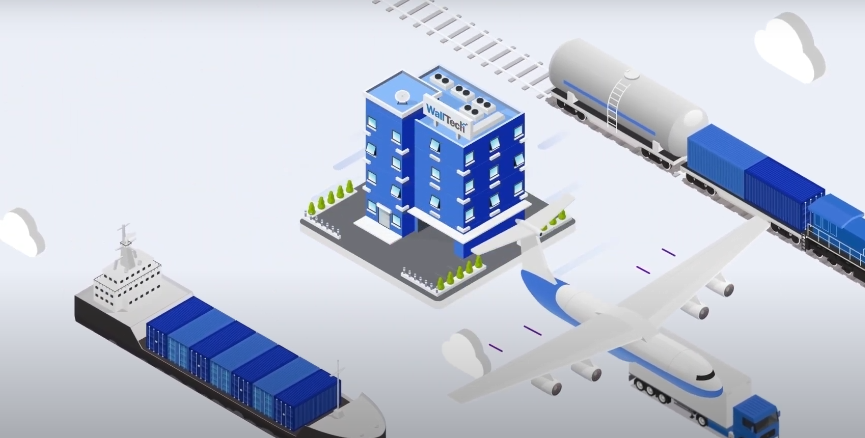
Unified Integration Hub: eTower acts as a centralized logistics management platform that connects logistics stakeholders across eCommerce platforms, carriers, warehouses, customs systems, and financial systems. Its unified data layer eliminates information silos and enables seamless collaboration.
End-to-End Order and Shipment Management: By centralizing order capture, shipment tracking, customs status, and exception handling, eTower provides one of the most comprehensive visibility layers available in SaaS logistics today. This supports both transactional efficiency and strategic oversight.
Scalable Deployment: Whether for mid-sized freight forwarders or large global enterprises, eTower scales to accommodate high volumes of data, transactions, and integrated partners. The platform’s modular architecture means customers can adopt capabilities incrementally and expand them as business needs evolve.
Automation and Intelligent Workflow Engines: eTower utilizes intelligent automation to streamline repetitive processes such as quoting, booking, label creation, document generation, and customs compliance checks. This minimizes manual intervention and accelerates throughput.
Analytics and Business Intelligence: Beyond operational software, eTower delivers intelligence dashboards and analytics modules that monitor performance KPIs, carrier performance, transit trends, and logistics costs, enabling informed strategic decision-making.
Future of Logistics SaaS
As supply chains continue to evolve, Logistics SaaS will further integrate emerging technologies such as artificial intelligence, machine learning forecasting, blockchain-enabled tracking, and predictive analytics. Enterprises that embrace these innovations will not only optimize operations but also create strategic differentiation in the new digital economy. Cloud-native SaaS solutions will continue to democratize advanced logistics capabilities, making them accessible, affordable, and indispensable.
Logistics SaaS is a strategic enabler for digital transformation in global supply chains. By combining real-time visibility, end-to-end process automation, multi-party integration, and actionable insights, Logistics SaaS platforms empower organizations to operate smarter, faster, and with greater transparency than ever before.
Platforms like eTower showcase how modern SaaS logistics solutions can transform complexity into competitive advantage, making them essential for logistics providers, freight forwarders, and enterprises looking to win in the digital era.
FAQs of Logistics SaaS
What is SaaS in logistics?
SaaS (Software as a Service) is a cloud-based logistic management solution that allows businesses to manage transportation, warehousing, freight forwarding, parcel tracking, customs compliance, and financial settlement through an online platform. Unlike traditional on-premise systems, SaaS solutions are hosted and maintained by the provider, enabling faster deployment, automatic updates, and lower upfront costs.
How is Logistics SaaS different from traditional logistics software?
Traditional logistics software is typically installed locally and requires dedicated IT infrastructure and maintenance. Operating in the cloud, SaaS logistics software requires no local hardware installation and provides automatic updates and security patches. It uses a subscription-based pricing model, enabling remote access from anywhere.
Who can benefit from Logistics SaaS solutions?
Freight forwarders
Third-party logistics providers (3PLs)
Cross-border eCommerce businesses
Warehouse operators
Importers and exporters
Global enterprises managing multi-country supply chains
Both small businesses and large enterprises can leverage SaaS due to its flexible deployment model.
Is Logistics SaaS secure?
Yes. Reputable SaaS logistics management system providers implement enterprise-level security measures, including data encryption (in transit and at rest), role-based access control, secure cloud hosting environments, and regular security audits and backups. Because SaaS providers specialize in maintaining and updating systems, security standards are often stronger than in-house solutions.
Is Logistics SaaS suitable for cross-border logistics?
Yes. Logistics SaaS is particularly valuable for cross-border operations because it centralizes customs data, supports multi-currency settlement, and integrates international carrier networks. It simplifies compliance management and provides global shipment visibility in one unified system.
.webp "How Logistics Platforms Deliver Shipment Task Automation")
.webp "Why Companies Use Logistics Partner Network Systems")


