




May 25,2026
How Do Companies Manage Freight Operations Digitally?
Introduction
A logistics platform for Amazon sellers managing global fulfillment is a centralized system that helps sellers coordinate inventory, shipments, carriers, and fulfillment processes across multiple countries and channels. It enables real-time visibility, multi-role collaboration, and workflow automation, allowing sellers to efficiently manage complex cross-border operations and meet Amazon’s strict fulfillment requirements.
As Amazon sellers expand globally, managing fulfillment across warehouses, carriers, and regions becomes increasingly complex—making digital logistics platforms essential for scalable operations.
What is a Logistics Platform for Amazon Sellers
A logistics platform for Amazon sellers is a software system designed to manage the end-to-end logistics lifecycle of eCommerce shipments, including:
Order intake from multiple sales channels
Inventory and warehouse coordination
First-mile, line-haul, and last-mile transportation
Customs clearance and compliance
Final delivery and tracking
For Amazon sellers, this includes managing:
Fulfillment by Amazon (FBA) shipments
Fulfillment by Merchant (FBM) orders
Cross-border shipping requirements
Multi-country inventory distribution
The platform acts as a control tower that connects all logistics nodes, ensuring smooth coordination between sellers, warehouses, carriers, and marketplaces.
Why It Matters
Global Amazon sellers face several operational challenges:
1. Multi-Channel Order Fragmentation
Orders come from Amazon marketplaces across regions (US, EU, Asia), often requiring centralized management.
2. Complex Fulfillment Networks
Inventory may be distributed across multiple fulfillment centers and warehouses globally.
3. Strict Delivery Requirements
Amazon enforces tight SLAs for shipping speed and performance.
4. Limited Visibility
Tracking shipments across multiple carriers and countries is often fragmented.
5. Manual Coordination
Managing shipments through spreadsheets and emails leads to inefficiencies and delays.
Without a unified logistics platform, sellers struggle to scale operations while maintaining service quality and compliance.
How Logistics Platforms Enable Global Fulfillment
Logistics platforms support Amazon sellers by integrating all fulfillment processes into a single system.
1. Centralized Order Management
Orders from Amazon and other channels are automatically imported and processed within one platform.
2. Multi-Warehouse Coordination
The system manages inventory allocation and shipment planning across multiple warehouses.
3. Intelligent Routing and Carrier Selection
Shipments are assigned to optimal carriers based on predefined rules such as cost, delivery time, and destination.
4. End-to-End Tracking
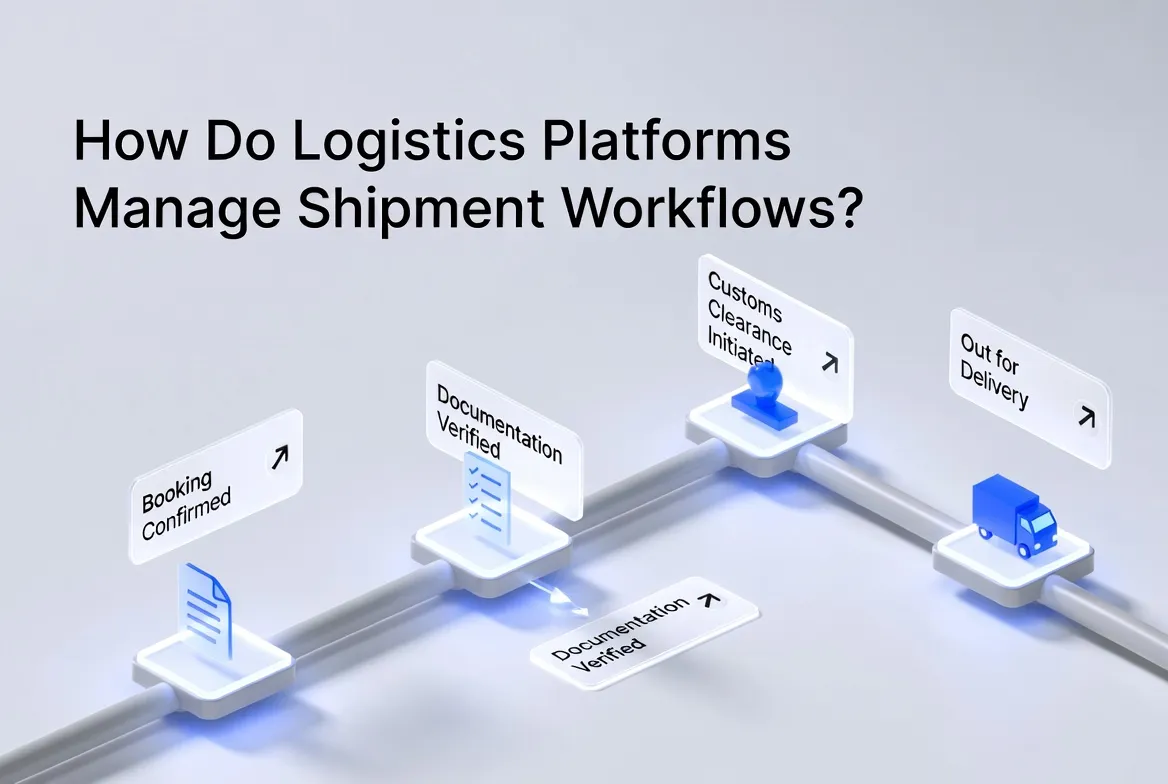
A unified timeline provides visibility into all shipment milestones—from origin to final delivery.
5. Automated Workflow Execution
Tasks such as label generation, booking, and document preparation are automated.
6. Integration with Logistics Ecosystem
Platforms connect with carriers, customs systems, and warehouse systems via APIs for seamless data exchange.
This structured approach transforms fragmented fulfillment processes into coordinated, scalable operations.
Key Features / Key Capabilities
A logistics platform designed for Amazon sellers typically includes:
1. Multi-Role Collaboration
Coordination between sellers, warehouse teams, and logistics providers
Role-based access for different stakeholders
2. End-to-End Visibility
Real-time tracking across all transport stages
Milestone-based shipment monitoring
3. Workflow Automation
Automated order processing and shipment creation
SOP-driven task management
4. AI Data Recognition
OCR for extracting order and shipment data
Reduced manual data entry
5. Automated Billing and Reconciliation
Financial processes linked to shipment data
Accurate cost tracking and settlement
6. Multi-Carrier Integration
Access to global carrier networks
Standardized tracking and service management
7. Exception Management
Alerts for delays, customs issues, or delivery failures
Proactive resolution workflows
These features enable sellers to manage complex logistics operations with greater efficiency and control.
Benefits for Logistics Companies and Amazon Sellers
1. Improved Operational Efficiency
Reduced manual processes
Faster order and shipment handling
2. Enhanced Visibility
Full transparency across the supply chain
Real-time shipment tracking
3. Better Cost Control
Optimized carrier selection
Accurate financial tracking
4. Increased Scalability
Ability to handle higher order volumes
Standardized workflows across regions
5. Improved Customer Experience
Faster delivery times
Accurate tracking information
6. Compliance with Amazon Requirements
Consistent fulfillment performance
Reduced risk of penalties or account issues
Best Practices / Use Cases
1. Managing FBA Shipments
Coordinate bulk shipments to Amazon fulfillment centers with automated workflows and tracking.
2. Handling FBM Orders
Manage direct-to-customer shipments with integrated carrier selection and tracking.
3. Multi-Country Fulfillment
Distribute inventory across regions and manage cross-border shipments efficiently.
4. Peak Season Scaling
Handle high order volumes during events such as Prime Day or holiday seasons.
5. Returns and Reverse Logistics
Streamline return processes with centralized tracking and workflow management.
Conclusion
A logistics platform is essential for Amazon sellers managing global fulfillment. It centralizes operations, improves visibility, and automates workflows, enabling sellers to handle complex logistics networks efficiently.
As global eCommerce continues to grow, sellers that adopt digital logistics platforms gain a competitive advantage in scalability, cost control, and customer satisfaction.
Frequently Asked Questions
What is a logistics platform for Amazon sellers?
It is a system that helps sellers manage orders, shipments, inventory, and logistics operations across multiple regions and carriers.
How does it support global fulfillment?
It centralizes order management, integrates with carriers and warehouses, and provides real-time tracking and workflow automation.
Why is it important for Amazon sellers?
It improves efficiency, ensures compliance with Amazon requirements, and enables scalable global operations.
What are the benefits of using such platforms?
Benefits include better visibility, reduced manual work, improved cost control, and enhanced customer experience.
Who should use these platforms?
Amazon sellers, cross-border eCommerce businesses, and logistics providers supporting online retail operations.
About WallTech
WallTech provides digital logistics solutions designed to support global eCommerce fulfillment and cross-border logistics operations. Its platforms enable end-to-end collaboration between sellers, warehouses, and carriers, supported by real-time shipment visibility through milestone-based tracking and unified timelines. By integrating workflow automation, AI-driven data recognition, and automated financial processes such as billing and reconciliation, WallTech helps logistics companies and eCommerce sellers improve operational efficiency and scalability. These capabilities support structured, transparent, and data-driven logistics management across global fulfillment networks.
If you're exploring ways to improve your logistics operations, feel free to connect with us to learn more about our solutions and system capabilities.

_20250415161350.webp "Global Air Freight Forwarders Rankings 2025")


