
May 06,2026
Logistics Collaboration Platforms for Multi-Partner Logistics Operations
Introduction
The evolution of global supply chains has driven the need for more advanced digital capabilities. Traditional logistics systems, often fragmented and manual, can no longer support the speed, visibility, and coordination required in modern operations.
Logistics platforms have emerged as the foundation for building digital supply chain platforms. By integrating systems, standardizing workflows, and enabling real-time data exchange, they transform isolated logistics processes into fully connected digital ecosystems.
What Is a Digital Supply Chain Platform?
A digital supply chain platform is an integrated system that connects all stages of the supply chain—from order creation and transportation to warehousing and final delivery—within a unified digital environment.
It typically includes:
Order and shipment management systems
Transportation and warehouse operations
Partner and customer collaboration tools
Data integration and analytics capabilities
The goal is to provide end-to-end visibility, automation, and coordination across the entire supply chain.
The Role of Logistics Platforms
Logistics platforms act as the core layer that enables digital supply chain platforms.
They provide:
Centralized control over logistics operations
Integration with upstream and downstream systems
Real-time data synchronization
Workflow automation across supply chain processes
By serving as the operational backbone, logistics platforms connect different systems and stakeholders into a cohesive digital structure.
How Logistics Platforms Enable Digital Supply Chain Platforms
1. Centralizing Supply Chain Operations
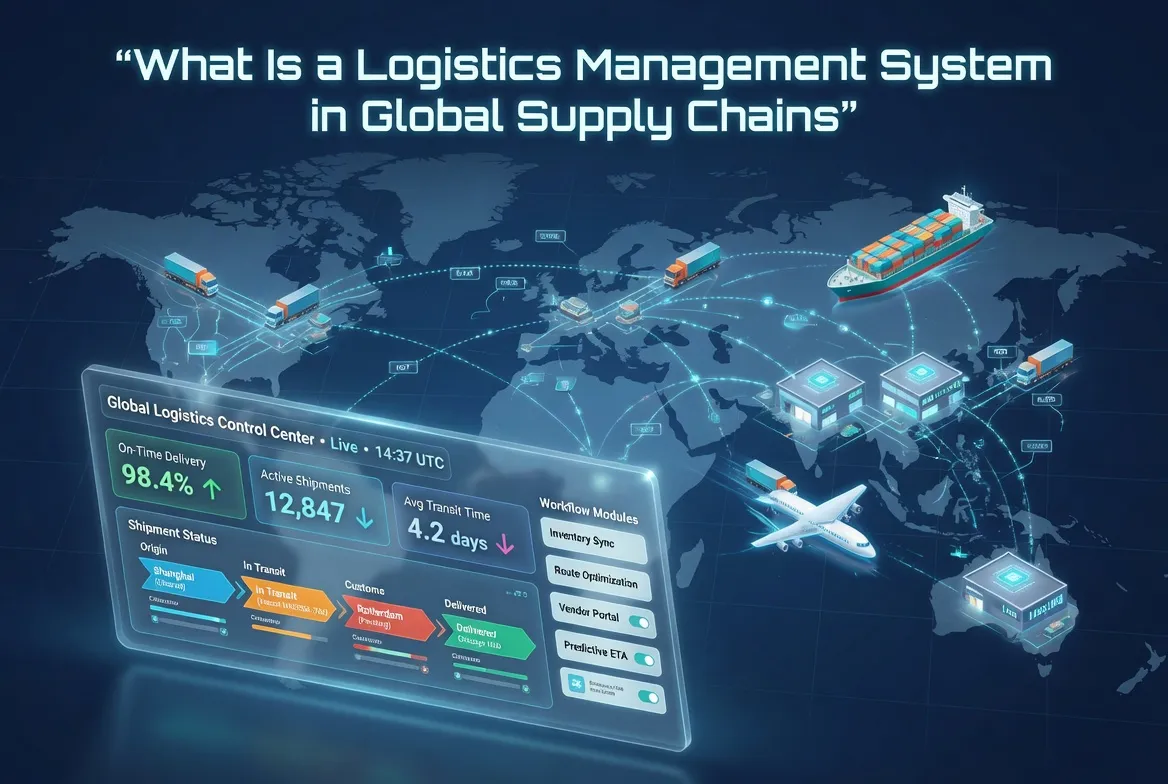
Logistics platforms consolidate all logistics activities into a single system.
This includes:
Order processing
Shipment execution
Tracking and monitoring
Financial management
Centralization eliminates the need for multiple disconnected tools and ensures that all operations are managed within a unified environment.
2. Enabling End-to-End Visibility
Visibility is a key requirement for digital supply chains.
Logistics platforms provide:
Real-time tracking across all shipment stages
Aggregation of tracking data from multiple sources
Unified shipment timelines
This allows all stakeholders to monitor supply chain activities through a single interface.
3. Integrating Systems Across the Supply Chain
Digital supply chain platforms rely on seamless integration between systems.
Logistics platforms connect with:
ERP and financial systems
Warehouse management systems
Carrier and tracking platforms
eCommerce platforms
Through APIs and data interfaces, information flows automatically between systems, enabling synchronized operations.
4. Automating Supply Chain Workflows
Automation is essential for managing complex supply chain processes.
Logistics platforms support:
Configurable workflows based on standard operating procedures
Automated task execution at each stage
Notification and alert mechanisms
This reduces manual work and ensures consistency across operations.
5. Supporting Multi-Party Collaboration
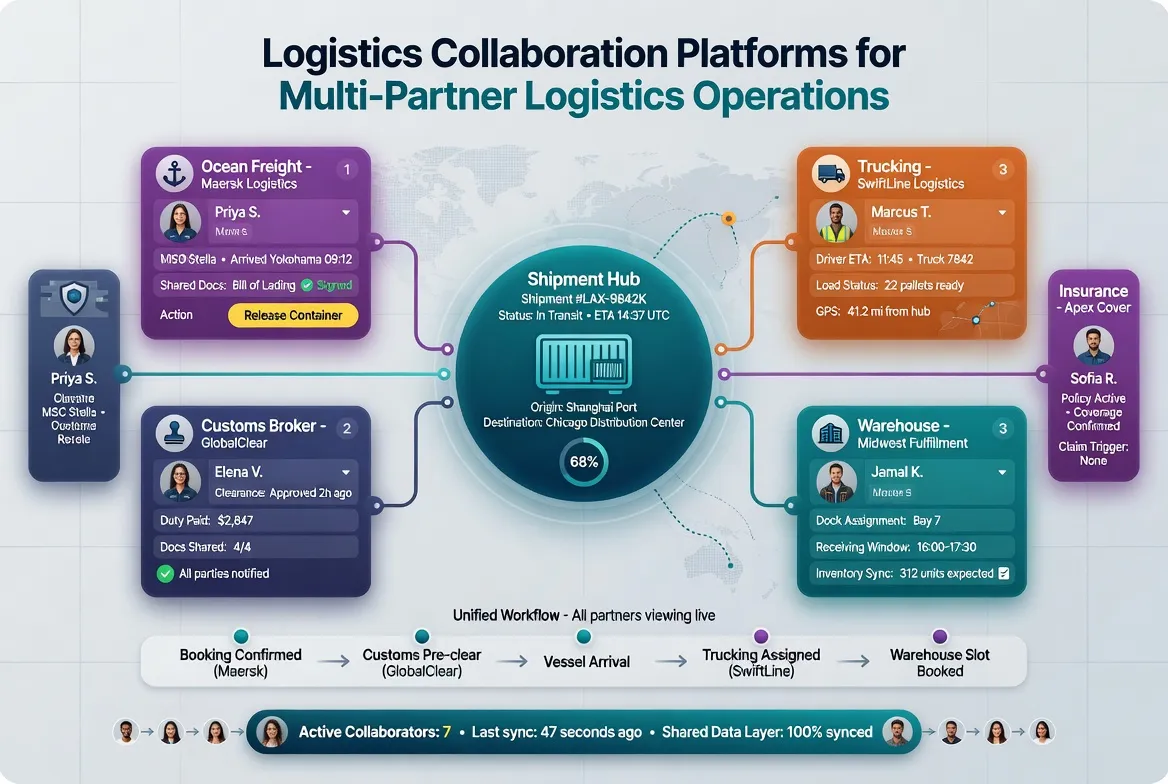
Supply chains involve multiple stakeholders, including suppliers, logistics providers, and customers.
Logistics platforms enable collaboration by:
Providing shared access to data
Supporting role-based permissions
Facilitating communication within the platform
This improves coordination and reduces delays.
6. Managing Multi-Modal Logistics
Digital supply chains require coordination across different transportation modes.
Logistics platforms enable:
Management of multi-leg shipments
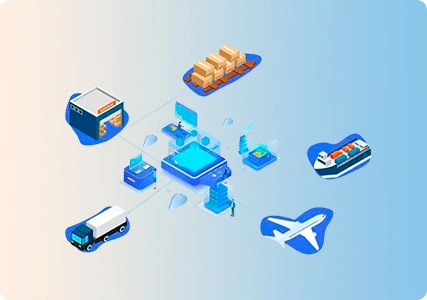
Coordination across ocean, air, land, and express transport
Synchronization of tracking events
This ensures seamless execution across complex logistics networks.
7. Integrating Financial and Operational Data
A digital supply chain platform must connect operational activities with financial processes.
Logistics platforms provide:
Automated cost calculation
Revenue and expense tracking
Profit analysis at shipment level
This integration improves financial transparency and supports better decision-making.
Benefits of Digital Supply Chain Platforms
Improved Efficiency
Automation and integration streamline processes and reduce manual workload.
Enhanced Visibility
Real-time tracking provides full transparency across the supply chain.
Better Collaboration
A unified platform enables seamless communication between stakeholders.
Increased Scalability
Digital platforms support business growth without increasing operational complexity.
Stronger Decision-Making
Centralized data and analytics provide insights for optimizing performance.
Best Practices for Building Digital Supply Chain Platforms
1. Use a Central Logistics Platform
Adopt a core logistics platform to serve as the foundation for the digital supply chain.
2. Ensure Seamless Integration
Connect all relevant systems and partners through APIs and data interfaces.
3. Standardize Processes
Define consistent workflows to ensure smooth operations across different teams and regions.
4. Leverage Automation
Automate repetitive tasks to improve efficiency and reduce errors.
5. Focus on End-to-End Visibility
Ensure that the platform provides complete visibility from origin to final delivery.
Challenges to Consider
Integration Complexity
Connecting multiple systems and stakeholders can be technically challenging.
Data Consistency
Maintaining accurate and consistent data across systems requires strong governance.
Organizational Change
Transitioning to digital platforms may require changes in processes and training.
Conclusion
Logistics platforms are essential for delivering digital supply chain platforms. By centralizing operations, enabling real-time visibility, and automating workflows, they transform traditional supply chains into connected, efficient, and scalable digital ecosystems.
As supply chains continue to evolve, companies that adopt digital platforms will be better positioned to manage complexity, improve performance, and maintain a competitive advantage in the global logistics landscape.