Nov 06,2024
WallTech Family | Season 2: Freight Forwarding Trends in 2024 | Part 2: Explore New Markets
A logistics operations management platform is a digital system used to manage daily logistics activities such as order processing, transportation coordination, shipment tracking, and financial settlement. It centralizes operational data and workflows, helping logistics companies manage complex transportation processes more efficiently.
Understanding Logistics Operations Management Platforms
Logistics operations involve many interconnected tasks. Freight forwarders and logistics providers must manage shipment orders, coordinate carriers, track cargo movement, handle documents, and process financial transactions.
Traditionally, these tasks were managed through separate tools such as spreadsheets, emails, and standalone software systems. As shipment volumes increase, this fragmented approach often leads to operational inefficiencies and information inconsistencies.
A logistics operations management platform integrates these processes into a single digital environment. By connecting operational data, transportation workflows, and financial information, the platform provides a unified system for managing logistics operations.
Core Functions of a Logistics Operations Platform
A logistics operations management platform typically includes several core operational capabilities.
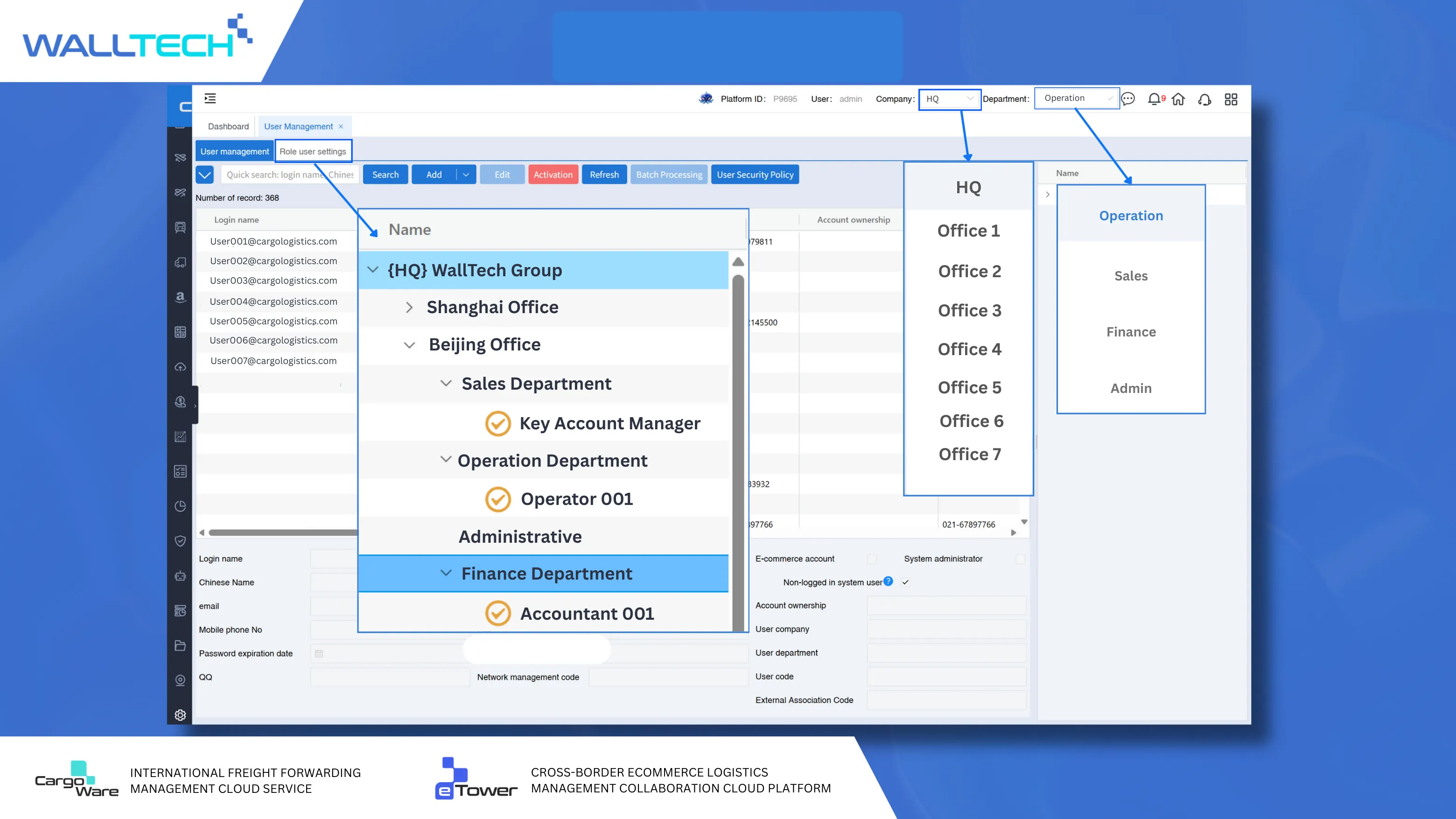
Order management allows logistics teams to create, modify, and manage shipment orders within the system. Orders can be entered manually, uploaded in bulk, or integrated through external systems such as customer portals or e-commerce platforms.
Transportation coordination enables companies to manage multiple transportation modes, including ocean freight, air freight, trucking, and rail. The system records operational milestones across the shipment lifecycle.
Shipment tracking and visibility provides real-time updates on cargo movement. Transportation events from carriers and partners can be consolidated to create a unified shipment timeline.
Document management helps store and organize logistics documents such as shipping instructions, invoices, and customs documents within the shipment record.
Why Logistics Companies Need Operational Platforms
As logistics networks expand, manual coordination becomes increasingly difficult. Shipment information may be scattered across multiple communication channels, making it harder for teams to maintain consistent operational visibility.
Operational platforms help standardize logistics workflows. Instead of relying on separate tools, logistics teams can manage shipments through a centralized system where data and processes are connected.
This reduces the risk of data duplication, improves coordination between departments, and allows teams to respond more quickly to operational changes.
Operational Benefits for Logistics Companies
Adopting a logistics operations management platform can significantly improve operational efficiency. Centralized systems reduce the need for manual data entry and simplify communication between teams.
These platforms also improve shipment visibility, allowing companies to monitor transportation progress and identify potential delays earlier.
In addition, integrated financial modules help logistics companies track receivables, payables, and operational costs. This provides clearer insights into shipment profitability and business performance.
Conclusion
A logistics operations management platform provides the digital foundation for managing modern logistics operations. By integrating order management, transportation coordination, tracking, and financial processes into one system, it helps logistics companies operate more efficiently.
As supply chains become more complex, these platforms play an increasingly important role in enabling scalable and data-driven logistics operations.
.webp "Best Practices for Managing Logistics Documents Digitally")