



Apr 20,2026
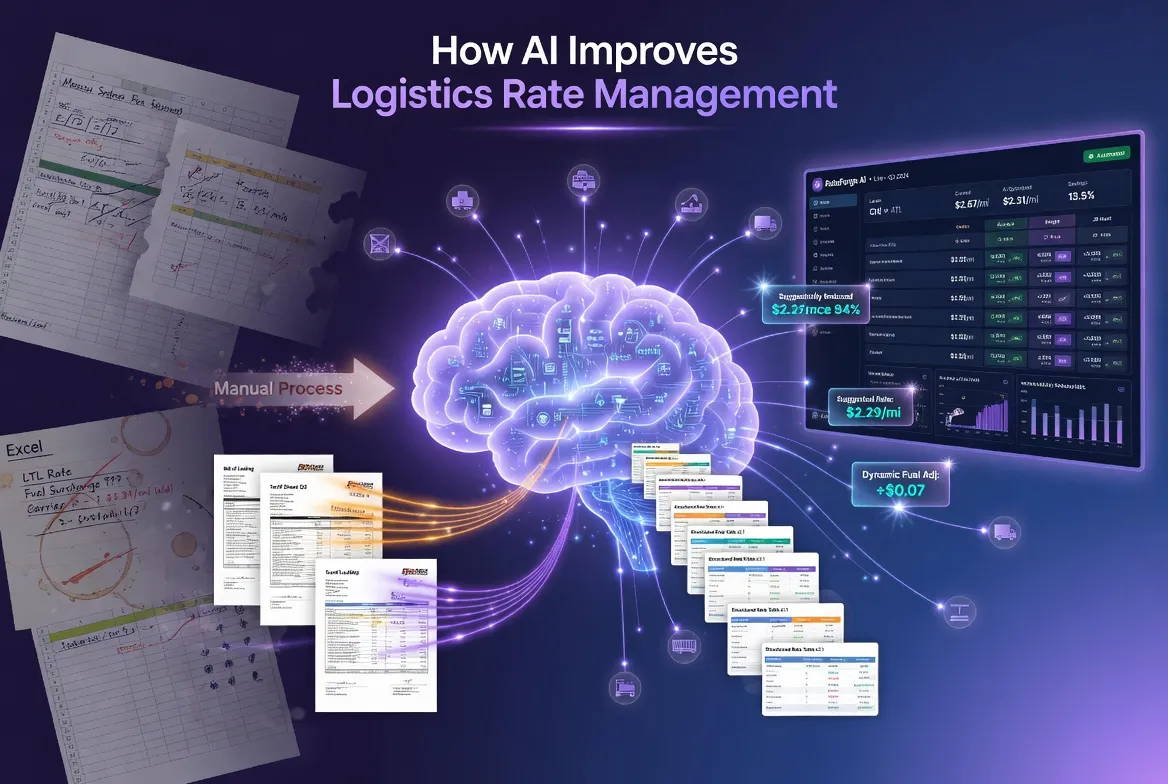
How AI Improves Logistics Rate Management
Freight forwarding companies often begin with relatively simple operational structures. Early-stage logistics businesses may manage shipments using spreadsheets, emails, and manual coordination between teams. While this approach can work when shipment volumes are low, it becomes increasingly difficult to maintain efficiency as the business grows.
As freight forwarders expand into new markets, serve more customers, and handle higher shipment volumes, operational complexity increases significantly. Without scalable systems, companies may experience operational bottlenecks, data inconsistencies, and difficulty coordinating activities across teams and offices.
Digital logistics systems help address these challenges by providing scalable platforms that support growing operational demands. By centralizing operational processes, automating workflows, and integrating data across departments, these systems allow freight forwarders to expand their business without losing operational control.
The Operational Challenges of Business Growth
When freight forwarding companies experience rapid growth, several operational challenges typically emerge.
One major challenge is increasing shipment volume. As the number of shipments grows, operations teams must manage more bookings, documentation tasks, transport coordination activities, and customer communications. Manual processes that once worked efficiently can quickly become overwhelmed.
Another challenge is the expansion of customer networks and logistics partners. Growing freight forwarders may work with more carriers, agents, and service providers across multiple regions. Coordinating these relationships requires structured information management and consistent communication channels.
In addition, business growth often leads to the establishment of new branch offices or regional operations teams. Without centralized systems, maintaining consistent operational processes across locations can become difficult.
Centralizing Operational Data and Processes
Digital logistics systems support scalability by centralizing operational data and workflows within a unified platform. Instead of relying on multiple disconnected tools, freight forwarders can manage shipment information, documentation, and operational tasks within a single system.
Centralized data management ensures that all teams access the same operational information. Shipment details, booking records, documentation files, and financial data are stored within the platform and can be accessed by authorized users across different departments or locations.
This centralized approach reduces the risk of data duplication and inconsistencies. It also allows logistics companies to maintain a clear overview of operations as shipment volumes increase.
Automating Repetitive Operational Tasks
Automation plays an important role in supporting scalable logistics operations. Many tasks within freight forwarding involve repetitive data entry, document preparation, or status updates.
Digital logistics platforms automate many of these routine processes. For example, systems can automatically generate operational tasks based on shipment milestones, notify relevant teams when key events occur, or trigger documentation workflows when bookings are confirmed.
By reducing manual workload, automation allows operations teams to handle larger shipment volumes without proportionally increasing staffing requirements. This improves operational efficiency while maintaining service quality.
Supporting Multi-Branch Operations
As freight forwarding companies expand geographically, coordinating operations across multiple offices becomes essential. Each branch may handle shipments related to specific regions, customers, or service types.
Cloud-based logistics platforms enable multi-branch operations by allowing teams in different locations to access the same system environment. Shipment records, operational tasks, and financial data remain synchronized across offices.
This shared system infrastructure helps ensure that operational procedures remain consistent regardless of location. It also allows management teams to maintain oversight of global operations through centralized reporting and dashboards.
Enhancing Collaboration Across Teams
Scalable logistics operations require efficient collaboration between internal teams and external partners. As shipment volumes increase, communication and coordination must remain structured to avoid operational confusion.
Digital logistics systems provide collaboration tools that allow teams to share information directly within shipment records. Operational notes, task assignments, and milestone updates can be accessed by all relevant users within the platform.
This integrated collaboration environment helps maintain clear communication channels even as operational complexity grows.
Data Visibility and Performance Monitoring
Another advantage of digital logistics system is improved visibility into operational performance. As companies grow, management teams need access to data that helps them understand operational efficiency, shipment volumes, and service performance.
Logistics platforms provide reporting tools and dashboards that transform operational data into actionable insights. Managers can monitor shipment throughput, operational workloads, and service performance indicators.
These insights help companies identify bottlenecks, allocate resources effectively, and continuously improve operational processes as the business expands.
Best Practices for Building Scalable Logistics Systems
Freight forwarders seeking to build scalable operations should consider several best practices when implementing digital logistics systems.
First, companies should select platforms that support modular expansion. As business needs evolve, the system should allow new operational capabilities or integrations to be added without disrupting existing workflows.
Second, companies should standardize operational processes within the system. Clear workflows and standardized data structures help ensure that operations remain consistent as shipment volumes grow.
Finally, investing in employee training is essential. Teams must understand how to use the digital platform effectively to maintain efficient and coordinated operations.
Conclusion
Scalability is a critical factor for freight forwarding companies seeking to expand their operations in global logistics markets. As shipment volumes, customer networks, and operational complexity increase, manual tools and fragmented systems become insufficient for managing daily operations.
Digital logistics systems provide the infrastructure needed to support scalable growth. By centralizing operational data, automating workflows, enabling cross-branch collaboration, and providing operational visibility, these platforms allow freight forwarders to manage larger and more complex logistics networks efficiently.
For growing freight forwarding companies, adopting scalable digital logistics systems is an essential step toward building sustainable and efficient logistics operations in an increasingly interconnected global supply chain.

.webp "What Is an API-Integrated Logistics System?")


